
Austin office demand is not moving in one neat direction. Some teams want less space. Some want better space. A recent local example makes the point: Lucid Private Offices announced two upcoming Austin locations, including one near the Arboretum and Domain corridor and another in Westlake. The company framed the move around premium work suites and hospitality-style amenities.
That is a useful signal for anyone planning smart vending in Austin. Shared workplaces are not only rows of desks. People move through focused work, meetings, and lounge time in short bursts. Refreshment access has to fit that rhythm, not fight it.
Revvolto has no affiliation with Lucid Private Offices. The announcement is simply a local planning cue. When office space becomes more service-aware, the refreshment plan cannot stay stuck in pantry mode.
Shared workdays create uneven demand
A traditional breakroom is easier to map. People work in one suite, leave at predictable times, and return to the same kitchen. Flexible workspace is messier.
A member might be there all day. A small team might use a suite for a sprint. A consultant might arrive for one meeting, take calls from a lounge, then leave before lunch. That movement changes the job of the amenity.
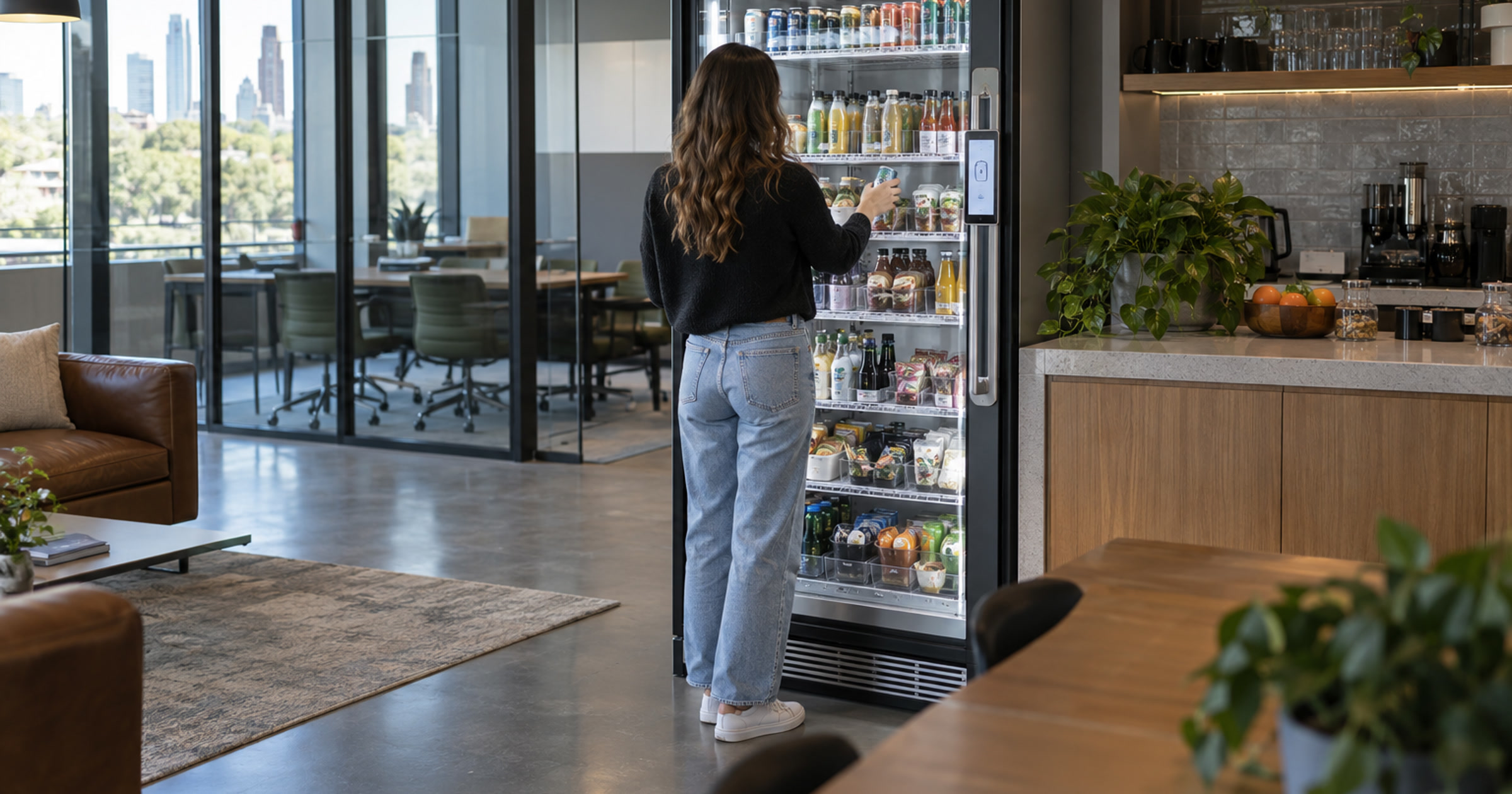
A vending setup can sit where those short gaps happen. A glass-front cooler near a lounge or meeting-room corridor gives people a simple place to grab a drink or snack without asking the site staff to manage pantry inventory.
The key is location. If the unit hides behind the wrong door, it becomes background furniture. If it sits in the main work route, it can serve quick visits and late work blocks without turning the front desk into a snack counter.
The amenity has to respect the workday
Shared workspace users are not all doing the same thing at the same time. That is exactly why a generic refreshment setup gets awkward.
A good plan should account for arrival, meeting breaks, and late-day work. Arrival is when coffee or cold drinks matter. Meeting breaks call for fast grab-and-go choices. Late-day work favors reliable access after nearby cafes slow down.
That does not mean every building calls for a full market. Sometimes a compact fridge or vending machine does the cleaner job. The right answer depends on traffic, room layout, and the restocking relationship.
This is where operators matter. If the building team buys snacks and tracks preferences, the amenity quietly becomes another job. Revvolto is built to remove that burden. We stock the equipment, maintain it, and manage cashless payment support for qualified locations.
Restock routes matter as much as the machine
A workspace can look beautiful and still make operations harder than they should be. The unit needs a place people can use. It also needs a place the route team can reach without creating a circus in the middle of the workday.
Before installing a cooler, the practical questions are simple. Where do people naturally pause? Can the door swing safely? Can restocking happen without blocking a meeting room? Those are not glamour questions, but they decide whether the amenity feels polished six months later.
The best placement usually sits near a shared kitchen, lounge edge, or controlled corridor. It should be visible enough to be used, but not so central that every refill feels like a performance.
That planning also helps with product mix. A meeting-heavy floor may lean toward cold drinks and quick packaged meals. A team-suite area may favor more everyday snacks. Purchase data can guide the mix over time, but the first decision is physical: put the unit where the workday already bends.
Austin offices should plan the refreshment layer early
The Lucid announcement points to a broader buyer question for Austin: as workspaces get more flexible, who owns the small daily conveniences that make the building easier to use?
It is tempting to treat snack and drink planning as a finishing touch. That is how buildings end up with a pretty lounge and a weak refreshment setup. The better move is to plan it with the room, power, and route access before opening day.
For coworking locations and premium office lounges, the right vending setup can be a practical middle ground. It gives people a self-serve option. It keeps payment cashless. It gives the site team a cleaner way to offer refreshments without building a miniature retail operation.
The point is not to copy anyone’s office model. The point is to notice what Austin’s workspace market is telling us. Better offices are becoming more service-aware. On-site refreshments should be part of that plan.
There is also a brand signal here. A beautiful lounge with no convenient refreshment option feels unfinished. A well-placed unit tells members and visitors that the daily details were considered before the lease signs went up.
For Revvolto, the fit question starts with the room. Is there enough daily traffic? Is there a natural stopping point? Can the equipment be stocked without disrupting members? When those answers line up, the amenity can feel built-in instead of bolted on. That is the difference between a vending unit people notice early and a forgotten appliance.
If you are planning an Austin coworking site or private-suite floor, tell Revvolto about the location. We can help decide whether a vending machine, smart fridge, or compact micro market belongs in the room.



