
Medical clinics run on tight routes. The front desk has its own work. Clinical teams have theirs. Nobody needs the snack shelf becoming a side quest.
That is the practical case for smart vending in a clinic staff breakroom. The point is not to sell patients on a retail experience. The better use is staff-only food and drink access in the parts of the building where employees already reset between appointments and closing tasks.
For a qualified medical office, Revvolto can place a modern smart vending unit or smart fridge in a staff area and handle the service. The clinic still has to choose the right room and the right path. A good install should support the day quietly. A bad one becomes another thing the office manager hears about.
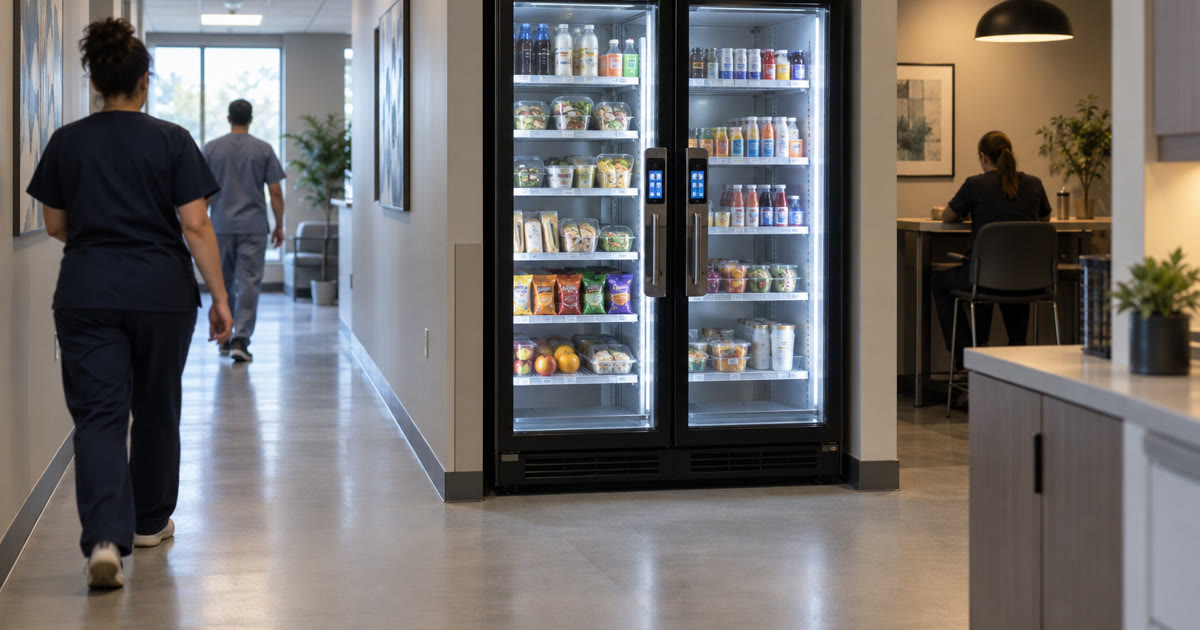
Keep the vending plan off the patient path
A clinic vending plan should start with one boundary: patient-facing space and staff food access are different jobs.
A lobby machine may be right for some buildings, but many medical offices should start in a staff-only room or back corridor. That keeps the amenity tied to the people who are working long blocks inside the building. It also avoids making the front desk the unofficial snack counter.
The first site walk should ask where staff already pause. A breakroom table behaves differently from a back-office route. The right answer is usually the spot people pass naturally, not the empty corner that looked convenient on a floor plan.
Accessibility still matters. The U.S. Access Board guidance on accessible routes is not a vending placement manual, but it is a useful reminder that equipment should not crowd circulation or block a route. For clinics, that matters even more because hallway space already carries carts and staff movement.
Staff-only does not mean staff-managed
The biggest mistake is treating vending like a cabinet with a card reader.
If the office manager has to chase restocks or troubleshoot payment questions, the clinic did not reduce work. It moved the work to a different desk.
A smart vending program should come with clear ownership. Revvolto handles stocking, payment tech, and service for qualified locations. Your team should know who to contact when something goes wrong, but they should not become the operating layer.
This is why service access belongs in the first conversation. A cooler tucked behind a busy conference table may technically fit, but it can make restocking awkward. A staff corridor may see steady traffic, but it still needs room for the service visit. Placement is not just about who can buy from the unit. It is also about who can maintain it without disrupting the clinic.
Payment support deserves the same plain handling. PCI Security Standards Council merchant resources are a useful reminder that card and digital payment systems need real ownership. Your clinic team does not have to become a payment expert. It does need an operator who owns the payment support path.
Product mix should fit clinic workdays
Clinic teams rarely need a dramatic pantry story. They need normal food access that survives real schedules.
That usually means cold drinks, simple snacks, and grab-and-go items that make sense for short breaks. Some clinics may lean toward refrigerated options. Others may do better with shelf-stable snacks and bottled drinks. The first product mix is a starting point, not a monument.
Smart vending helps when the operator uses sales and restock data to adjust over time. If certain items sit, they should change. If the cooler empties before late afternoon, the service plan should be reviewed. The useful part of the technology is not a claim that the machine “knows” staff preferences. It is the ability to see patterns and make better stocking decisions.
Keep health claims out of it. A clinic setting does not make a vending program a wellness program. The promise is simpler and safer: convenient food and drinks, stocked and supported by the operator, in a staff area that fits the building.
The room test before you say yes
Before approving a clinic staff vending setup, walk the room with a few boring questions. Boring is good here. Boring catches problems before the machine arrives.
Who uses the space most? If it is mainly clinical staff and office teams between blocks, the product mix and access pattern should reflect that staff use.
When does the room get busy? A unit that works during lunch may still fail if it creates crowding during opening, shift changes, or end-of-day closeout.
Can service happen cleanly? Restocking should not interrupt a meeting, block a staff route, or require someone to move furniture every time the operator arrives.
Those questions are not glamorous. They are the difference between a useful amenity and an appliance everyone learns to ignore.
Where Revvolto fits
A good clinic vending program should feel quiet, modern, and handled. Staff get a better breakroom option. The clinic avoids pantry duty. The operator owns the stocking and support.
That is the lane Revvolto is built for. We work with qualified locations to place modern cashless smart vending, smart coolers, or smart fridges where the audience and traffic can support them. Then we keep the program stocked and maintained so your internal team is not stuck managing snacks between patients, paperwork, and closing tasks.
If your medical office has a staff breakroom or back-of-house route where people already pause, start there. The machine is not the decision. The room is.
Tell us about the location at revvolto.com/contact-us. We will help you decide whether smart vending fits the clinic, where it belongs, and what your team should not have to manage.



