A local healthcare real-estate deal creates a timely planning moment for property owners. Community Impact reported Nov. 6 that Woodside Health acquired The Hills Medical Portfolio, two buildings on Bee Cave Road occupied by several specialty practices. The buyer’s announcement describes about 55,000 square feet of leasable space across the two properties.
The acquisition does not mean those buildings require vending, and it does not identify the buyer as a Revvolto customer. It does highlight a decision that often surfaces when ownership changes: is there a common staff space where a managed cooler could serve more than one practice without becoming another job for tenant teams?
That is the concrete buyer decision. Before choosing equipment, the property owner needs to verify collective demand and assign a workable replenishment location. An ownership transition is a reasonable time to ask because building operations and vendor relationships are already under review.

Start with the common area, not the tenant list
A two-building healthcare property can look promising on paper. Several practices may work under the same ownership umbrella, and each practice has people moving through appointment-heavy days. None of that proves that one shared cooler will work.
The first question is physical. Is there an employee area used by more than one tenant, or would every person have to leave a controlled suite to reach it? A lobby may be easy to see, but visibility is not the same as fit. Patient circulation and staff convenience are different jobs.
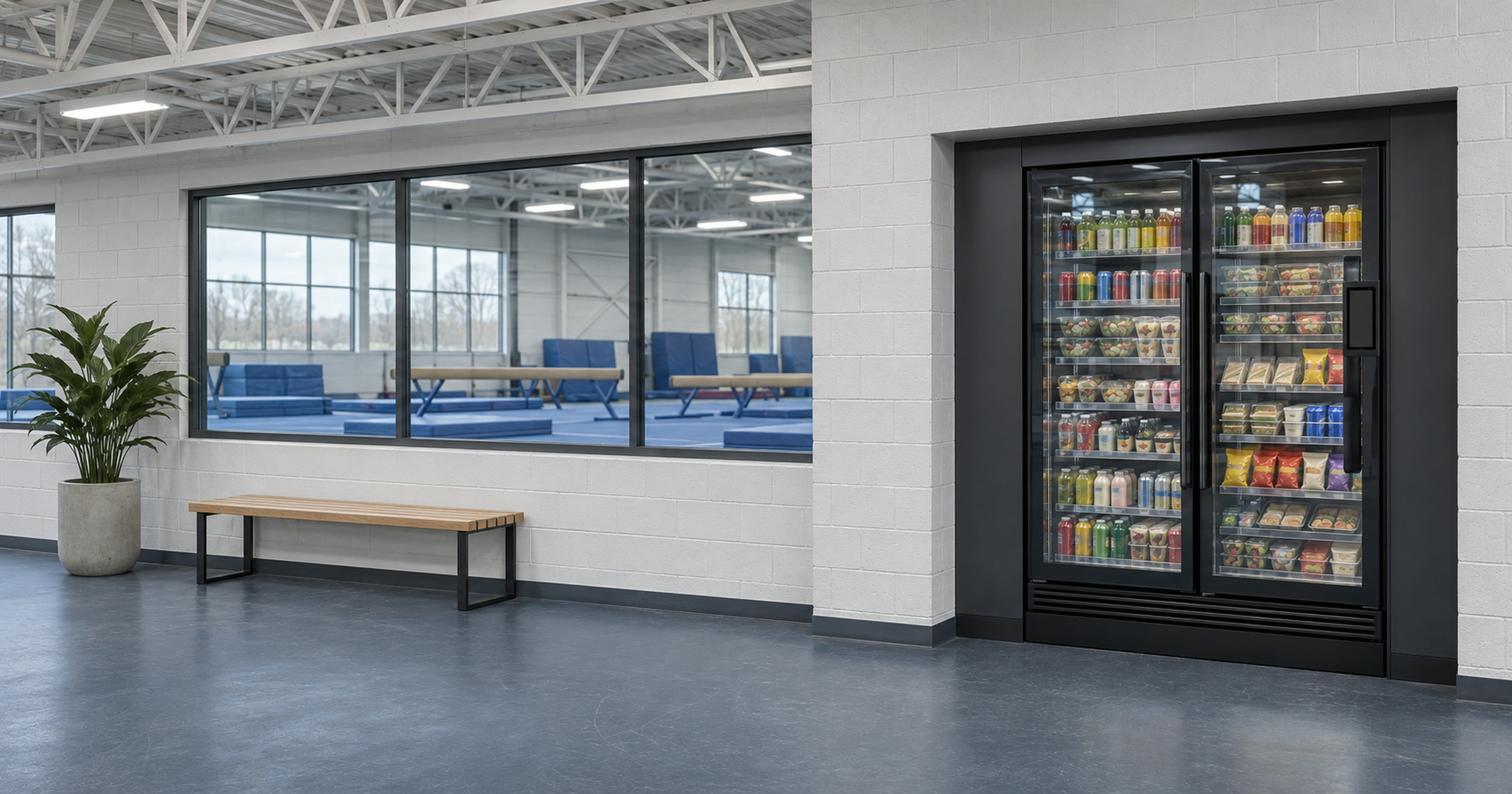
The better location may be a shared staff room, a building-level employee lounge or another approved common area. The point is not to put equipment in the busiest-looking corner. The point is to find a place employees already use where routine replenishment will not interfere with clinical work.
If no shared area exists, a portfolio-wide idea can collapse into several small tenant requests. That changes the economics and the operating burden. It may also mean the right answer is no placement at all.
The vending plan needs an ownership boundary
Shared amenities fail when responsibility is fuzzy.
A property owner may control the common area, while individual practices control access inside their suites. A managed vending program needs one clear operating boundary. Who approves the location? Who communicates access changes? Where can a service visit occur without entering treatment space?
Those questions belong in the property review, not after installation. The vending provider should own stocking and routine maintenance. The building team should not become the daily snack department, and a clinic manager should not inherit payment questions for an amenity outside the practice.
Revvolto provides modern cashless smart fridges and vending for qualified locations. Our team handles stocking and routine maintenance, typically at no cost to the business. Qualification still depends on actual use, a suitable location and reliable service access. It is not a blanket promise for every medical property.
Measure shared demand before choosing a machine
The source material identifies two buildings and a mix of specialty practices. It does not report employee counts, common-area traffic or food-service gaps. Those facts have to come from a site review.
A short observation period can answer more than a glossy amenity plan. Note when staff members use the proposed room. Check whether nearby food options work during short gaps between appointments. Confirm whether evening activity creates a different pattern from the middle of the day.
Then separate recurring demand from occasional convenience. A cooler stocked for a consistent employee audience is a different proposition from a machine that depends on scattered visitor purchases. The product mix, service frequency and placement all change with that distinction.
The review also needs a conservative answer to scale. One qualified common-area placement can be tested before anyone assumes both buildings need matching equipment. If the first location does not produce reliable use, duplicating it will not improve the premise.
Keep replenishment outside clinical operations
Medical offices contain spaces where outside service activity does not belong. A common-area unit only works when the refill route respects that boundary.
The service plan needs an approved entrance and a place to move stock without blocking normal circulation. It also needs dependable access during an agreed window. If a driver must wait for a practice employee or cross a treatment area, the location is creating work instead of removing it.
Clearance matters too. The unit must open safely and remain usable without narrowing a doorway. The site review should account for furniture movement and cleaning routines, not just the empty floor plan.
Cashless payment removes coin handling, but it does not remove support questions. Employees need an obvious way to report a transaction issue. The property team needs one contact for service changes. Those roles can stay simple when they are assigned before launch.
Use the sale as a review point, not a sales shortcut
An ownership change is useful because it creates a natural audit of shared operations. It is not proof of a vending opportunity.
For the named acquisition, the public facts are limited. Two West Lake Hills buildings changed hands with multiple specialty practices in place. The sources do not describe staff amenities, staffing patterns or a proposed vending location. Any recommendation beyond that is Revvolto analysis for similar healthcare properties.
The practical recommendation is narrow: evaluate a common staff room across the two buildings before selecting a machine. Verify recurring use, keep replenishment outside clinical suites and assign the operating boundary to the property level. If those conditions hold, a managed cooler may give employees convenient food access without adding a new tenant duty.
If those conditions do not hold, skip the machine. A clean no is better than forcing equipment into a building because the tenant roster looks impressive.
Healthcare property owners reviewing an acquisition can see how Revvolto’s managed program works or request a site review.