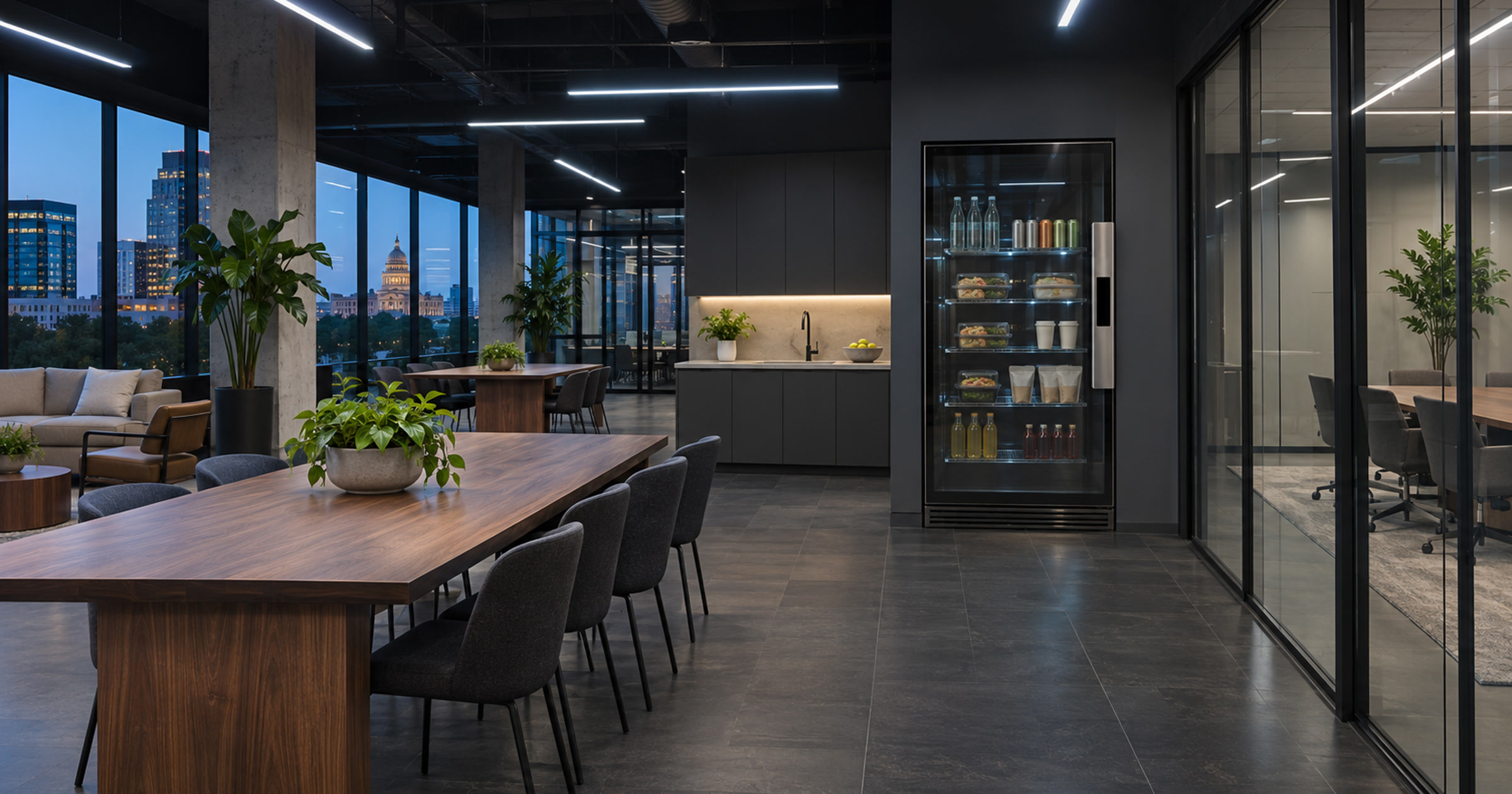
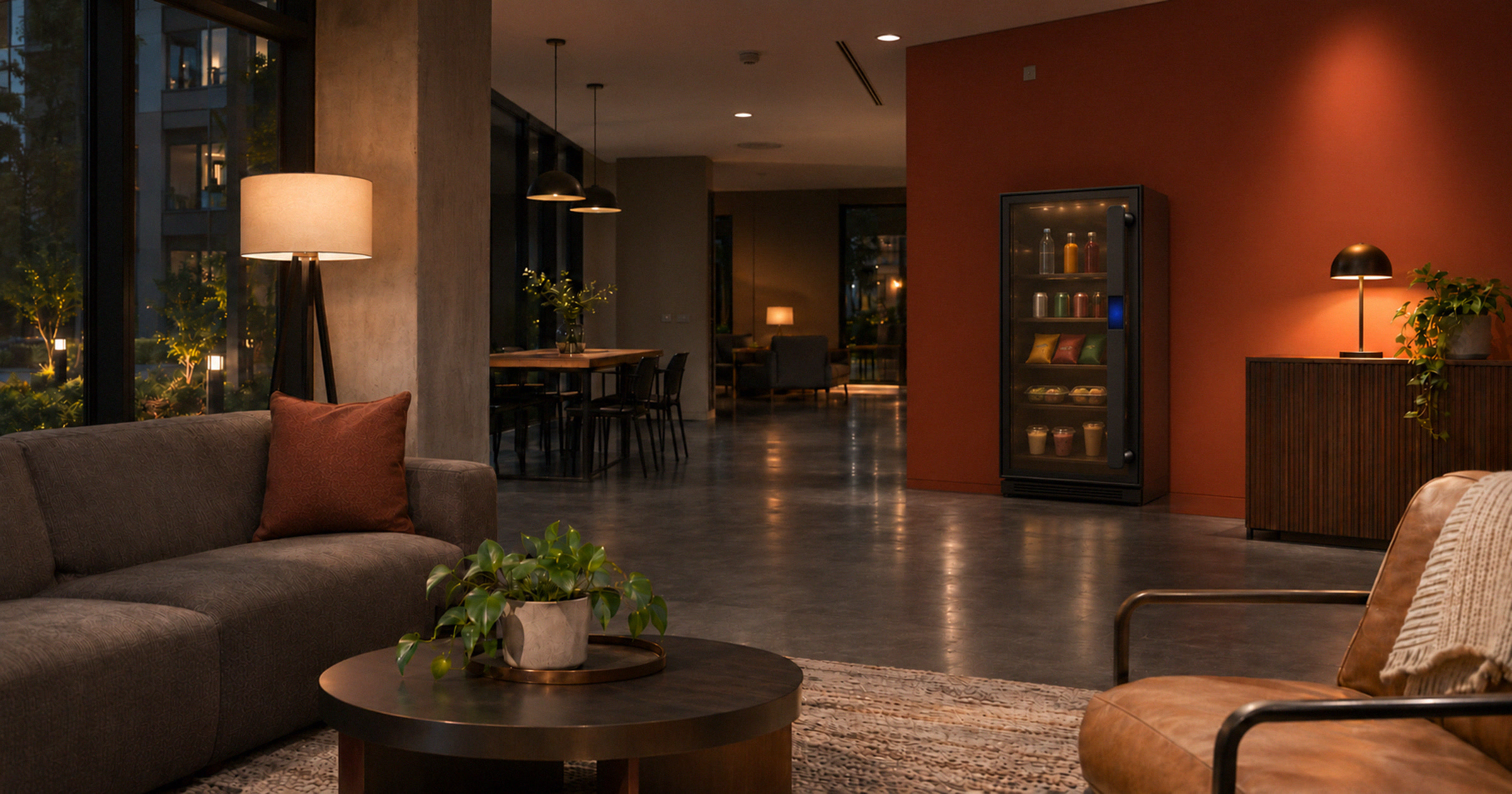
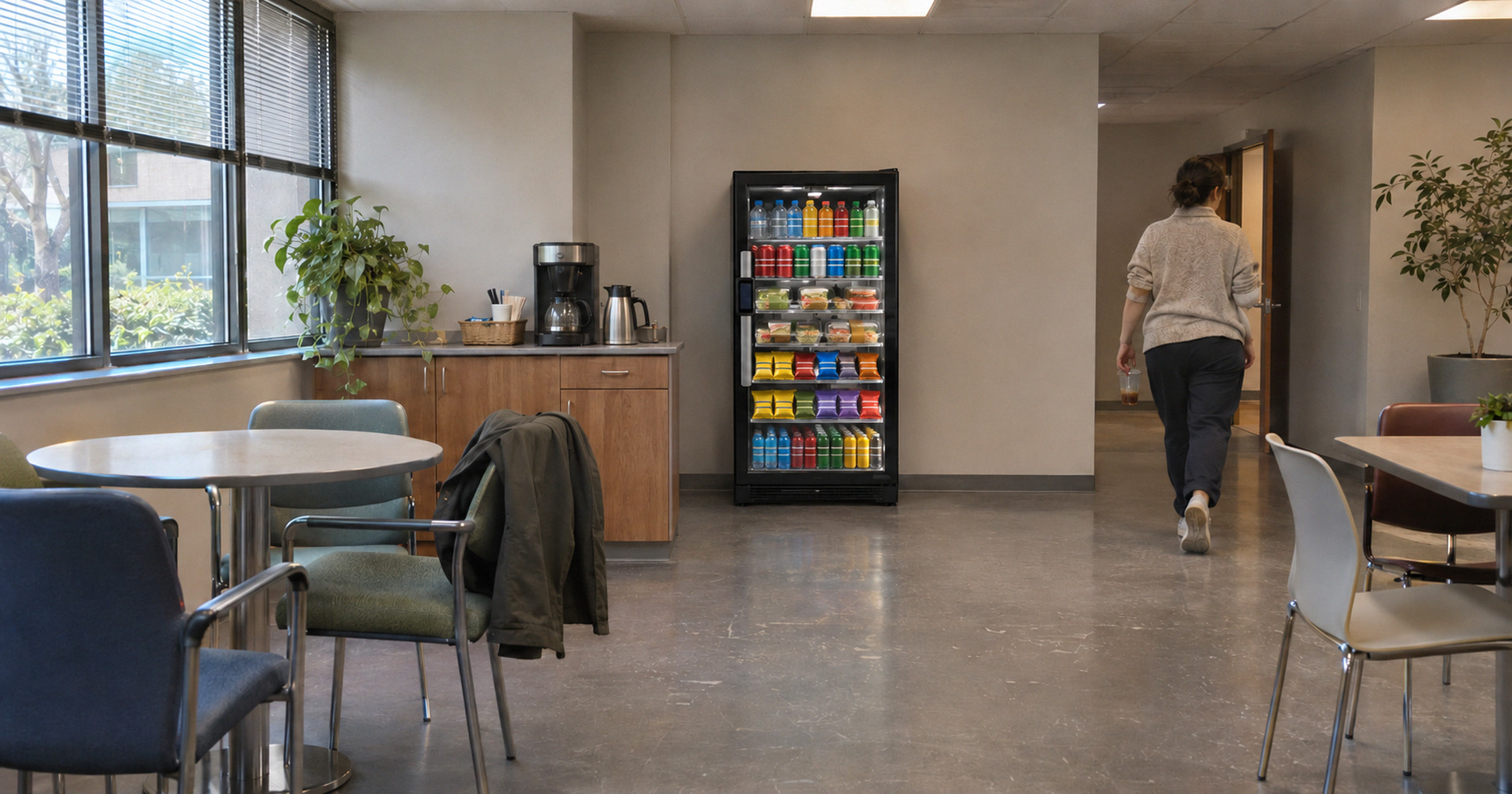
A new medical office launch creates a short window when room assignments, staff traffic, and service access are still flexible.
That window is open now in South Austin. Community Impact reported that a new CareNow Urgent Care location near Southpark Meadows is listed to open November 9 at 200 W. Slaughter Lane. Revvolto has no stated affiliation with the clinic. The announcement is simply a useful reminder for any medical operator planning a new site: employee refreshments are easier to solve before opening day than after every room has a job.
Start with the staff area, not the lobby
A walk-in clinic is not a convenience store, and the patient waiting room is rarely the first place to solve employee refreshments.
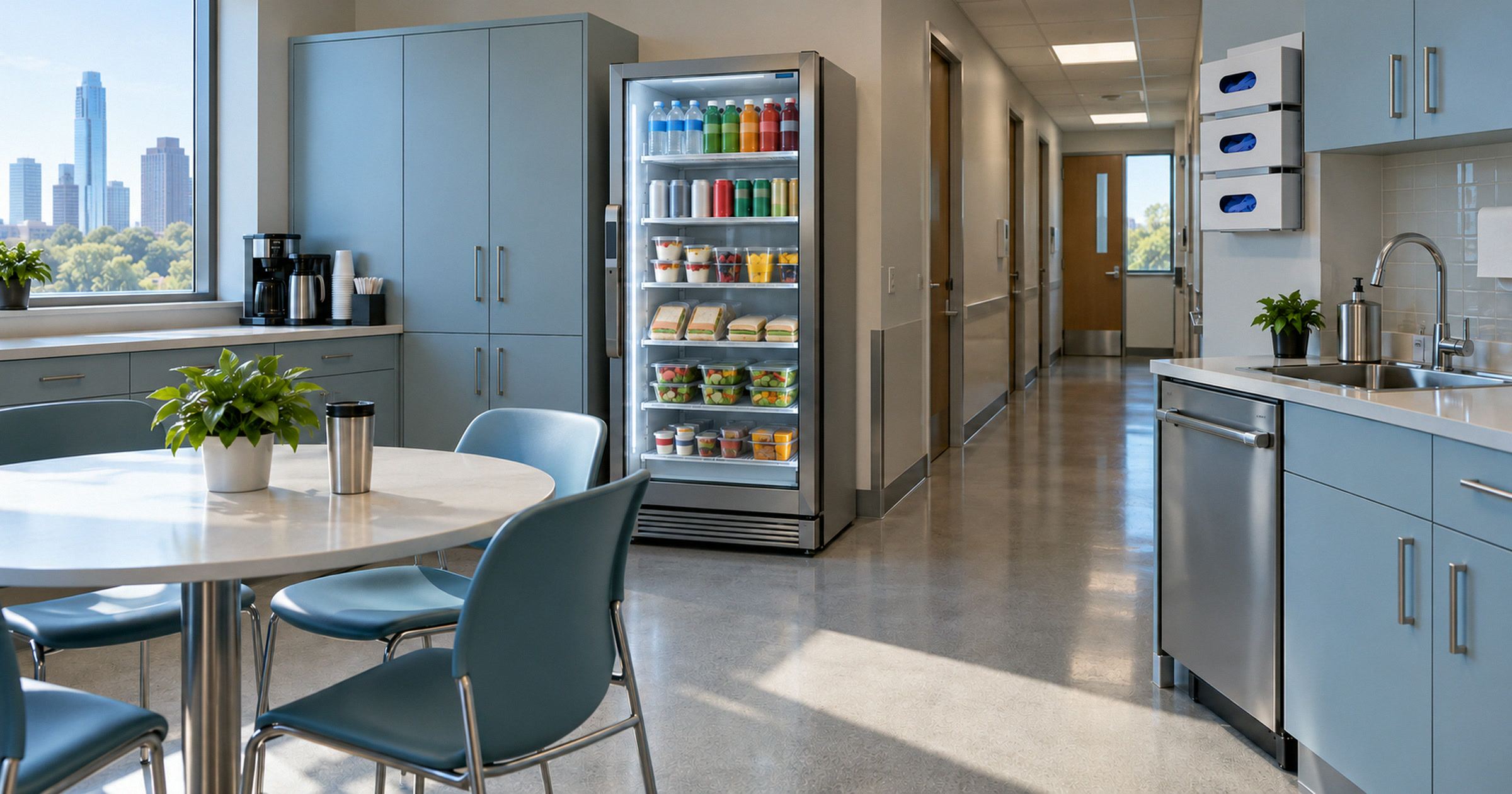
Start behind the public-facing area. Look at the employee lounge, a back-office alcove, or another staff-only space where a modern smart fridge can sit without interfering with clinical work. The goal is straightforward: give the team a nearby grab-and-go option while keeping reception out of snack questions, payment support, and restocking.
This boundary matters. A staff amenity belongs in a clean employee area, away from treatment rooms and protected clinical areas. If the only available spot creates those conflicts, the site is not ready for a unit.
Test the service route before the furniture is fixed
The right room still fails if a service cart cannot reach it cleanly.
Walk the route from the building entrance to the proposed placement. Check door widths, turns, and locked access points. Then check floor transitions and the space required to restock without blocking staff movement. Confirm where deliveries can happen and who can grant access if the clinic is busy.
Do this while the layout can still change. Moving a table during planning is easy. Reworking a finished employee lounge because the cooler door cannot open fully is annoying and avoidable.
Power and connectivity belong in the same review. A modern cashless unit needs a suitable electrical location and reliable payment connectivity. Those details are boring, which is exactly why they are worth checking before launch week.
Qualify the site before promising the amenity
Not every clinic has enough staff volume, operating hours, or purchasing demand to support a fully managed setup. A pre-opening conversation can establish expected team size, daily coverage, and access hours. A site walk confirms the available footprint and practical restocking route.
That is also the time to decide which format fits. A refrigerated smart cooler can hold drinks and grab-and-go items. A smaller vending setup may fit a tighter staff room. The selection should follow the site, not a generic equipment wish list.
Product mix comes later. First prove that the location can support consistent use and clean service.
Plan for an ordinary Tuesday
Opening-week traffic is a bad planning benchmark. The first few days bring contractors, trainers, and extra managers. Curious visitors add to the temporary crowd, making a small employee area look busier than it will be a month later.
Build the estimate around a normal operating day instead. Count the people who will use the building regularly, note when shifts overlap, and identify the periods when leaving the property is least practical. A morning-heavy practice may behave differently from a location that stays active into the evening.
The answer does not have to be perfect. It has to be honest enough to determine whether the expected use can support a managed unit. If the numbers are thin, say so before equipment is promised. A smaller option or no placement is better than an amenity that cannot be maintained properly.
This is also where nearby retail matters. A clinic beside several quick-service restaurants creates a different buying pattern from one surrounded by offices that close early. The building does not operate in a vacuum, and the vending plan should not pretend it does.
Give the first month an owner
The launch plan needs one clinic contact and one operator contact. That does not make the clinic manager responsible for the machine. It gives both sides a clean route for access changes, unusual building hours, or a service visit that conflicts with scheduled work.
Set the reporting method before the first purchase. Staff should know where an equipment or payment question goes without routing it through reception. The operator should know who can open a controlled door when a refill visit falls outside the usual handoff.
Review the setup after the first few weeks. The useful questions are plain: Are people using it? Does the mix match the workday? Can restocking happen without disrupting the room? If one answer is no, adjust the plan rather than letting a preventable problem become normal.
Keep clinic staff out of vending operations
The best outcome is not merely a stocked machine on opening day. It is a clear operating handoff after the novelty wears off.
Revvolto owns restocking, payment technology, and maintenance for qualified Austin-area locations. The clinic team gets a self-serve food and drink option without inheriting pantry inventory or becoming the support desk. Placement is typically available at no cost to a qualified location, subject to site review.
A clinic opening already has enough moving parts. Food access earns its place when it is planned early, located away from patient care, and run by the operator instead of clinic staff.
Planning an Austin clinic, medical office, or staff facility? Tell Revvolto about the location before the room plan is locked.
*Source: Community Impact report published October 20, 2026. The named business is a news reference only and is not presented as a Revvolto customer or partner.*