
Veterinary hospitals run on a different rhythm from ordinary retail or office buildings. The team may move from exam rooms to treatment areas to kennel support and back again before anyone gets a clean pause.
That is exactly why smart vending for veterinary hospitals should start with the staff breakroom, not the lobby. The better question is not where a machine looks nice. It is where your team can get a drink, pay quickly, and get back to work without bringing human food into the wrong part of the building.
For emergency vet clinics and specialty hospitals, the placement decision matters as much as the equipment. A modern smart cooler or smart vending machine works best when it supports the staff route without creating clutter, noise, or extra work for managers.
Veterinary staff food access has a placement problem
A veterinary hospital is not one open room with a snack corner. It is a working clinical environment with treatment spaces, storage zones, and public-facing rooms. Food access has to respect those boundaries.
That is not just a preference. OSHA’s Bloodborne Pathogens Standard says eating and drinking are prohibited in work areas where employees can reasonably expect exposure to blood or other potentially infectious materials. OSHA’s sanitation rules also restrict consuming food or beverages in areas exposed to toxic materials. In plain English: lunch belongs away from clinical hazards.
That creates a practical challenge. If the only food option is outside the building, the break becomes longer than planned. If the team keeps personal snacks wherever space appears, the building starts teaching bad habits. Neither one helps a manager trying to keep a clean, calm staff flow.
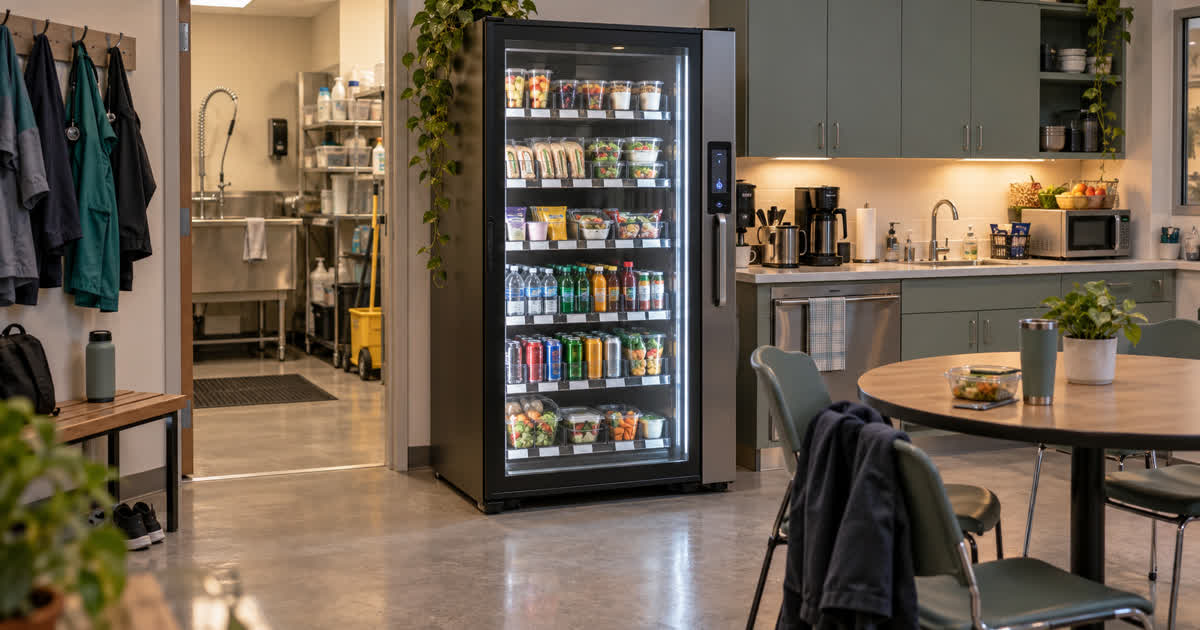
A smart vending setup gives the team a designated place to grab food and drinks. It belongs in a true staff breakroom or back-of-house pause area. The machine should sit close enough to the route people already use, but separate from treatment and storage zones that should stay food-free.
The point is simple: do not make the vending machine fight the floor plan.
The best veterinary vending setup supports irregular shifts
Emergency and specialty veterinary teams do not always eat on a tidy lunch schedule. After-hours coverage and handoff periods can turn food access into a scramble.
That does not mean every veterinary hospital needs a giant market. The better starting point is the break pattern. Where do technicians actually pause? Where does the overnight team sit down for ten minutes? Where can a manager allow food without pulling it into clinical work areas?
A smart cooler can fit when the building has a compact staff lounge. A dual-door smart vending unit can make sense when the team is larger and product variety matters. A small micro market setup can work when there is a secure employee-only room with enough traffic to keep items moving.
The useful vending plan starts with real movement, not wishful thinking. If your staff breakroom is on the opposite side of the building from the overnight route, people will work around it. If the unit blocks a supply path, it becomes one more object everyone resents. If it sits where employees already pass on the way to a true break, it has a fighting chance.
That is where Revvolto fits. We look at the location, the audience, and the practical service path before recommending a machine format.
Choose products for the workday, not a generic snack wall
Veterinary staff vending should not feel like a random shelf of candy and soda. The product mix has to match the working day.
For some teams, that means cold drinks and quick meals that work during short breaks. For others, it means simple snack options for overnight coverage or training days. The right mix depends on who uses the room, how often the unit is serviced, and whether the location can support refrigerated options.
This is where smart vending beats the old honor-box mindset. Cashless payment keeps the transaction quick. Inventory reporting helps the operator see what is moving. Restocking stays with the vending partner instead of landing on the practice manager’s desk.
There is a limit, though. A vending program should not make health claims about the team, promise better retention, or pretend food access solves staffing pressure by itself. That is lazy marketing dressed as wellness.
The stronger claim is more practical: veterinary teams do better with a designated, reliable place to get food and drinks during the workday. The machine cannot run the hospital. It can remove one small source of friction when it is placed and serviced correctly.
Service access matters in veterinary buildings
Veterinary hospitals are busy behind the scenes. Laundry carts move. Deliveries arrive. Staff rooms collect backpacks, jackets, and supplies. A vending machine that cannot be serviced cleanly becomes a problem before it becomes an amenity.
Before adding smart vending, check the path a restock visit would use. The machine should be reachable without cutting through sensitive clinical areas. It should have room for the door swing, regular cleaning, and product loading. It also should not crowd the staff table or create a pinch point near lockers.
AAHA’s veterinary hospital design materials show how much attention good practices give to internal workflow and staff communication areas. Food access deserves the same kind of planning. It is not decorative. It is part of how the team moves through the building.
For qualified locations, Revvolto handles the vending operation after setup. That includes stocking, payment technology, and routine service. That is the part managers usually care about most. A smart vending setup should reduce the snack-and-drink workload, not create another checklist for the person already juggling schedules and supplies.
This is also why the cheapest available machine is not always the best fit. The right answer may be a smaller smart fridge in a cleaner path. It may be a larger smart vending unit in a stronger staff area. The site should lead the choice.
A better breakroom starts with the route
Veterinary hospital vending works when it respects the building. Keep human food in the right staff area. Place the machine where people already pause. Make sure service access is clean. Pick a product mix that matches the shift pattern.
That is not fancy. It is just better operations.
If you are planning food access for a veterinary hospital or emergency clinic, start with the staff route before you pick the machine. We can help you decide whether a smart cooler, smart fridge, or smart vending setup fits the room and the team.
Tell us about the location at revvolto.com/contact-us.



