People used to treat vending as a last resort.
That is changing. Not because every machine suddenly became futuristic, and not because people woke up craving another app. The shift is simpler: people expect useful things to be available when they need them, without waiting for a counter, a cashier, or a staff member who is already doing three other jobs.
That is the heart of unattended retail.
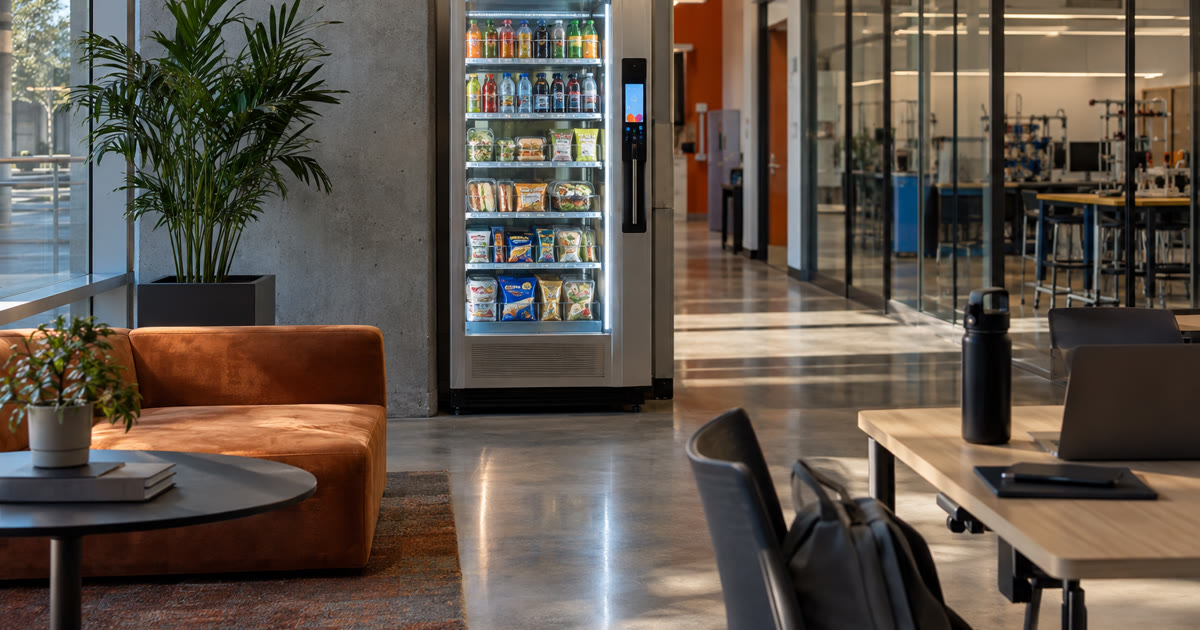
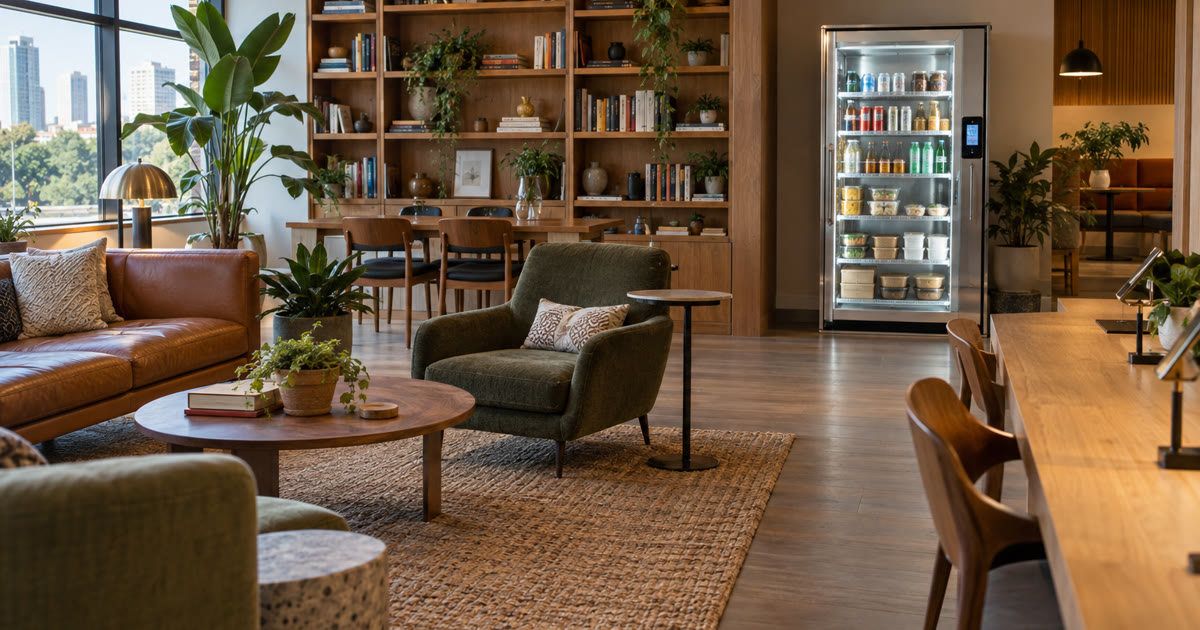
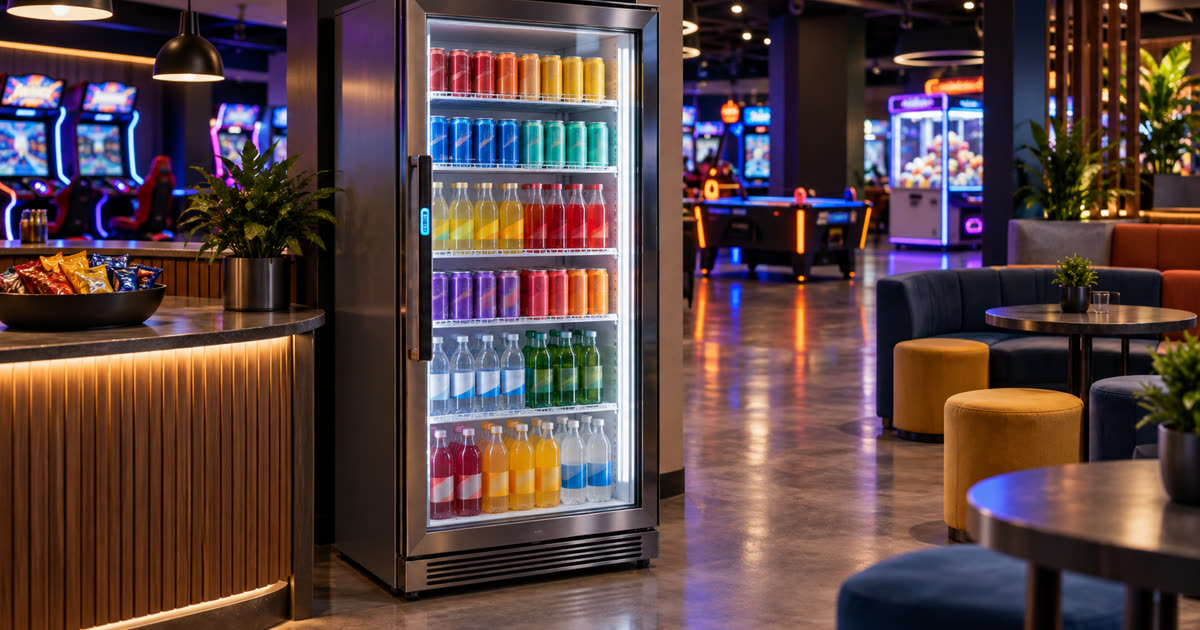
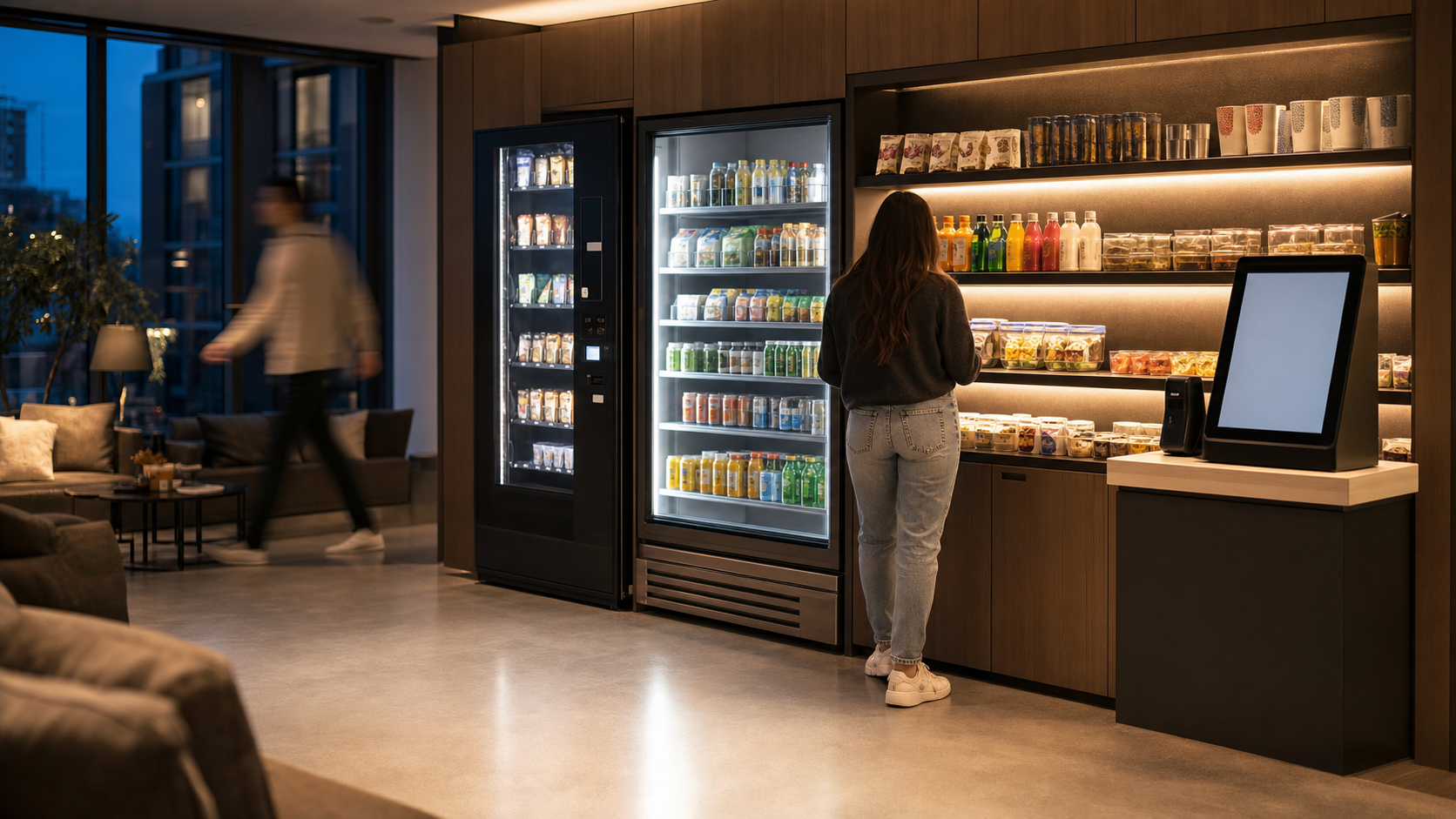
Unattended retail covers self-service formats like smart vending machines, smart fridges, micro markets, grab-and-go kiosks, and other retail setups where a person can choose, pay, and leave without a staffed checkout. Sometimes it lives in an office. Sometimes in an apartment lobby, hotel, gym, university building, clinic staff area, coworking space, dealership, warehouse, transit lounge, or mixed-use property.
The public-facing idea is easy to understand: convenience moved closer to where life already happens.
The business question is harder: who makes that convenience reliable after the equipment is installed?
Self-serve convenience is becoming normal because time got expensive
People do not always want a full shopping trip.
Sometimes they want a cold drink between meetings. A snack after the gym. A quick lunch during a short break. A bottle of water before heading upstairs. A simple option after the nearby cafe closes. These are not dramatic moments, which is exactly why they matter. Everyday convenience lives in small decisions.
Unattended retail works when it removes friction from those moments.
That does not mean every building needs a market wall. It does not mean every vending machine needs a giant touchscreen. It means the format should match the place. A hotel lobby may need late-night grab-and-go. A gym may need cold drinks near the recovery path. A clinic staff lounge may need quick options away from patient flow. An apartment building may need something useful near the mailroom or amenity lounge.
The trend is not “machines replacing people.” That line is lazy and usually wrong.
The better read is this: self-service works best where the alternative is no service at all, inconvenient service, or staff being dragged into work that does not belong to them.
Payment has to feel invisible, but support cannot be invisible
Self-service only feels easy when payment works.
A customer should not need instructions, a lecture, or a treasure hunt to buy a drink. Tap, card, mobile wallet, app checkout, or account-based payment can all work depending on the format. But the smoother the front-end experience looks, the more important the back-end ownership becomes.
If a payment fails, a product does not vend, or a charge needs review, someone has to own that support path. That someone should not automatically be the receptionist, leasing office, gym trainer, hotel front desk, or clinic manager just because they are standing nearby.
PCI DSS was developed to support technical and operational requirements for payment account data. That supports one narrow point: when unattended retail involves cashless payment, payment roles and data responsibilities need to be clear. It does not prove PCI compliance for any Revvolto setup, vending machine, smart fridge, payment terminal, processor, app checkout, refund workflow, future location, user transaction, host procedure, or unattended retail format. It also does not make “we accept cards” a complete payment plan. Source: PCI Security Standards Council
A useful unattended retail setup should answer practical support questions before launch:
- What happens if checkout fails?
- Who handles refund requests?
- What should the host team never ask a customer to share?
- How are recurring payment issues reviewed?
- Is support clear without cluttering the space with ugly signs?
Convenience is not just the purchase. It is what happens when the purchase does not go perfectly.
Data can improve operations, but it is not magic
The industry loves to talk about data like it is a wizard living inside the machine.
It is not.
Smart vending and unattended retail systems can report useful operating information: what sold, what did not, when products move, when a machine may need attention, and which locations need different assortments. That can help an operator make better decisions over time.
But the machine does not “know” what people want in some mystical sense. It records behavior. Operators interpret it. Good operators adjust product mix, restocking cadence, service response, and placement based on what the data is actually saying.
The FTC’s *Start with Security* guide focuses on practical data-security habits for businesses, including controlling access, protecting sensitive information, and building security into operations. That supports one narrow point: businesses using connected systems should think carefully about data access and security practices. It does not prove any Revvolto system, vending machine, smart fridge, checkout flow, dashboard, integration, location, operator process, or future installation is secure, compliant, breach-proof, or approved by the FTC. It also does not replace technical security review. Source: FTC
For buyers, the useful questions are simple:
- What data does the system actually collect?
- Who can access it?
- How does the operator use it?
- Does the host need a dashboard, or just a reliable operator?
- How does data improve restocking and product mix?
Data should make the amenity better. It should not become another screen nobody has time to check.
Fresh and refrigerated options raise the bar
Unattended retail gets more interesting when it moves beyond shelf-stable snacks.
Smart fridges and refrigerated vending can make grab-and-go food, cold drinks, and fresher options easier to offer in places that cannot support a staffed cafe. That is a big reason the category feels different from old-school vending.
But refrigerated convenience is not casual. It requires the right equipment, restocking discipline, product rotation, and service process.
FDA consumer food-safety guidance says refrigerators should be kept at 40°F or below and freezers at 0°F, with thermometers used to monitor temperatures. That supports one narrow point: refrigerated food and drink programs require temperature attention. It does not prove any Revvolto equipment, smart fridge, vending machine, product, route, installation, host site, food item, shelf life, operator process, or future unattended retail setup is FDA-approved, compliant, certified, safe, or risk-free. It also does not replace site-specific food-safety review. Source: FDA
For everyday users, this is invisible when done well. They just see something cold, stocked, and easy to buy.
For the host, the questions matter:
- Who manages refrigerated restocking?
- How often is the assortment reviewed?
- Who removes slow-moving products?
- What happens if equipment needs service?
- Does the setup fit the location’s traffic and operating rhythm?
The more useful the product mix becomes, the more serious the operator model has to be.
The real trend is convenience moving closer to people
The public does not need to know every term the industry uses.
Most people do not wake up thinking, “I hope I encounter an unattended retail solution today.” Please, nobody talks like that unless a trade-show badge is cutting off oxygen.
People just want the useful thing nearby.
That is why unattended retail keeps showing up in more places. It meets a simple expectation: if a building already has people passing through, pausing, working, waiting, exercising, studying, traveling, or living there, some of those people will need quick food and drink options at awkward times.
Revvolto helps qualified locations add modern, cashless smart vending, smart fridge, or compact market setups without making the host manage stocking, payment tech, maintenance, or product rotation.
For qualified placements, Revvolto typically installs and operates the setup at no cost to the host. Site fit still matters. The best setup depends on traffic, audience, product mix, payment support, restocking access, refrigeration needs, and whether the amenity solves a real convenience problem.
That is where unattended retail is going: not louder machines, not gimmicks, not “smart” slapped on everything like glitter.
Just better convenience, closer to where people already are.
Talk to Revvolto about smart vending or smart fridge options for your site