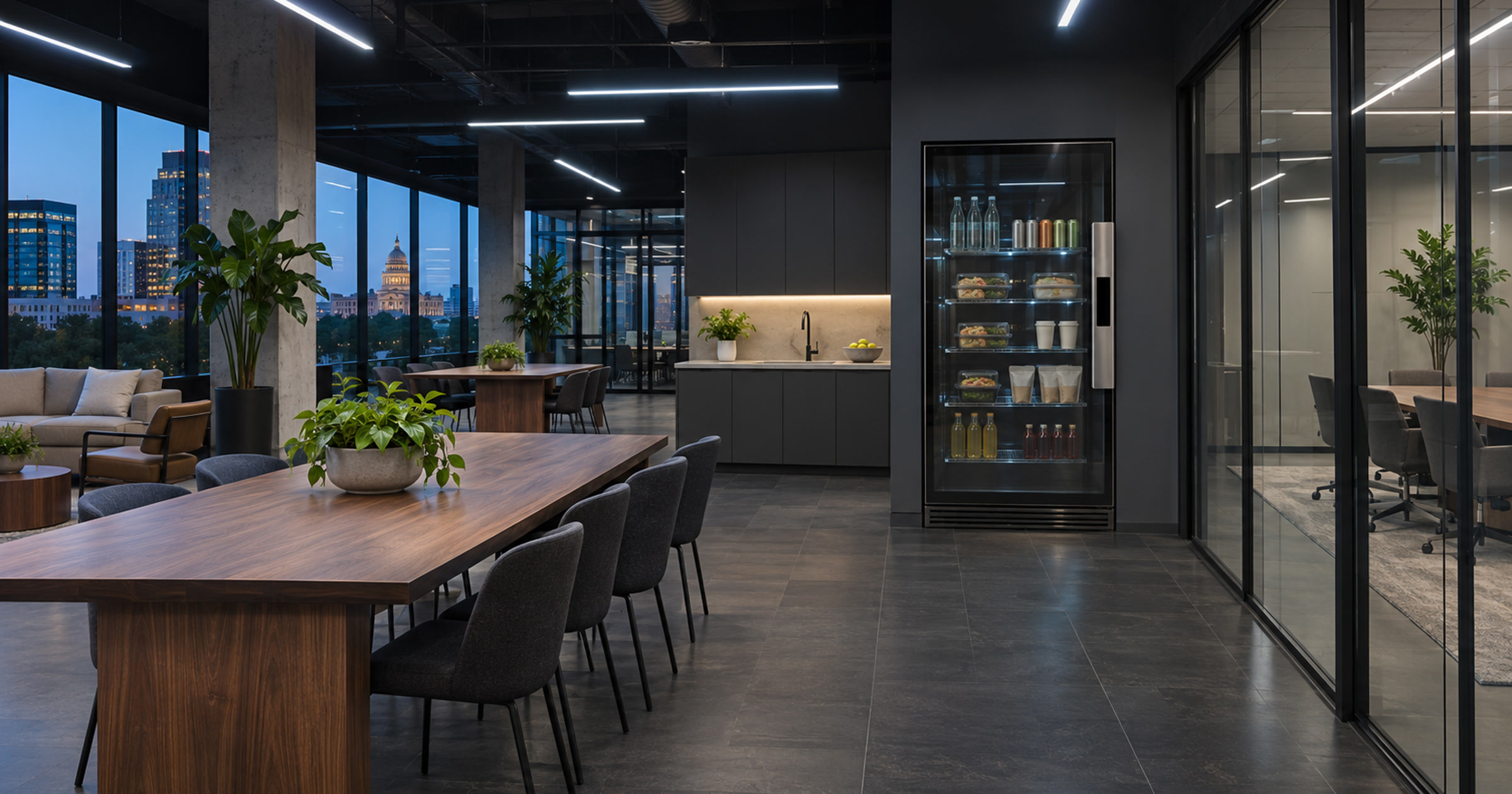
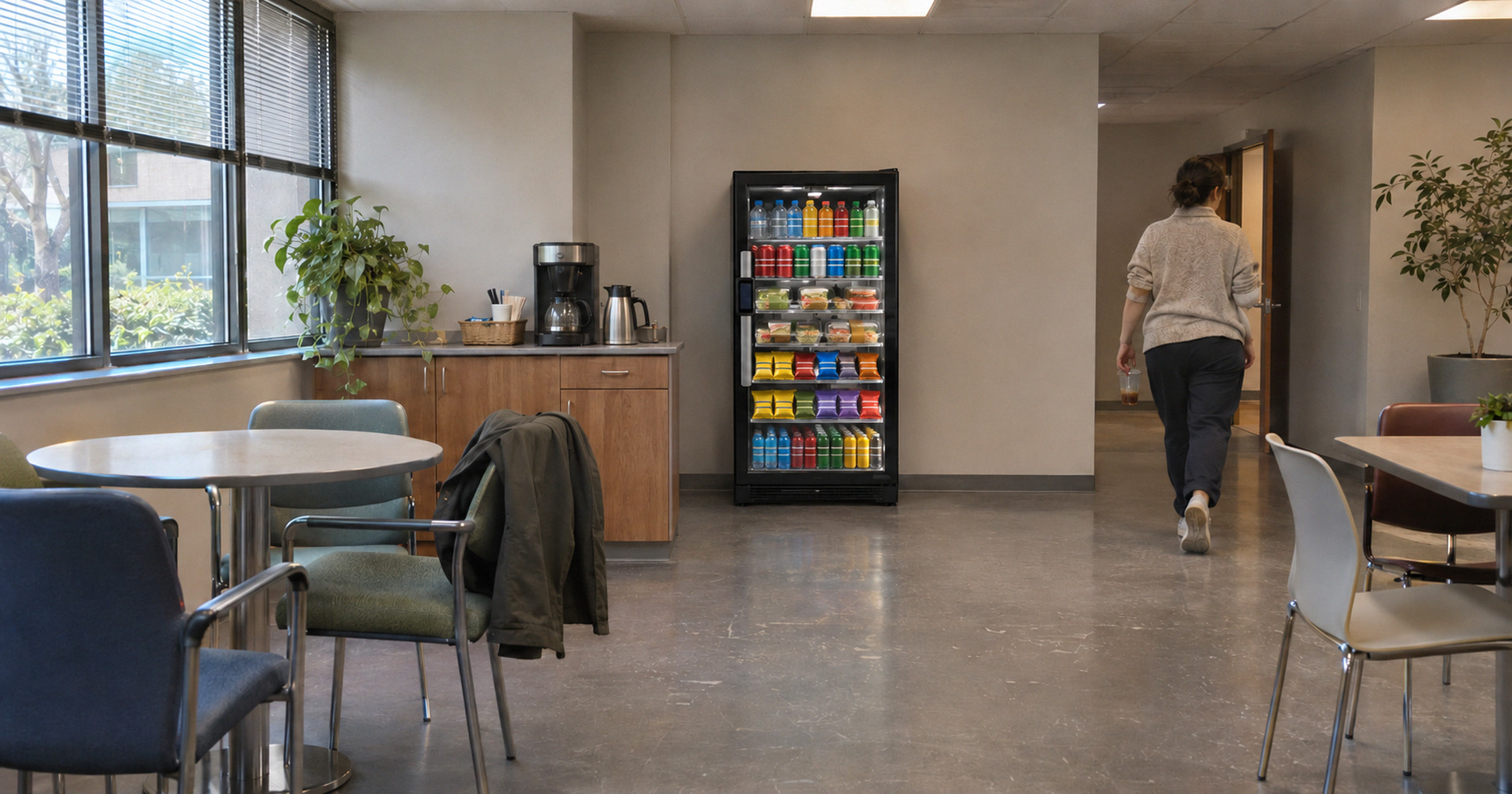
A breakroom vending setup in a hospital should solve a specific problem: reliable food and drink availability when nearby options are limited, without sending another task to clinical teams.
That sounds simple until replenishment enters the picture. A cooler can fit neatly in a breakroom and still be a bad operating choice if every refill requires a difficult handoff or an improvised escort through controlled space.
The right buyer question is not just, “Where will staff see it?” It is, “Can people use it and can the operator maintain it without interfering with hospital work?”
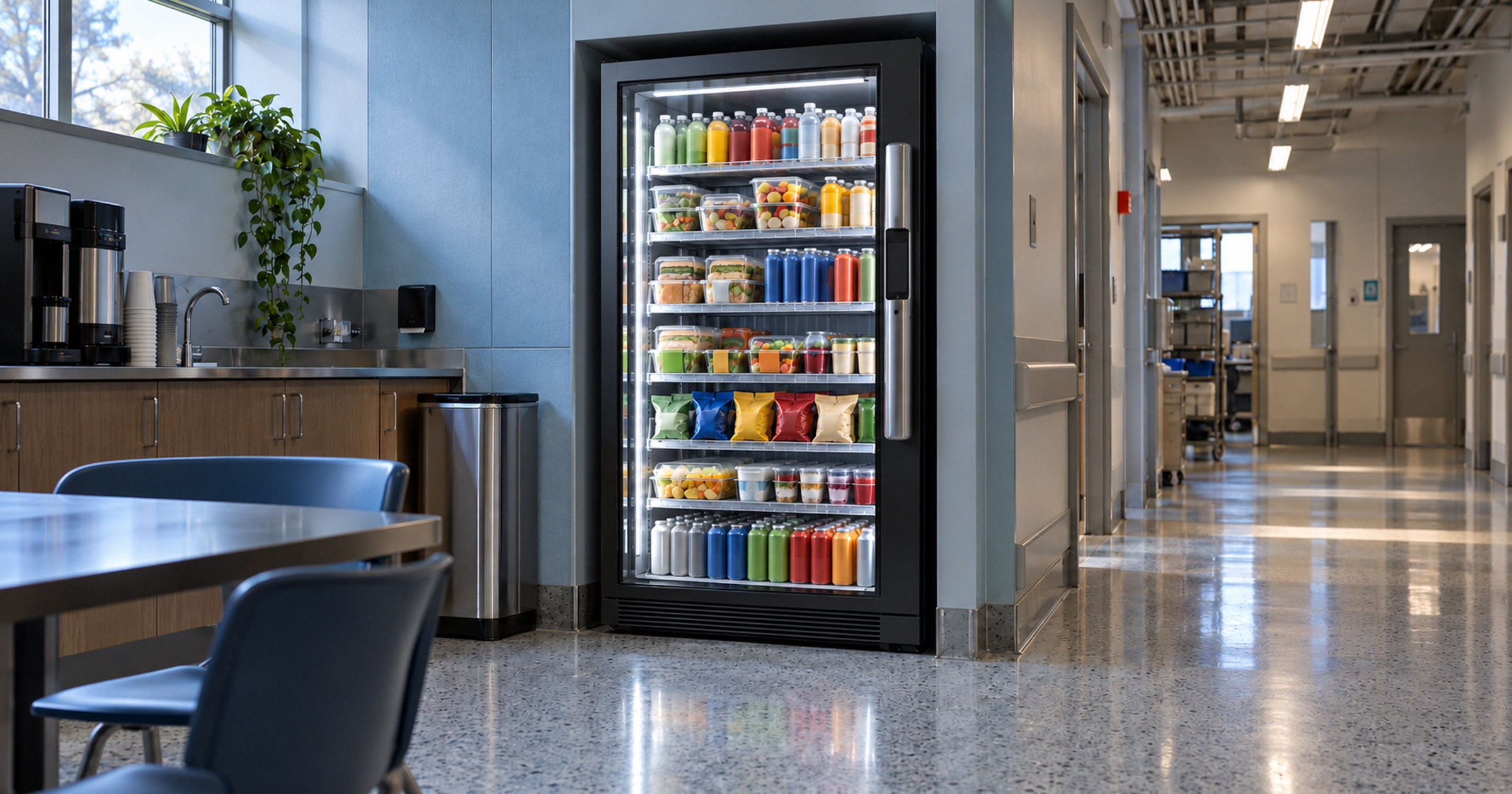
Start with a staff-only need
Hospitals contain public zones and clinical workspaces. They also have employee rooms and back-of-house corridors. A managed food option does not belong everywhere that has traffic.
Start with the staff audience. Look for a breakroom or employee commons where people already step away from work. The location should have recurring use across normal operating hours, not just a rush during one shift change.
Then define the gap. Is the issue after-hours access? Is the nearest staffed food option far from the department? Is the break short enough that leaving the building is unrealistic? A clear need makes equipment selection easier. A vague goal such as “add an amenity” usually produces a vague location.
Keep the claims narrow too. A refrigerated unit can provide convenient cashless purchasing. It does not improve care outcomes or clinical performance. Those promises do not belong in the decision.
Test the route before choosing equipment
A good staff location needs two workable routes.
The first is the everyday user route. People should be able to approach the unit and browse without narrowing the main corridor. Payment and departure should be equally clean. Door swing and standing room matter.
The second is the replenishment route. Trace the operator’s trip from the approved building entry to the proposed location. Check whether a cart can move through the route during an ordinary service window. Note every controlled entry and vertical transition. Give each required handoff a named owner.
The U.S. Access Board guide to accessible routes explains the federal framework for accessible circulation. For this buying decision, the lesson is straightforward: equipment should not consume the corridor people need.
Do the walk with the cooler door open in mind. A location can look clear while the machine is closed and become awkward during browsing or maintenance. Measure the real operating footprint, not just the cabinet.
Put service ownership in writing
The equipment should not turn a nurse station, reception desk, or facilities office into a vending support center.
Before installation, name the owner for each handoff. The property controls building access and internal policy. Revvolto handles stocking, routine maintenance, and equipment support for qualified locations. Payment questions need a clear channel that does not require hospital employees to diagnose a reader.
The PCI Security Standards Council merchant resources emphasize trusted partners, sound processes, and correctly implemented payment technology. A hospital buyer does not need to become the payment technician. The buyer does need to confirm who owns the terminal and who handles transaction questions.
A simple escalation path matters because the nearest employee is usually the person asked for help. If the answer to every issue is “ask whoever is in the room,” the operating model is unfinished.
Choose the format after the room test
The room should decide the format, not the other way around.
A glass-door refrigerated unit can make sense when the breakroom has enough depth for browsing and door clearance. A compact machine may fit a tighter employee room. A larger market setup asks more from the room and the operator path.
Product planning comes next. Start with the main buying moment and keep the first assortment disciplined. A staff area used across long operating hours may need a different mix from a smaller room used mostly during scheduled breaks.
Revvolto can adjust the stocked mix based on actual use. The property still sets its site rules. A hospital may have rules for food zones and waste handling. Vendor entry and equipment location also require review. Those rules come before a generic product wish list.
Run a normal-shift test
Do not judge the location during a quiet walkthrough alone. Watch it during an ordinary shift change or meal period.
Can someone stop at the machine without blocking the doorway? Can another person pass behind them? Can the door open fully? Can a service cart reach the unit without crossing a clinical work zone?
Then test the support handoff. If a payment question happens, does staff know where to direct it? If access procedures change, is there a person responsible for updating the operator? If a refill window is missed, can the visit be rescheduled without creating a scramble?
This test is intentionally boring. Boring is good. It exposes the recurring details that decide whether the setup stays useful after launch week.
What a qualified employee location looks like
The strongest location is not necessarily the busiest corridor. It is a staff-only area with recurring demand, enough room for normal use, and a repeatable service route.
It also has a clean ownership boundary. Hospital teams control building policy and entry. Revvolto manages the stocked cashless equipment. Employees use the amenity without inheriting inventory duty or first-line technical questions.
Some sites will not qualify. A room with limited use, difficult vendor access, or no reliable service window may be a poor fit. Saying no to a weak location is better than forcing equipment into a place that cannot support it.
For the right property, managed vending can extend convenient food availability without creating an internal snack program. See how Revvolto works or tell us about your employee breakroom so we can test the room and replenishment path.