A vending machine can be full, functional, and still useless if it lives in the wrong corner.
That is the part people underestimate. Placement is not decoration. Placement decides whether a smart vending machine, smart fridge, or compact market becomes a daily amenity or a lonely appliance quietly developing abandonment issues.
For Austin offices, apartments, coworking spaces, gyms, hotels, clinics, warehouses, and dealerships, the question is not simply “Where will the machine fit?” That is how you end up with a decent idea wedged beside a mop closet like it lost a bet.
The better question is: where will people naturally use it?
Smart amenities work when they sit inside the real rhythm of the building. They need visibility, access, enough pause time, clean traffic flow, reliable power, connectivity, service access, and a product mix that matches the people passing by. The machine is the visible part. The placement is the strategy hiding underneath.
Good placement starts with the path people already take
The best vending machine placement usually does not require a treasure map.
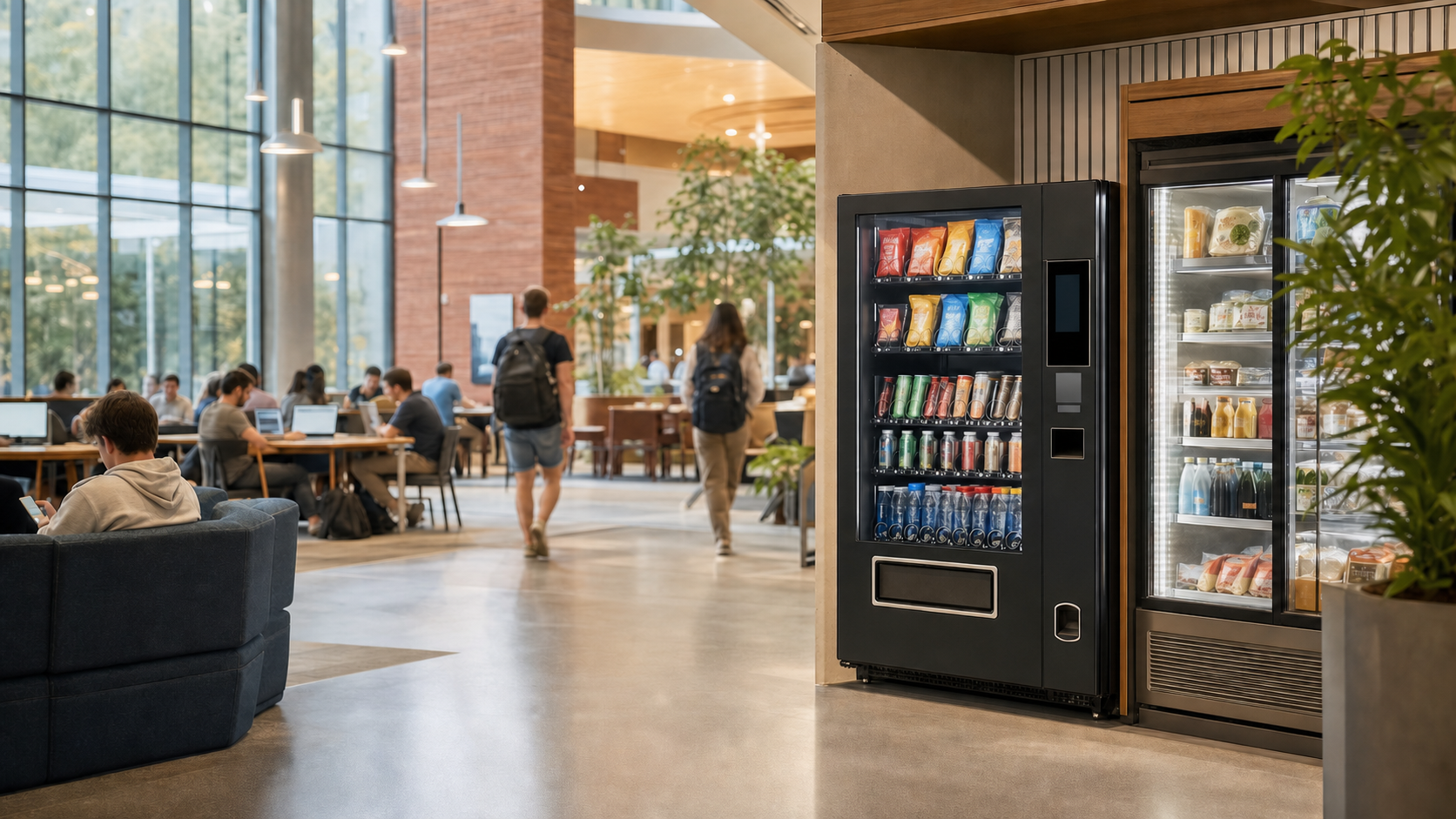
People use amenities when they are already nearby, already pausing, or already making a small decision: coffee or meeting, elevator or desk, gym class or recovery, package pickup or lobby exit, service advisor or waiting area. If the machine is placed along that natural path, it has a chance. If it is hidden in a dead zone, the product mix has to work twice as hard just to be noticed.
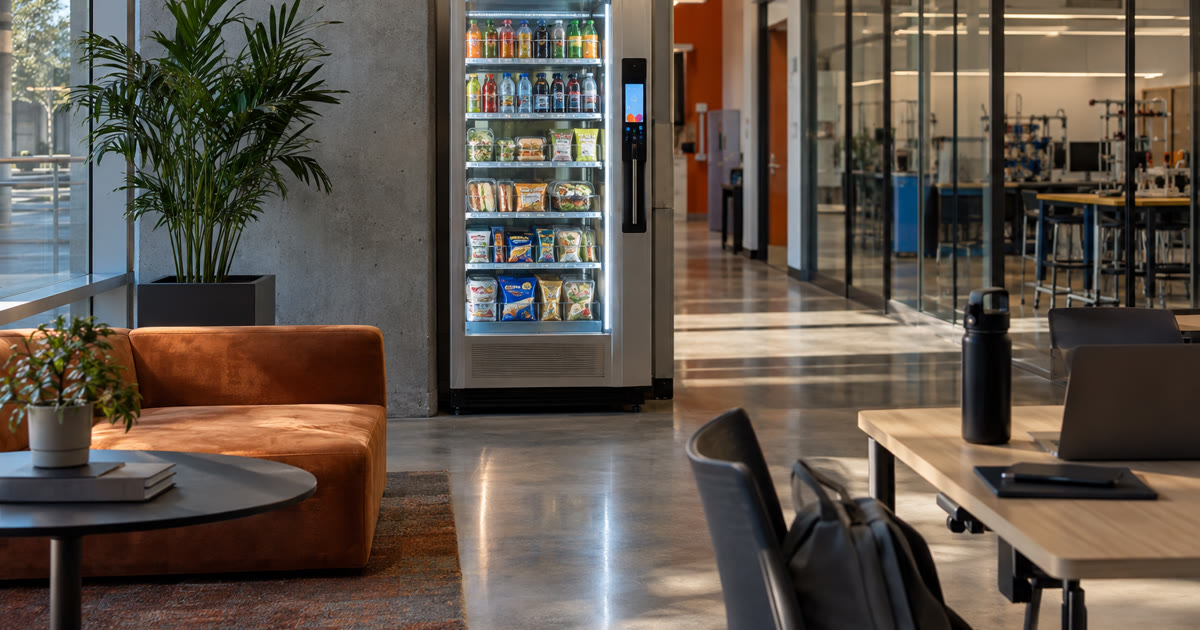
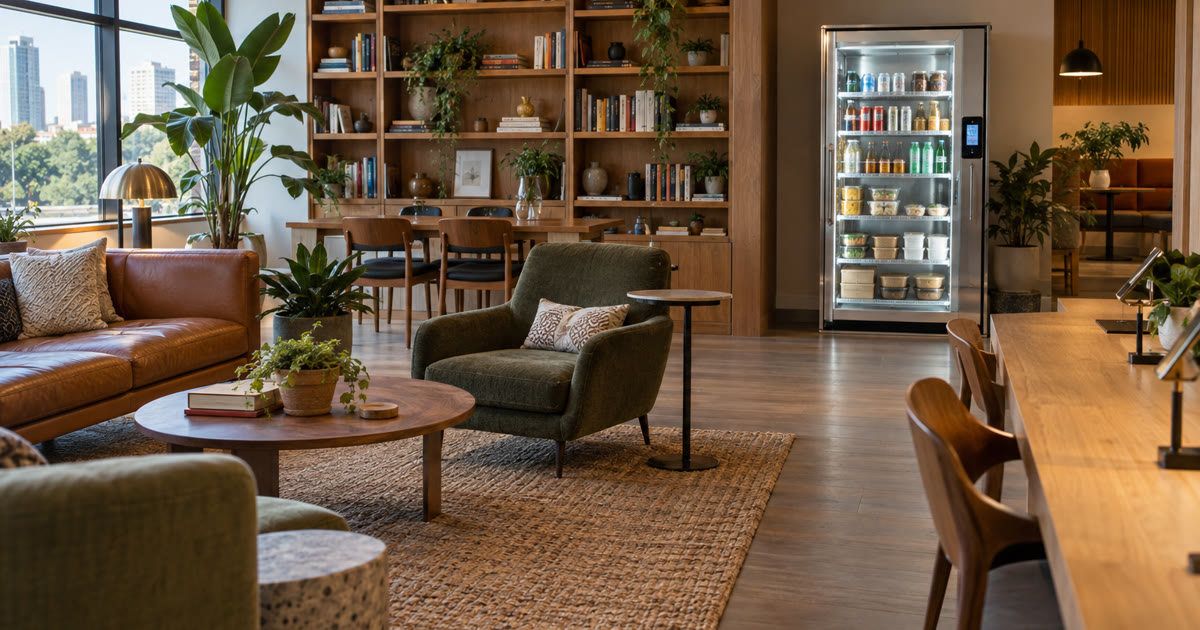
In an Austin office, that may mean a breakroom, lounge, or corridor near meeting rooms. In a coworking space, it may mean the path between phone booths, shared desks, and the kitchen. In an apartment community, it may mean near the mailroom, package area, lobby, or amenity lounge. In a gym, it may mean near recovery seating or the exit path. In a dealership, the service lounge matters more than the showroom corner nobody visits unless they are avoiding eye contact with a salesperson.
Good placement is not the most dramatic spot. It is the spot where convenience becomes obvious.
Ask these before choosing a location:
- Where do people already pause?
- Where do they pass during real use, not just during a tour?
- Can they see the machine without hunting for it?
- Does the location feel natural, or does it feel like leftover space?
- Would someone use it alone, quickly, without feeling awkward?
If the placement needs a sign, an announcement, and a motivational speech, the location may be doing too little work.
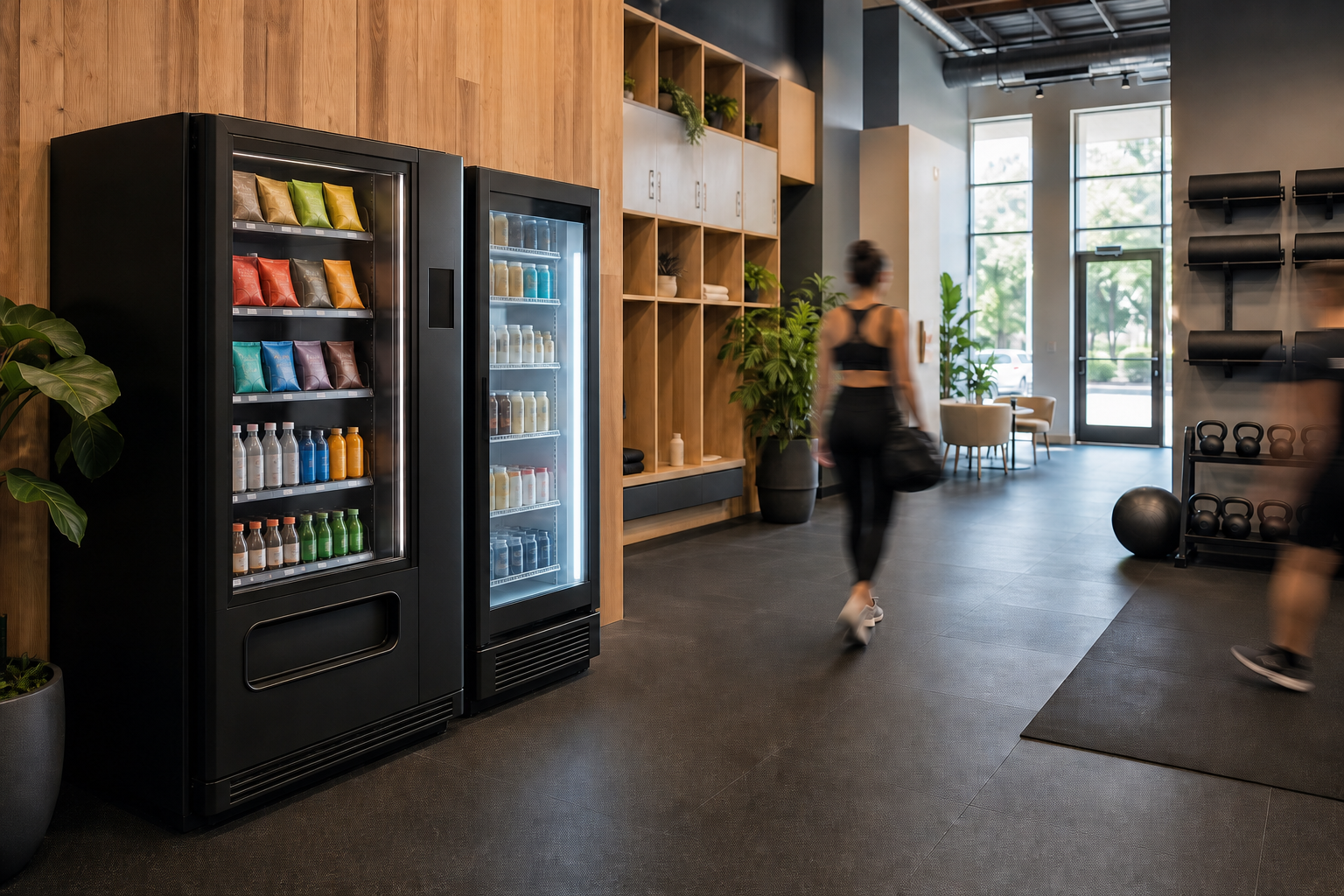
Access matters more than squeezing the machine into a gap
A vending machine is not a poster. It has depth, door swing, user space, service needs, power needs, and human beings standing in front of it trying to choose between caffeine and pretending they are fine.
That means placement needs more discipline than “there is an outlet over there.”
The U.S. Access Board’s ADA guide explains accessible-route concepts and notes that accessible routes must connect accessible elements and spaces. That supports one narrow planning point: vending placement should be reviewed so the amenity does not block circulation or create an avoidable access problem. It does not certify any office, apartment, coworking space, gym, hotel, clinic, dealership, warehouse, smart vending machine, smart fridge, compact market, route, path of travel, door clearance, Revvolto recommendation, Austin installation, future site, or host layout as ADA compliant. It also does not replace site-specific accessibility review. Before placement language puts on a hard hat and starts practicing law, keep it practical: do not shove the amenity where people need to move. Source: U.S. Access Board
The same thinking applies to service access. Operators need to restock, clean, troubleshoot, open doors, move carts, and handle maintenance without turning the break area into a three-act play. A unit that technically fits but cannot be serviced cleanly will eventually remind everyone that “technically” is where bad plans go to hide.
Good placement should leave room for:
- A person choosing products
- Someone passing nearby
- Door swing or service-panel access
- Restocking carts or inventory bins
- Cleaning and maintenance
- Safe access to power and connectivity
If the machine blocks the thing people need to walk through, it is not an amenity. It is furniture with snacks and an attitude.
Payment and support should be placed where confusion does not spread
Modern vending placement is also a support decision.
A cashless machine or smart fridge may have a card reader, tap-to-pay, app checkout, or a support path for failed vends and refund questions. That does not mean the host team should become the help desk. But placement can make that easier or harder.
If a machine sits beside the front desk, leasing office, reception counter, trainer station, service advisor desk, or clinic check-in window, users may assume the nearest employee owns every issue. That can be fine if the support process is clear. It can also quietly recruit your staff into payment support without asking permission.
The PCI Security Standards Council describes PCI DSS as a global standard with technical and operational requirements designed to protect payment account data. That supports one narrow buyer point: payment roles, processor responsibilities, and support ownership should be clear before a business places a cashless vending machine, smart vending setup, smart fridge, or compact market. It does not prove PCI compliance for any machine, payment terminal, payment processor, app checkout, software dashboard, operator, Austin installation, future site, Revvolto setup, user transaction, refund process, support workflow, host policy, or placement decision. It also does not guarantee payment security, eliminate fraud risk, certify a provider, or make “we take cards” a complete operational plan. Source: PCI Security Standards Council
That is why the support path should be decided before the machine goes live.
Ask:
- What does a user do if a product does not vend?
- Who handles refund questions?
- What should the host team never ask for?
- Is support information clear without adding ugly signage?
- Does the placement create confusion about who owns payment issues?
The machine should be easy to use. The support path should be even easier to understand.
Refrigerated setups need room, rhythm, and real equipment thinking
Smart fridges and refrigerated vending setups add another layer to placement.
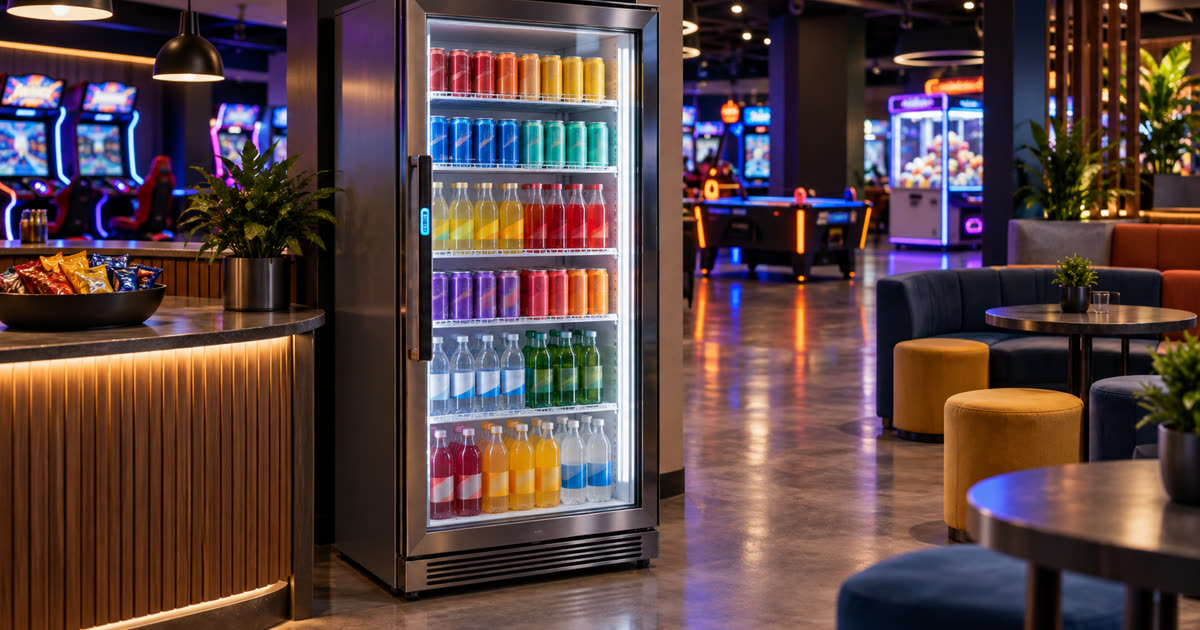
A snack vending machine can work in a lot of places. Refrigerated options ask more from the environment. They may need stronger visibility, stable power, ventilation, restocking access, and enough regular use to keep the product mix moving. If the setup includes meals, drinks, or grab-and-go items, the location has to support more than “there is space against that wall.”
ENERGY STAR maintains product information for commercial refrigerators and freezers, including commercial equipment categories and buying guidance. That supports one narrow planning point: refrigerated workplace amenities involve equipment and placement considerations before a business adds chilled food and drink access. It does not prove energy savings, utility savings, environmental benefit, ENERGY STAR certification, equipment eligibility, equipment performance, refrigeration performance, Revvolto equipment performance, any smart fridge installation, any vending machine installation, any Austin site, any future site, any operating result, or any specific cost outcome. It also does not replace a site-specific equipment review. Source: ENERGY STAR
This is where Revvolto’s site-fit approach matters. A smart fridge is not automatically better because it sounds smarter. A traditional vending machine is not automatically worse because it looks familiar. A compact market is not automatically premium because it takes up more space.
The right format depends on the site:
- How many people are there each day?
- Are they employees, residents, guests, members, patients, visitors, or shift workers?
- Do they need drinks, snacks, meals, or all three?
- Is the location visible without being in the way?
- Can the operator restock without disrupting the site?
- Does the product mix match the audience and usage rhythm?
If the building cannot support the format, the format will not rescue the building. That is not pessimism. That is placement doing its job.
Revvolto helps choose the spot before the machine becomes the problem
The best vending machine placement is not an afterthought at the end of the sale. It is one of the first decisions that decides whether the amenity earns its keep.
Revvolto helps qualified Austin-area businesses add modern, cashless smart vending or smart fridge options — and, where the site supports it, compact market setups — without turning the host into the operator.
For qualified placements, Revvolto typically installs and operates the setup at no cost to the host. Site fit still matters. Foot traffic, audience rhythm, product mix, placement, restocking access, payment support, refrigeration needs, and maintenance expectations all shape whether the amenity makes sense.
Good placement should make the amenity feel obvious:
- Easy to see
- Easy to approach
- Easy to use
- Easy to service
- Out of the way without being hidden
- Matched to the real audience on site
That is the difference between placing a machine and planning an amenity.
If your Austin workplace, property, gym, hotel, clinic, dealership, or facility is considering smart vending, a smart fridge, or a compact market setup, start with the building’s rhythm. Where do people already pause? Where do they need convenience? Where can the operator service the setup cleanly? Where will the amenity get used without becoming someone else’s chore?
Answer those first. The machine gets a lot easier to choose after that.
Talk to Revvolto about smart vending placement for your site