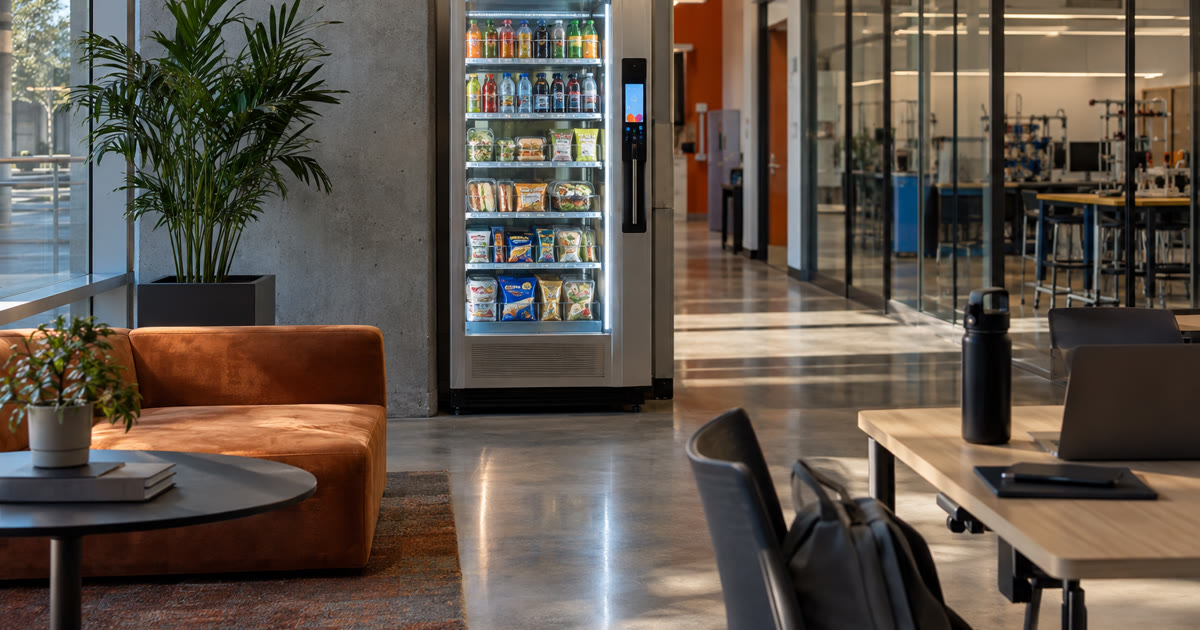
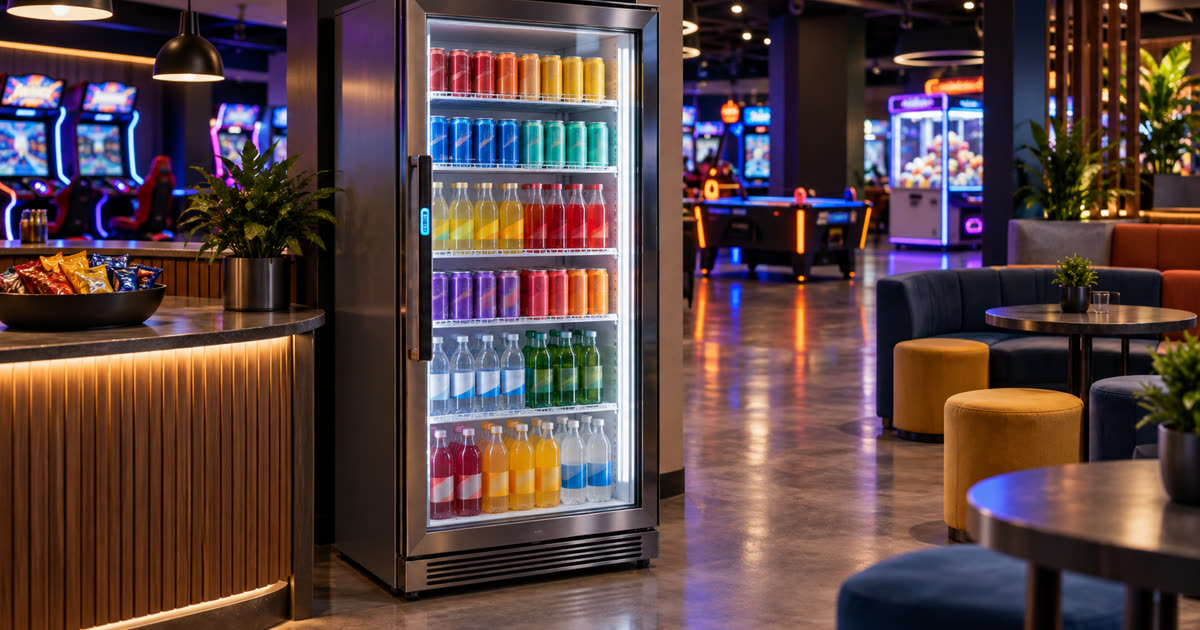
A vending machine service is only as good as the person who notices the machine became a chore before your staff does.
That is the quiet difference between buying a box and getting an operated amenity. The box sits there. The operator keeps it useful.
For Austin businesses comparing vending machine service Austin options, the machine is the most visible part of the decision and usually the least complete one. A glossy front panel does not restock itself. A card reader does not answer refund questions. A product mix does not improve because someone stared at it with enough optimism. If nobody owns the work behind the machine, the host inherits it one tiny snack problem at a time.
That is not service. That is a chore with a plug and a product window.
This July 13 blog is the operator test: what should a good vending machine service in Austin actually handle after installation?
Good operators own the site rhythm before they recommend the box
A good vending operator does not start with “Here is the machine.” They start with “Show me how this place moves.”
That sounds less exciting than equipment specs. Good. Specs are where weak service conversations hide when they are afraid of the building.
Before recommending a vending machine, smart vending setup, smart fridge, or compact market setup, the operator should understand the location’s actual rhythm: employee breaks, shift changes, resident traffic, hotel guests, gym member flow, service-lounge wait times, clinic staff schedules, warehouse movement, and the strange little daily migration pattern created by people hunting for caffeine.
The right vending machine service Austin buyers should look for is not a hardware drop. It is site interpretation.
Ask whether the provider reviews:
- Who will use the amenity?
- When will they use it?
- What food and drink options are nearby now?
- Where do people already pause?
- What access rules matter after hours?
- What should the host team never have to manage?
That last question is the operator’s job interview wearing a name tag. If the provider cannot clearly explain what stays off your team’s desk, the machine is already asking for a raise.
Restocking is not a calendar invite with snacks attached
Bad vending service treats restocking like a date on a calendar. Good vending service treats restocking like a feedback loop.
A machine can be “serviced” and still be wrong. Full of the wrong products. Clean but ignored. Stocked but stale in spirit. Technically functional and spiritually abandoned near the copy room.
Good operators watch what sells, what sits, what disappears too quickly, and what keeps coming back from the dead because nobody had the nerve to remove it. The product mix should get smarter over time in the ordinary operator sense: people buy things, patterns appear, the assortment gets less dumb.
Do not let anyone turn that into sci-fi. The machine does not know your employees, residents, guests, patients, members, or customers. It shows behavior. The operator earns the value by interpreting it and adjusting the setup.
If refrigerated products are included through a smart fridge or a mixed setup, food handling deserves its own lane. The FDA says refrigerators should be kept at 40°F or below as part of food-safety guidance for slowing bacterial growth. That supports one narrow planning point: refrigerated options require temperature-aware handling and operational discipline. It does not prove food safety, cold-chain compliance, product safety, equipment validation, temperature performance, freshness, spoilage prevention, regulatory compliance, health outcomes, nutrition quality, Revvolto equipment performance, any vending machine installation, any smart fridge installation, any Austin site, any future site, any stocked item, any restocking workflow, any operator practice, any service cadence, or any product rotation decision. Before the thermometer grabs a clipboard and starts managing the route, keep it measuring what it actually measures. Source: FDA
Ask the operator:
- How often do you review product movement?
- Who decides what gets rotated out?
- How do you handle fast sellers and slow movers?
- What happens when a location’s usage changes?
- How are refrigerated products handled if included?
- How do you keep restocking from becoming the host’s problem?
A good operator should make restocking feel boring to the host and responsive to the people using the machine. That is the trick. Boring on the outside. Attentive underneath. Like plumbing, but with better snacks.
Payment support should not wander into the nearest inbox
Modern vending machine service usually includes cashless payment. That is table stakes. People expect tap-to-pay, card payments, mobile-wallet convenience, and fewer encounters with a dollar bill that looks like it survived weather.
But “cashless” is not the same as “handled.”
Payment support is where service quality either shows up or puts on a fake mustache and escapes through the breakroom door. A user sees a pending charge. A tap fails. A receipt does not appear. A product does not vend. Suddenly the nearest person with a badge, desk, or clipboard becomes the payment department.
That should not happen.
The PCI Security Standards Council publishes PCI DSS as a global standard for protecting payment account data. That supports one narrow buyer point: payment responsibilities, processor roles, and support ownership should be clear before a business adds cashless vending, smart vending, a smart fridge, or a compact market setup. It does not prove PCI compliance for any vending machine, smart vending machine, smart fridge, payment terminal, payment processor, app checkout, software dashboard, inventory platform, operator, vending machine service provider, Austin installation, future installation, Revvolto setup, checkout flow, card tap, mobile wallet payment, employee purchase, resident purchase, guest purchase, customer transaction, refund process, charge dispute, support workflow, help desk response, or host responsibility. It also does not guarantee payment security, eliminate fraud risk, certify a provider, bless a payment experience, make the host responsible, make the host not responsible, or make “we take cards” a complete operational plan. Before payment language borrows a lanyard and starts acting like staff, make the support path boring and owned. Source: PCI Security Standards Council
A good operator should explain:
- Who handles failed taps or failed vends?
- How do users request help?
- Who handles refund questions?
- What payment information should the host never request?
- What does the host team do when someone asks for help?
- How are repeat payment issues tracked?
If the answer sends people to your front desk, leasing desk, office manager, trainer, service advisor, or shift lead, the machine has quietly recruited your team without asking payroll.
Maintenance is where the operator stops being theoretical
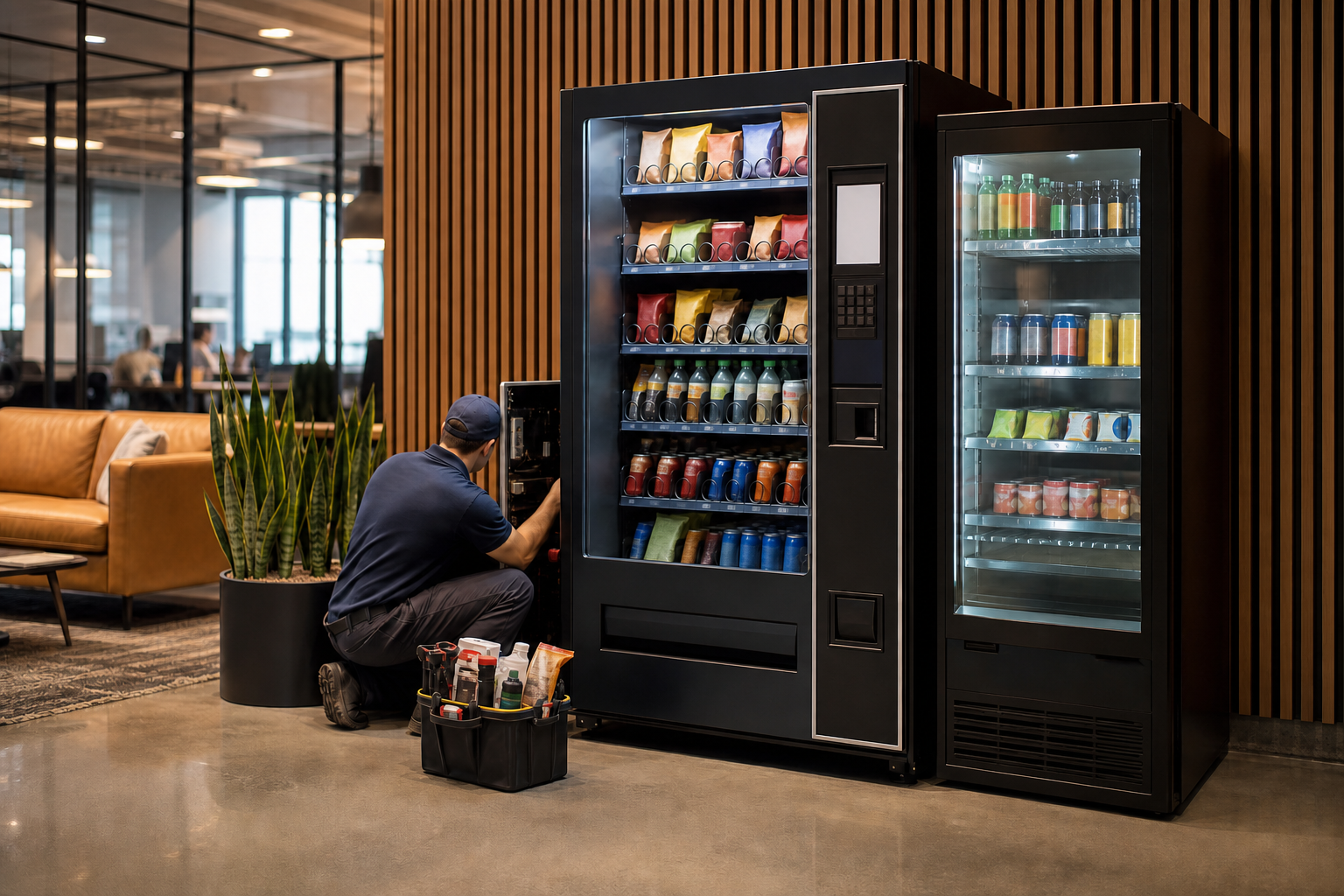
Every machine eventually has a moment. A door sticks. A reader hiccups. A shelf looks sad. A product row sells out. A unit needs cleaning. A machine starts making a noise that sounds like it is considering a career change.
Maintenance is where the operator becomes real.
A good vending machine service should make issue ownership obvious. The host should not need to diagnose equipment, chase support, keep spare parts, wipe down the operator’s reputation, or explain to users why the machine is “usually fine.” Usually fine is not a service model. It is a weather report with outlets.
The FTC’s *Start with Security* guide tells businesses to start with security and make careful choices about collecting, keeping, protecting, and disposing of sensitive information. That supports one narrow planning point: access, dashboard, support, and data responsibilities should be clarified before an unattended retail system goes live. It does not prove legal compliance, privacy compliance, payment compliance, cybersecurity maturity, platform security, user-data safety, processor security, operator security, Revvolto security, vending-machine security, smart-fridge security, dashboard security, Austin-site security, future-site security, support security, service-ticket security, technician access controls, or any specific data-handling practice. It also does not mean the host collects payment data, has access to payment data, should request payment data, should store support details, or should improvise privacy language. Before “support access” wanders in wearing a trench coat full of logins, ask who can see what and why. Source: Federal Trade Commission
Ask:
- How are equipment issues reported?
- Who monitors machine status?
- Who cleans and maintains the unit?
- What happens if the same issue repeats?
- Who has dashboard or service access?
- What information should staff never collect from users?
Good maintenance is not heroic. It is uneventful. The best operator does not constantly save the day. They keep the day from needing saving in the first place.
Revvolto keeps the operator job off the host’s desk
The best vending machine service in Austin is not “we place a machine.” It is “we operate the amenity.” Those are different promises. One is furniture delivery with snacks. The other is ownership.
Revvolto helps qualified Austin-area businesses add smart vending or smart fridge options — and, where the site supports it, compact market setups — without turning the host into the operator.
For qualified placements, Revvolto typically installs and operates the setup at no cost to the host. Site fit still matters. Foot traffic, audience rhythm, product mix, placement, restocking access, payment support, refrigeration needs, maintenance expectations, and service cadence decide whether the amenity has a real job.
A good operator should handle the parts most hosts do not want to inherit:
- Equipment recommendation and placement planning
- Stocking and restocking
- Product rotation based on usage
- Payment technology and support ownership
- Equipment maintenance and issue tracking
- Clear host responsibilities, preferably very few of them
That last line matters. A vending machine service that keeps creating tiny assignments for your team is not turnkey. It is a group project with a card reader.
If you are choosing a vending machine service in Austin, do not ask only what machine you get. Ask what work disappears after the machine arrives.
The right operator should make the amenity useful for the people in the building and boring for the people responsible for the building. That is the whole game.
Curious whether smart vending, a smart fridge, or a compact market setup fits your Austin location? Tell us about your space at https://revvolto.com/contact-us.
No-cost site assessment. No install pressure. No commitment.