A small space can be a good vending location. It can also be a beautiful little trap.
The corner looks open. The outlet is nearby. People already pass it on the way to the elevator or break nook. Then the machine arrives and everyone learns the same lesson at once: fitting the unit is not the same as fitting the operation.
For vending machines for small spaces, the first question is not “can we squeeze it in?” The better question is whether the area still works when people use the machine on a busy day.
That is the service-path test.
The machine is only one part of the footprint
Most placement mistakes start with the tape measure. A team measures the wall, compares it to the unit width, and calls the space ready.
That misses the part people actually feel.
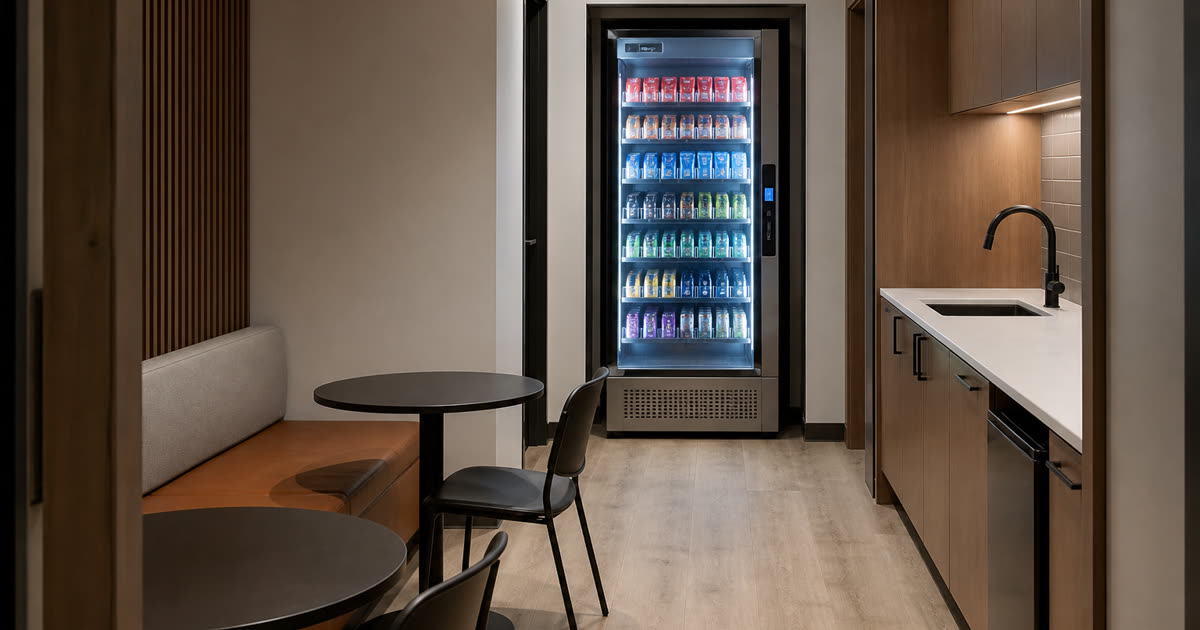
A smart vending machine or smart fridge needs room for the door swing, a customer standing in front of the glass, and someone passing behind or beside that customer. If the unit sits near a hallway or elevator bank, that extra space matters more than the machine footprint.
Service matters too. Revvolto handles the stocked operation, but the location still needs a practical way for that work to happen. A tight corner that blocks the cart or traps the door is not a premium amenity. It is future friction with nicer lighting.
The U.S. Access Board’s ADA guide to accessible routes is a useful planning reminder here. It does not turn a vending placement into a legal conclusion, and every site still needs its own review. It does show why clear routes and usable space should be part of the decision before anything gets placed.
In plain terms: do not judge the space empty. Judge it with the machine open, a person choosing a drink, and service happening at the same time.
Put vending where the pause already happens
Small-space vending works best when it supports a pause people already make.
That could be near an elevator bank where tenants wait. It could be just off a hotel lobby path, not jammed into the main check-in flow. It could be a staff break nook where people already stop between tasks. The common thread is simple: the vending unit belongs where stopping makes sense.
Bad placement asks people to create a new habit. Good placement meets the habit that already exists.
This is why compact vending should not automatically mean “the smallest unused corner.” Unused corners are often unused for a reason. They may be outside the natural path or awkward to reach. If people have to backtrack for a snack or feel like they are standing in traffic to pay, the machine will feel like an afterthought.
The service-path test asks four practical questions:
- Where do people already slow down?
- Can they choose and pay without blocking the path?
- Can service reach the unit without moving furniture?
- Does the location still feel intentional when the room is busy?
That last question is the one buyers skip. It is also the one people notice.
Cashless checkout needs breathing room
A modern vending machine is not an old box people slap coins into and forget.
Cashless payment and glass-front selection change how people interact with the unit. They look before they buy. They pause at the door. They use the payment screen. They may open a cooler-style unit after authorization. That interaction needs a little room.
The PCI Security Standards Council is the right source for payment security standards. For placement, the takeaway is narrower: payment tech should be treated as part of the operating environment, not decoration on the side of a box.
The screen should be easy to see. The reader or interface should not force someone to stand in a doorway. The unit should not sit where people are rushed, bumped, or squeezed while paying.
That is especially true in compact settings. A small office pantry, hotel staff corridor, or tenant lounge can support smart vending well if the path is clean. The same machine in a pinched passage can feel clumsy fast.
This is where a managed smart vending setup earns its keep. We are not asking you to guess the right corner from a floor plan. We look at the room, the user path, and the service access before recommending a fit.
Small spaces may need a different format
Sometimes the answer is not a smaller vending machine. It is a different format.
A single-door smart cooler may fit a staff nook better than a wider setup. A double-door smart cooler may make sense in a pantry where people have more room to browse. A compact micro market style layout may work when the room has wall space and steady traffic.
The mistake is picking the format before understanding the room.
That is why the small-space conversation should start with the buyer moment. Who is using the unit? Are they grabbing something during a short break, waiting for an appointment, or heading back to a work area? Are they likely to browse, or do they need a quick drink and go?
The answer changes the layout. A location that needs quick cold drinks may not need the same footprint as a space built for a broader snack assortment. A location with a tight path may benefit from a simpler setup with clear glass and fast checkout. A location with more dwell time may support a different mix.
If you are also weighing formats, this is where the room-fit question from our smart cooler vs micro market guide connects directly to placement. Format is not an aesthetic choice. It is an operating choice.
The best small-space setup feels obvious after it is installed
The goal is not to make the vending machine disappear. The goal is to make it feel like it belongs.
People should see it at the right moment. They should be able to use it without feeling like they are blocking the room. Service should be able to restock it without a production. The unit should look modern enough for the property and practical enough for the people who actually use the space.
That is the difference between “we found a corner” and “we added a useful amenity.”
For qualified locations, Revvolto can usually place and operate the right vending or smart fridge setup with no upfront equipment purchase from the property team. We handle stocking, payment tech, and service. You still need a space that makes sense.
If you are looking at a tight alcove or break nook, do not start with the machine size. Start with the path.
Then tell us about the location, and we will help you figure out whether smart vending fits there without turning the room into a traffic problem.