Warehouse vending machines have one job: give shift teams a practical food and drink option without turning the breakroom into another operations task.
That sounds simple until the unit sits in the wrong corner and the product mix misses the shift pattern. Then payment questions fall back on supervisors, restocking becomes somebody’s unofficial side quest, and the cooler turns into background furniture.
The better question is not “Should we add vending?” It is “Where can smart vending support the way this building already moves?”
Start with the shift path, not the machine
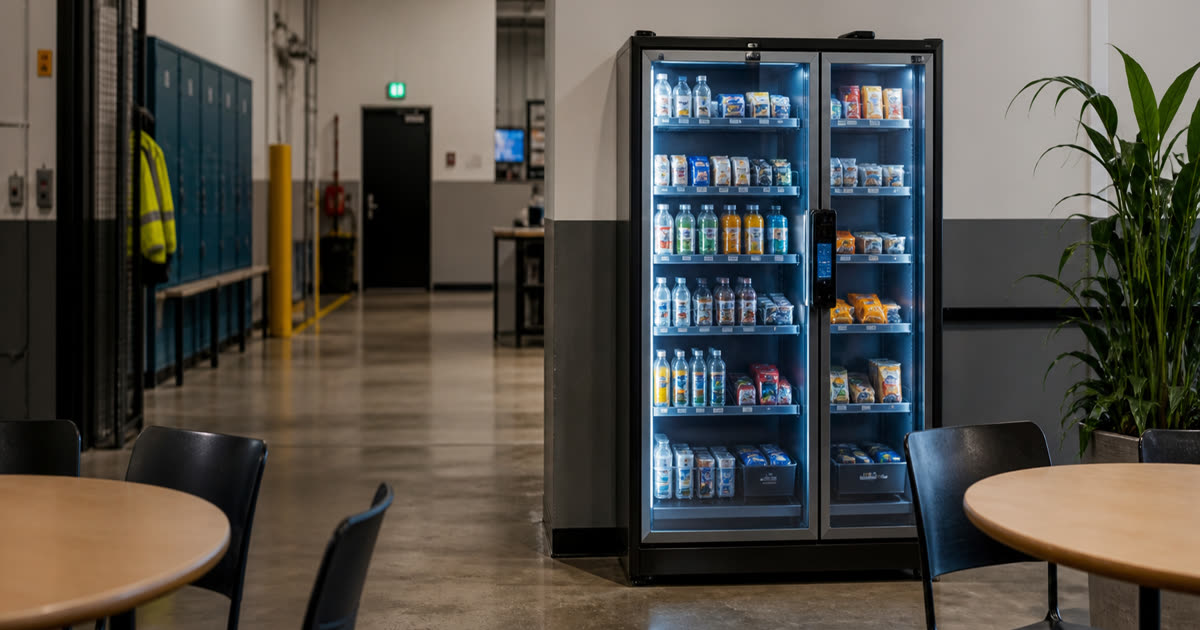
A warehouse breakroom is not an office pantry with forklifts nearby. People reach it in short windows. Some teams move through it before the line starts. Others hit it during staggered breaks, meal periods, or the walk back from a loading area.
That makes placement the first real decision. The machine should sit near a natural pause point, not in a forgotten room that only looks good on a floor plan. A practical location is visible, easy to reach, and clear of production hazards. It also has to be close enough that a short break does not become a building tour.
OSHA’s worker-fatigue materials note that extended and irregular shifts are common across American workplaces. That does not mean a vending machine solves fatigue. It means shift-based buildings should be honest about timing. If people work outside a standard daytime schedule, food access that only works during normal business hours leaves a gap.
For warehouse and manufacturing teams, the site review should answer three questions before anyone talks equipment. Where do people already pause? When do the heaviest break periods happen? Who gets interrupted when food access fails? If the answer is “the supervisor keeps hearing about it,” the current setup is already costing attention.
Keep vending out of the operations team’s lap
The worst version of breakroom vending is the one that looks convenient but quietly creates work.
Someone has to notice when popular items disappear. Someone has to chase service issues. Someone has to answer payment complaints. Someone has to deal with the mystery of why the machine is full of products nobody wants. If that person is a manager or shift supervisor, the amenity is not really hands-off.
A better warehouse vending setup gives the building a modern option while keeping ownership clear. Revvolto handles stocking, payment tech, and maintenance for qualified locations. Purchase data can also help refine the assortment over time, so the product mix is not built on guesswork or whoever shouted loudest in the breakroom.
That matters because warehouse teams usually do not need novelty. They need dependable access. Cold drinks, grab-and-go meals, and familiar snacks tend to matter more than a pretty fixture that photographs well and gets ignored by week three.
The equipment should also match the support model. Cashless smart vending and smart coolers can reduce the mess that comes with coin handling, cash collection, and handwritten IOUs. The point is not tech for tech’s sake. The point is fewer tiny chores landing on the wrong people.
Treat breakroom compliance as a placement filter
Vending does not replace a workplace safety program, a sanitation policy, or a site-specific facilities review. It should fit inside those rules without making anyone squint.
OSHA’s sanitation standard says food and beverages should not be stored in toilet rooms or areas exposed to toxic materials. It also covers hygienic handling for workplace food service. For Revvolto content, that source is a planning reminder, not a certification claim. The practical takeaway is simple: put food access where it belongs, keep it away from production exposure, and make service access easy enough that the area can stay clean.
This is where a smart vending site review earns its keep. The best location may not be the largest empty wall. It may be the breakroom edge with a safe electrical path, clear door swing, and enough room for restocking without blocking traffic.
Warehouse leaders should also think about who can reach the unit. If the only path runs through a restricted area, the machine may serve one team while missing another. If the placement blocks a walkway or forces service work into a busy production path, the location is doing too much damage for a small convenience win.
Good vending placement feels boring in the best way. People see it, use it, and move on.
Match the product mix to the workday
A warehouse breakroom does not need a random snack wall. It needs a product mix that respects the rhythm of the site.
Early teams may care about cold coffee, breakfast-style items, and water. Afternoon teams may want filling snacks and drinks that do not require leaving the property. Overnight teams may need options when nearby food service is closed. The mix should be built around the building’s real use pattern, then adjusted as purchase data shows what people actually choose.
This is also where smart fridges and smart vending machines can work differently. A smart cooler may fit refrigerated grab-and-go needs in a staffed breakroom. A smart vending machine may be better where product control, clear payment flow, and compact placement matter more. A larger micro market can make sense in the right room, but it is not automatically the better answer for every warehouse.
The right format depends on headcount, room size, and service access. It also depends on what workers are likely to buy during a short break. If the room is tight, a compact smart vending setup may beat a bigger amenity that looks impressive and functions badly.
That is the test: not “What looks premium?” but “What gets used without adding work?”
Use service access as the final check
Before installing warehouse vending machines, walk the service path like a restock visit is happening during a normal workday.
Can a service person reach the unit without crossing an unsafe area? Is there enough room to open the doors? Is the machine visible enough to be used but not so central that restocking interrupts breaks? Can workers use it without crowding a time clock, hallway, or production entrance?
Those questions are not fussy. They are the difference between an amenity and a recurring operational nuisance.
Revvolto is built for locations that want modern food and drink access without managing the machine themselves. For qualified Austin-area sites, that can mean a stocked smart vending or smart fridge setup that Revvolto maintains on a regular cadence, typically at no cost to the business placing it.
If your warehouse or manufacturing site needs better breakroom access, start with the shift path. Then choose the vending format that fits the room, the people, and the service model.
Tell us about the location at revvolto.com/contact-us.