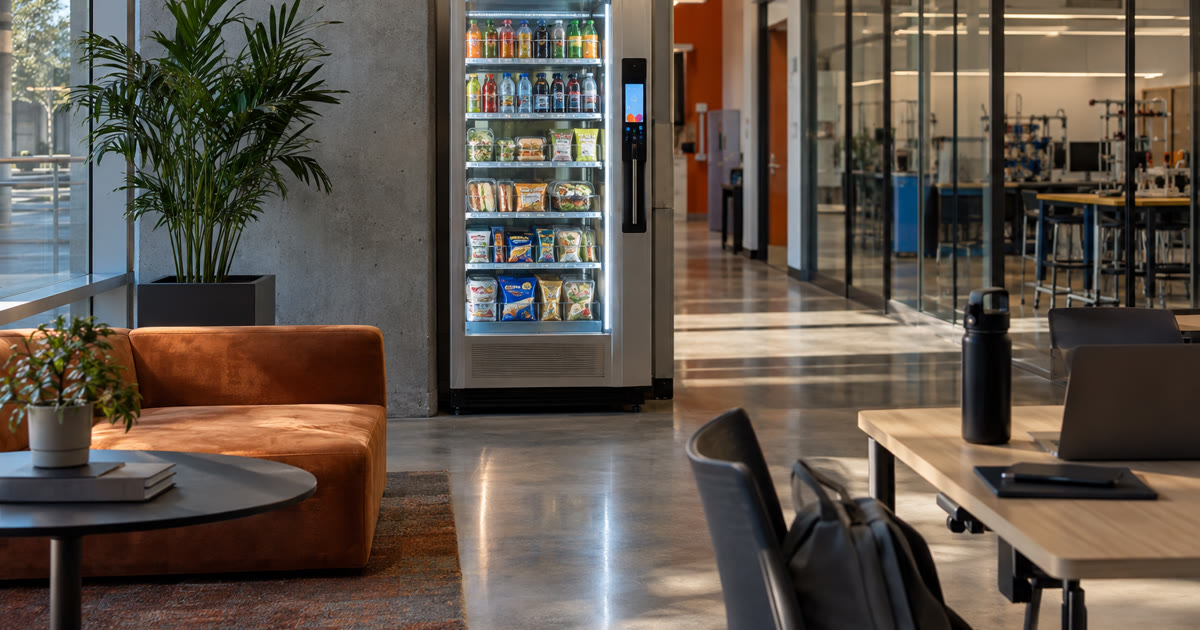
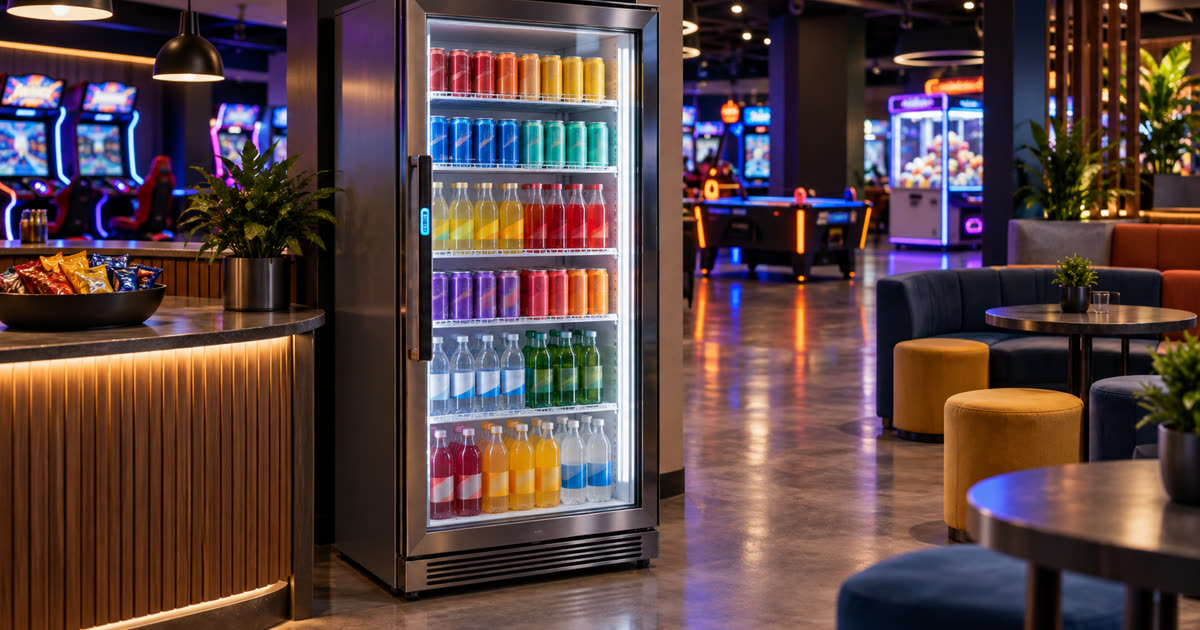
No-cost vending placement sounds simple: a business gets a modern vending machine, smart vending machine, or smart fridge without buying the equipment itself.
The part buyers should slow down on is the word “placement.” A good operator is not handing out machines like party favors. The site still has to make sense: enough daily traffic, the right audience, a practical location, a product mix people will actually use, and a service plan that keeps the host out of the vending business.
For qualified locations, Revvolto’s model is built around that hands-off idea. Revvolto brings in the stocked food-and-drink amenity, manages restocking and maintenance, supports cashless payment, and keeps the setup moving without asking the host team to become the snack department.
That is the promise worth understanding. Not magic. Not “free for everyone.” A fit-based amenity model.
No-cost vending placement starts with site fit
The first question is not “can a machine fit in this corner?” It is “will people actually use it here?”
A vending machine needs traffic. That traffic can come from employees, residents, guests, members, students, service customers, or shift teams, depending on the site. But a quiet hallway with almost no routine foot traffic is usually a bad placement, even if the machine would look nice there. Pretty does not restock itself.
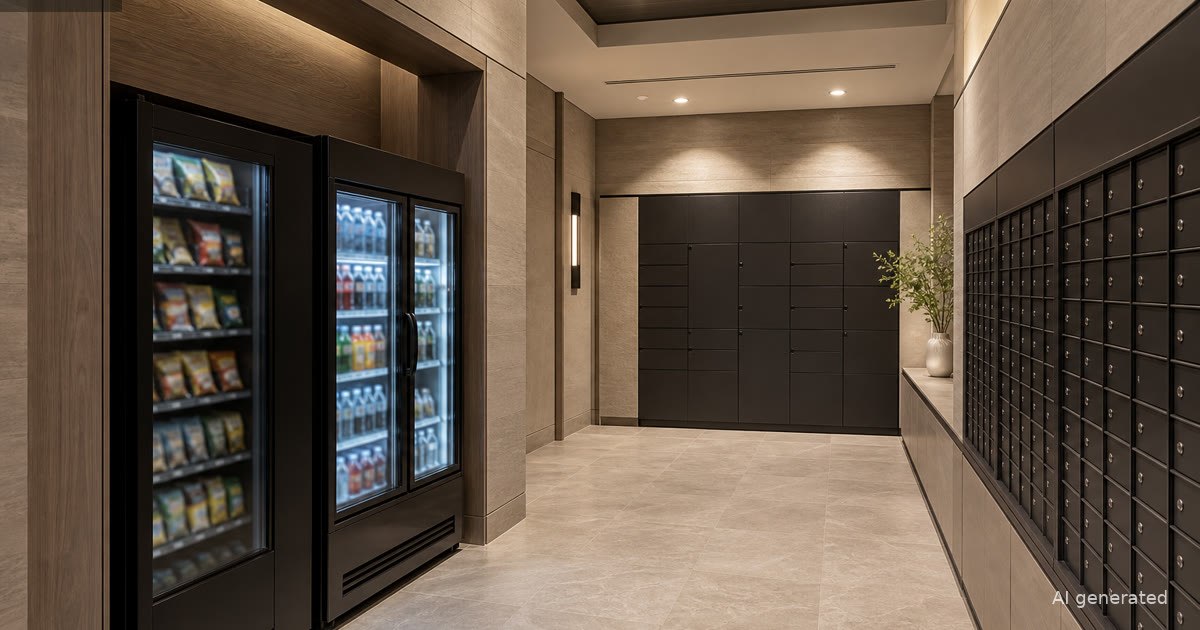
Strong sites usually have a clear use case. A service lounge has customers waiting longer than expected. A warehouse breakroom has teams eating around shift schedules. An apartment property has residents moving through the lobby, package room, or amenity area. A gym has members leaving a workout and wanting something quick. The best placement is tied to a real moment, not a vague hope that people will notice the machine.
Hosts should ask a provider what qualifies a site before talking equipment. Daily headcount, traffic patterns, hours of use, space constraints, electrical access, and product expectations all matter. A provider that skips those questions may be more interested in placing hardware than operating a useful amenity.
The host should know what is included
“No-cost” should never be a fog machine. The host needs to know what the operator is covering and what the host may still need to support.
In a full-service vending placement, the operator typically owns the biggest moving parts: equipment, product stocking, restocking cadence, maintenance, payment support, and product rotation. The host may still need to provide a suitable location, basic access, power, and a point of contact for site coordination. If the setup includes a smart fridge or refrigerated items, the service model should also explain product handling, restock expectations, and how issues get reported.
This is where language matters. The FTC’s small-business advertising guidance says advertising claims should be truthful, non-deceptive, and backed by evidence. That is not a vending-specific rule, but it is a good gut check for any “free” or “no-cost” claim. Buyers should expect plain answers, not a headline with fine print hiding behind it.
A practical conversation sounds like this:
- Who owns the machine and the service relationship?
- What does the host pay, if anything?
- What does the host provide, such as space, power, or access?
- Who handles restocking, maintenance, failed vends, and payment questions?
- What happens if the site does not get enough use?
If the answers are clean, the host can evaluate the opportunity without guessing.
Payment and service still need a clear owner
A no-cost vending placement can still create friction if payment and service ownership are fuzzy.
Modern vending often supports cards, tap-to-pay, mobile wallets, or other cashless payment paths. That is good for users, especially in locations where people do not carry cash. But the host should not become the refund desk when a card reader fails or a product does not vend.
The PCI Security Standards Council explains that payment security standards apply to organizations involved in storing, processing, or transmitting payment account data. A host does not need to become a payments expert to add vending, but the provider should be able to explain who manages payment technology, who supports the payment path, and where users go when something breaks.
Service ownership matters just as much. Restocking should follow actual use, not a calendar someone guessed before launch. Maintenance should have a route. Refunds and user questions should have a route. Product mix should change when the site proves people want something different.
This is the difference between a placed machine and an operated amenity. One sits there. The other has someone accountable behind it.
Qualified placement should feel low-friction, not vague
A strong no-cost vending placement should make the host’s life easier.
That does not mean the host has zero involvement. Someone still needs to approve the location, coordinate access, confirm the site is a reasonable fit, and help the operator understand the audience. But after that, the host should not be chasing snacks, troubleshooting payments, or deciding which drink belongs on the third shelf.
For Revvolto, the best-fit conversation is simple: does the location have enough real use, a sensible placement area, and an audience that wants convenient food and drink on site? If yes, a modern vending machine, smart vending machine, or smart fridge can add convenience without turning the amenity into another internal project.
That is the standard worth asking for. Not the cheapest-sounding pitch. The clearest operating model.
If you want to see whether your location could qualify for a stocked, maintained vending or smart fridge setup, contact Revvolto. Bring the site type, rough traffic pattern, and where people would actually use it. The corner matters more than the brochure.