Austin keeps building places where people learn by doing. The newest signal came from the University of Texas at Austin, which announced the Autry C. Stephens Engineering Discovery Building on September 21. The university described a 207,000-square-foot facility built around hands-on engineering and shared lab activity.
Revvolto has no affiliation with UT Austin or the project. The announcement is useful because it points to a broader planning question for campus and technical buildings across Austin: when people move between labs and project rooms, where does food access actually fit?
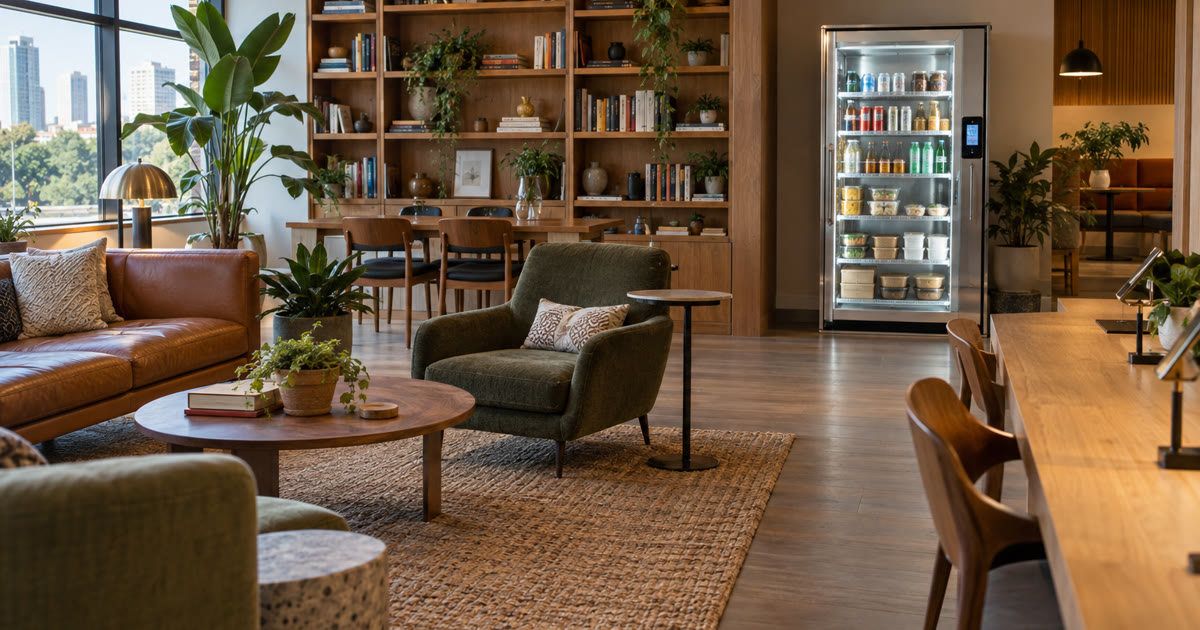
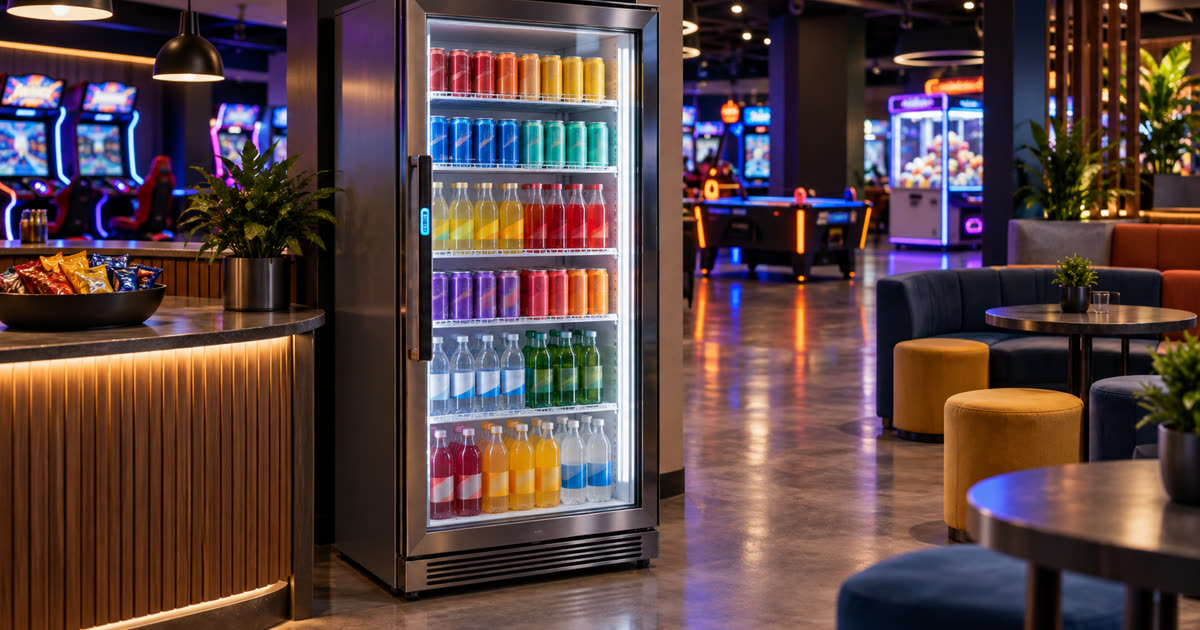
A smart vending machine or smart fridge is not the centerpiece of a technical building. It should never feel like one. The better question is whether the building has a natural pause path where people can grab something quickly without turning the front desk, faculty office, or facilities team into the snack department.
Technical buildings create long pause paths
The UT announcement is full of spaces that make food access more complicated than a simple lobby decision. It mentions collaborative laboratory space and classroom areas. It also points to gathering areas where people are likely to reset between focused work sessions.
That mix matters. Technical buildings do not always run on a neat lunch rhythm. A project group may leave a lab between work sessions. A staff member may have ten minutes before a meeting. A visiting partner may move from a conference room to a working area. A student may stay late because the workday did not end when the class block did.
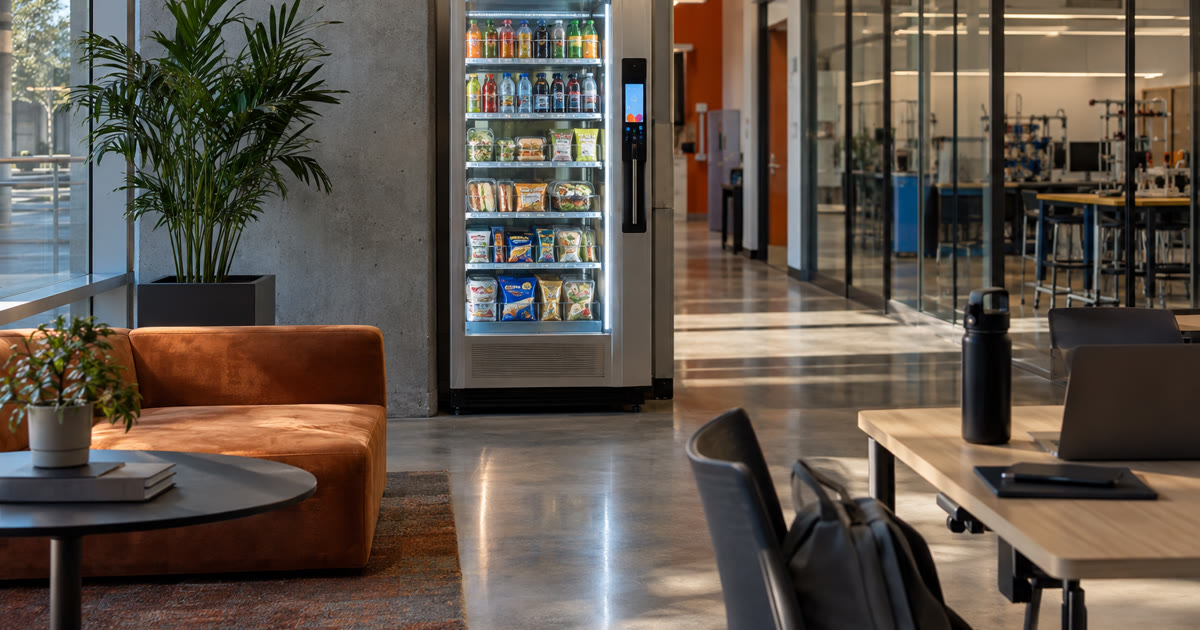
That is where old vending logic breaks down. A machine shoved beside the first empty wall can miss the real movement pattern. Smart vending works better when it sits near the ordinary pause: the spot people already pass when they reset, wait, or change modes.
For a campus or training facility, that might be near a study commons. It might fit by a project-room cluster instead. The point is not to make the machine louder. The point is to put it where movement already happens.
Staff workload should be part of the placement test
Food access becomes a building-operations problem when the plan relies on people who already have real jobs. If a department assistant has to answer snack questions or manage a shared fridge, the amenity is not low friction. It is a chore wearing a cheerful label.
That is the planning gap Revvolto watches for. A modern smart vending setup should reduce the local workload, not move it around. The machine needs a sensible service route. Restocking should not fight classroom traffic. Payment support should be cashless and simple. The product mix should be adjusted from use data instead of office guesswork.
This is especially true in technical buildings because the audience changes during the day. Students use the commons differently than staff. Visitors may only be there for a meeting. Project teams may stay longer than expected. A useful setup supports the shared rhythm without asking one internal team to become the unofficial food-service operator.
For qualified Austin-area locations, Revvolto typically handles the machine and stocking. We also handle payment tech and service. That model is a better fit when the site team wants the convenience without taking on another daily operational thread.
Product mix should match the building rhythm
A campus engineering building is not the same as a hotel lobby or apartment amenity lounge. The food and drink mix should reflect the way people use the space.
If the location sees long work sessions, drinks and quick food options matter. If the busiest moments happen between classes or meetings, the machine should support fast decisions. If the building has evening activity, cashless access becomes more useful than a staffed counter that closes before the work is done.
The important part is not stuffing every possible product into one machine. That is how a smart amenity turns into clutter. The better approach is to start with the likely use case, watch what actually moves, and refine from there.
Smart fridges and smart vending machines can support that kind of planning because they are not static boxes. The machine can be stocked on a cadence. Product choices can change when the audience changes. If the building has a heavy project week, the offer can shift without asking the property team to become snack forecasters.
That is the difference between food access as a convenience and food access as another small operational headache. The hardware matters, but the service model matters more.
The best campus amenity feels boring in the right way
The highest compliment for a campus smart vending setup is not that people admire it. It is that the machine quietly works where the building needs it.
People notice when food access is missing. They notice when the only option means leaving the building at the wrong time. They notice when a break turns into a detour. They rarely notice the operational design when it is done well, and that is the point.
For Austin technical buildings, the smart vending question is simple: where does the building already create a pause?
That question leads to better placement. It protects staff time. It makes service access cleaner. It gives students and visitors a simple grab-and-go option without making the amenity bigger than the building’s real purpose.
If you are planning food access for an Austin campus or lab-style building, Revvolto can help map the pause paths before the machine ever shows up. Tell us about the location at revvolto.com/contact-us.