Vending near elevators can be smart. It can also be a very expensive way to annoy everyone who uses the building.
The difference is not the elevator. It is the path around it.
Elevators create natural pauses. People wait there, pass through, and notice what is nearby. That makes the area tempting for a vending machine, smart vending machine, or smart fridge. But the same traffic that makes the spot attractive can turn ugly if the machine crowds the landing, blocks a route, or forces staff to explain where people should stand.
Use the elevator area only when the placement supports movement, visibility, and service access at the same time.
Why elevator-adjacent vending is tempting
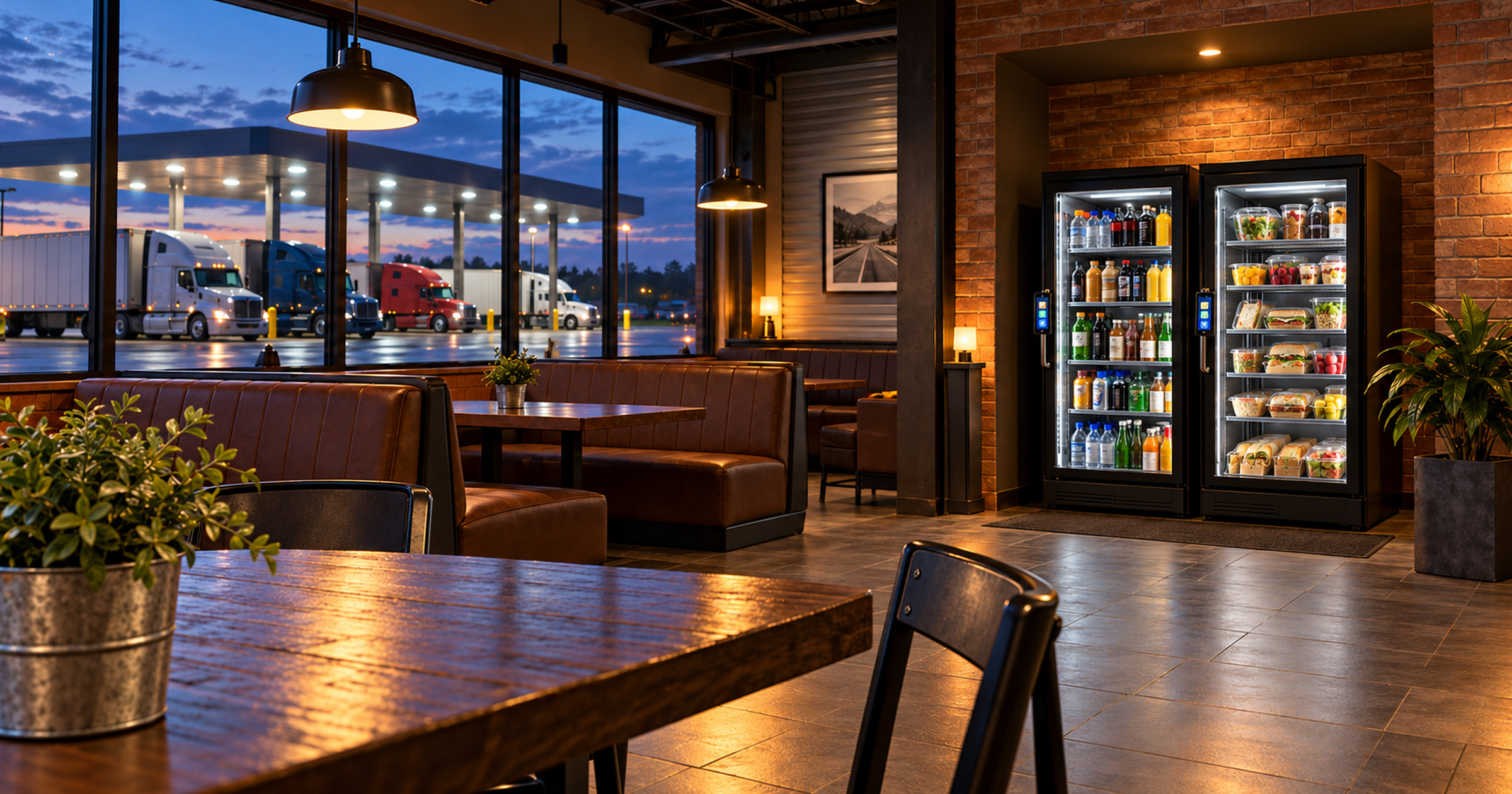
An elevator bank already has attention. Nobody has to wander down a hidden hallway to find the machine. In hotels, apartment communities, medical office buildings, and service lounges, the elevator area can sit close to the exact people who want a drink, snack, or quick grab-and-go option.
That matters because vending machine placement is mostly a behavior problem. Empty wall space does not buy anything. People do.
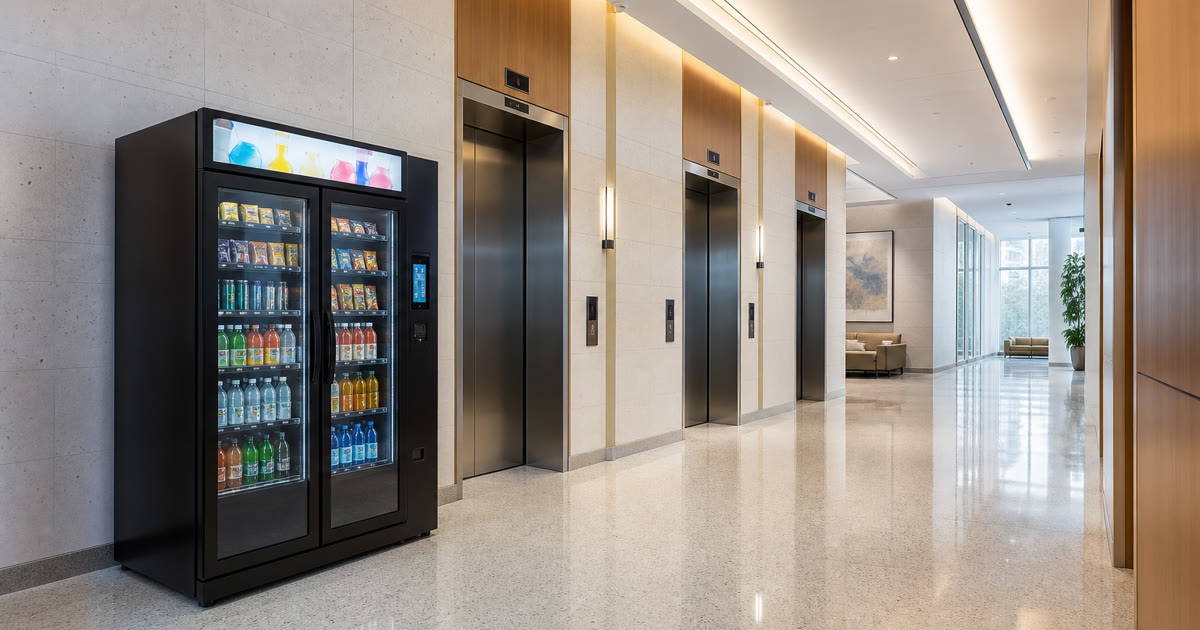
A vending setup near elevators can work when someone can see it, step to it, use the payment panel, and move away without creating a knot of people at the doors. That is the sweet spot: visible enough to be obvious, offset enough to stay out of the way.
The mistake is treating elevator traffic as proof the machine belongs there. Traffic is only useful when the stop makes sense. If the machine turns a normal wait into a shoulder-to-shoulder shuffle, the location is fighting the building.
Keep the elevator path clean
The first test is boring and non-negotiable: can people still move naturally?
A machine should not sit where elevator doors open, where people queue, or where someone using mobility equipment needs room to approach and turn. The U.S. Access Board’s ADA guidance on floor and ground surfaces and accessible routes treats accessible routes, elevators, and required clearances as part of floor and route planning. That does not make this post legal advice or an ADA approval stamp. It does mean clear space is not a cosmetic detail.
That is why the best elevator-adjacent vending spots are usually beside the traffic path, not inside it. Think recessed wall bay, side alcove, lobby edge, or lounge wall near the elevator bank. The machine stays visible, but the walking route still belongs to the people moving through the building.
Our broader vending site review guide uses the same logic: placement should account for who uses the space, how they move, and what happens after the machine is installed.
Check the user moment before the floor plan
The right elevator-area setup depends on who is waiting.
In a hotel, the useful moment may be a guest coming back upstairs without wanting a full lobby detour. In an apartment or condo building, it may be a resident passing through a common area on the way home. In a medical office building, it may be staff or visitors who need something close without sending questions to the front desk.
Those are different situations. Treating them like the same vending opportunity is lazy planning.
This is also where public-facing versus staff-only access matters. If the machine sits near a public elevator bank, your team should know whether the amenity is meant for customers, residents, or staff. If the answer is fuzzy, the placement will be fuzzy too. We covered that split in the guide on staff-only vs public-facing vending.
Good placement makes the intended user obvious without turning your staff into tour guides.
Do not forget service access
A vending machine near elevators still needs to be stocked, checked, and serviced.
That part gets ignored because it happens after the pretty floor-plan conversation. It should not. If restocking blocks elevator access, creates a lobby scene, or makes the operator drag product through a crowded path, the location has a service problem waiting to happen.
A better setup leaves room in front of the machine, keeps the restock path reasonable, and avoids making normal service feel like a furniture-moving documentary. We covered the pre-install basics in the vending machine installation checklist: power, clearance, door swing, and service ownership need to be checked before the unit shows up.
This is where Revvolto earns its keep. For qualified locations, we help think through the placement before bringing in equipment, then we handle stocking, service, and payment tech support. Your team should not inherit a snack operation just because the elevator lobby had a nice empty wall.
The best spot feels obvious later
Vending near elevators works when the machine feels like it belongs there after the novelty wears off.
People can see it. They can use it without blocking anyone. Service can happen without drama. The machine supports the building’s flow instead of competing with it.
That is the standard. Not the prettiest wall. Not the closest outlet. Not the spot nobody else knew what to do with.
If you are considering vending, smart vending, or a smart fridge near an elevator bank, start with the path, the user, and the service plan. Contact Revvolto and we can help decide whether that spot actually works.