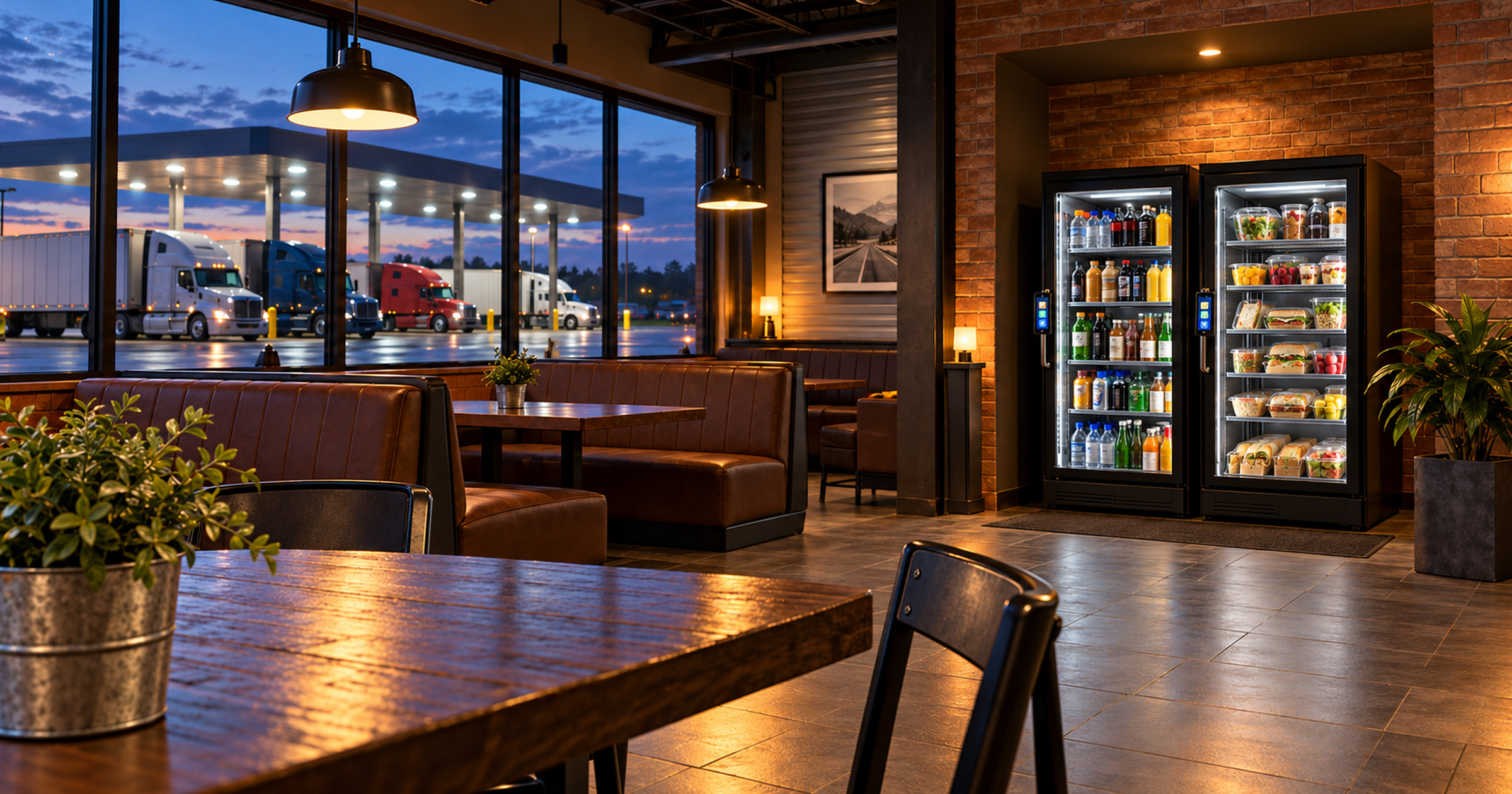
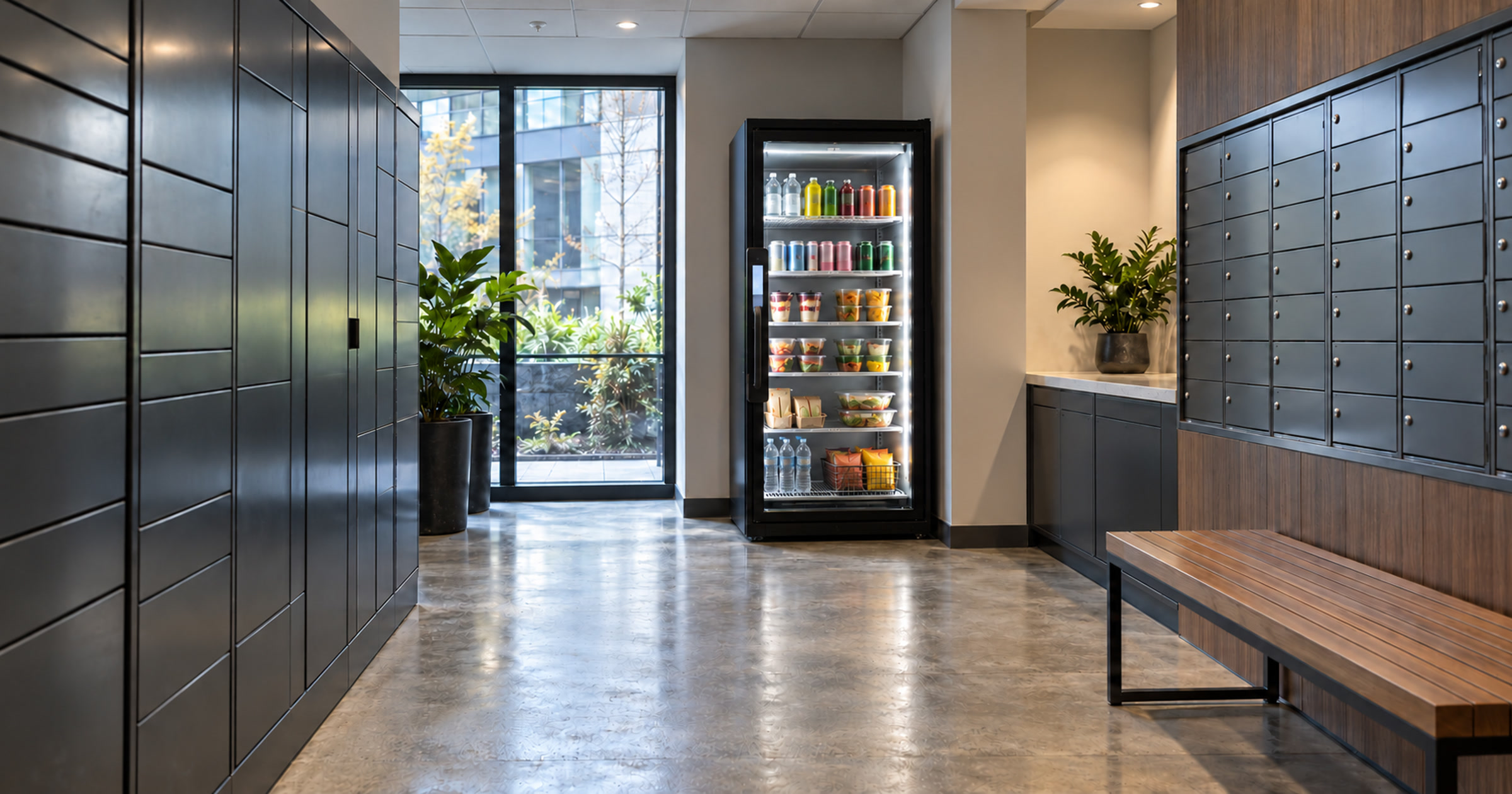
A smart cooler for a performing arts center has to fit a building that can be an office at noon, a rehearsal space in the afternoon, and a public venue that evening. Food and drink planning has to work across all three versions.
Austin has a fresh local example. Austin Opera says the Butler Performance Center officially opened on September 26. Its Southeast Austin home includes administrative offices and a 189-seat theater. KUT also reported four rehearsal rooms, a conference center, and indoor and outdoor areas.
Austin Opera is not connected to Revvolto. The opening is useful because it makes a facilities question easy to see: how should a year-round arts building handle grab-and-go food when the room schedule keeps changing?
A managed cooler can fit that kind of building. The decision starts with timing, operating ownership, and the route used to stock the unit. The machine comes later.
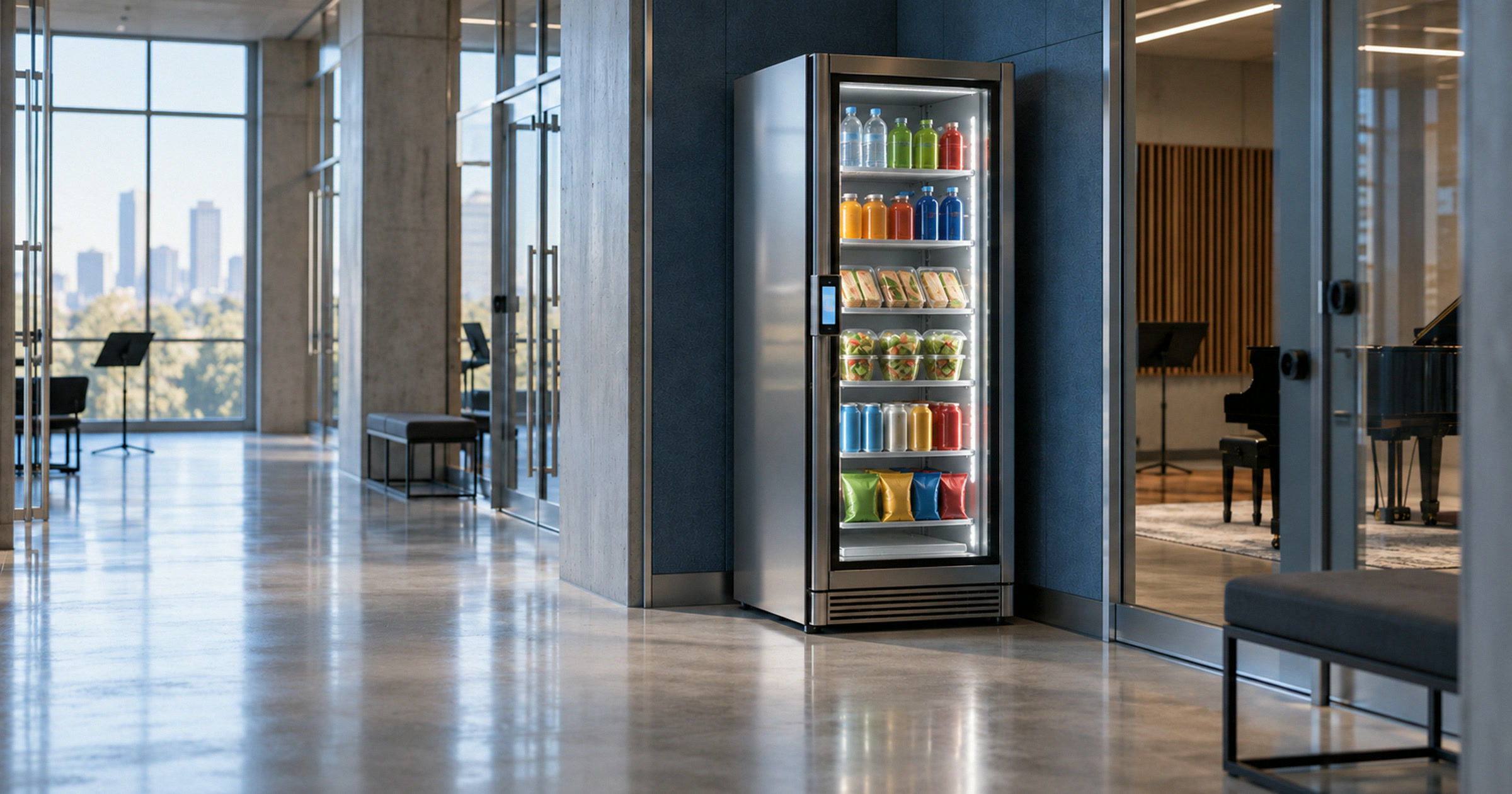
One building can have several daily rhythms
The public performance is only the visible part of the work. Staff may be in the building during the day. Artists and production teams can arrive later for rehearsals. A rented room or community program can bring another group through at a different time.
That changing schedule makes a single vending assumption unreliable. A unit aimed only at the evening audience may sit in the wrong part of the building for staff. A staff-room cooler may be invisible when the lobby fills. One machine can serve both groups, but only if the routes overlap naturally.
Watch the building between programmed moments. Where do people wait before a rehearsal room opens? Which corridor connects the theater to the offices? Can someone buy a drink without forming a line beside the box office? Those observations are more useful than choosing the empty wall nearest the lobby.
The schedule matters too. A short public event creates a different buying window than a long rehearsal day. That does not require a complicated plan. It requires a unit that sits near a genuine stop and an assortment that can change as purchase patterns become visible.
Put the cooler where it helps the room
A performance venue already has sensitive traffic points. Lobby doors have to stay clear. Ticketing areas cannot become checkout zones for another amenity. Backstage and production rooms have controlled routines of their own.
The cooler should sit near movement without owning the room. A transition between a rehearsal wing and a common area may work. A shared lounge near offices and event space may work. The exact answer depends on the building, not the venue label.
Then trace the stocking trip. A delivery cart should reach the unit without crossing a stage, squeezing through audience seating, or interrupting a class. If the easiest customer location creates a miserable refill trip, it is not the right location yet.
Door clearance and browsing space also deserve a real check. A clear-glass cooler needs room for the door to open fully. Someone comparing choices should not block an accessible route or force other visitors into a tight turn. Accessibility is a site-specific review, not a badge attached to the equipment.
The strongest setup will probably look obvious after it is installed. That is the point. Good building decisions tend to disappear into the routine.
Match the product mix to the calendar
The first assortment should cover the building’s broad use, then improve from actual purchases. Staff may buy cold drinks during the workday. Rehearsal days can create demand for quick food between calls. Public programs may shift use toward familiar snacks and beverages.
Do not turn those examples into stereotypes. Artists do not all want one thing, and visitors do not all want another. Start with a balanced mix, watch what moves, and adjust the shelves. Purchase data is useful because it replaces guesswork with evidence from that location.
The calendar can guide the review. A run of evening performances may produce a different pattern from a week of rehearsals and rentals. That does not mean rebuilding the machine every day. It means recognizing when a sustained schedule change deserves a product adjustment.
Presentation matters in a cultural venue. The stocked area should look orderly and easy to read from a normal distance. Empty rows make the amenity feel forgotten. Crowded shelves with near-duplicate products make choosing harder. A maintained cooler should feel like part of the facility, not a prop rolled in before opening night.
This is where a managed model earns its keep. We handle stocking, payment technology, and maintenance for qualified locations. Your staff can report an issue without becoming the team that shops, refills, and troubleshoots the unit.
Decide who owns the ordinary problems
A new facility gets plenty of attention on opening day. The harder question is what happens on an ordinary Wednesday when a popular drink sells out or a payment attempt fails.
Write that handoff down before launch. Staff should know whom to contact and what information helps resolve the problem. The vending operator should know when the building is open, how to enter, and which route is available for replenishment. That small bit of clarity prevents front-desk and production staff from inheriting work they never agreed to own.
Qualification matters as much as convenience. Daily traffic, building hours, and repeat use have to justify a managed unit.
A small room used twice a month may be a poor fit. A year-round center with regular workday activity and evening programs has a stronger case, provided the stocking route and room layout cooperate.
The Austin Opera opening is a good reminder that cultural buildings are working facilities, not just audience rooms. A refrigerated vending unit should be planned around the people who use the building all week, then operated by a team prepared to keep it current.
If you are evaluating food and drink for a theater or cultural facility, start with our smart vending site review guide for theaters and event venue product-mix guide. Then tell us about your location. We will help you judge whether managed refrigerated vending fits the schedule, room, and operating plan.