Austin’s business calendar has a useful signal hiding in plain sight: people still gather in person when the meeting is worth leaving the desk for.
The Austin Chamber events calendar lists the 2026 Greater Austin Business Awards as its largest business event of the year, drawing more than 700 attendees. Its August calendar also points to technology and entrepreneurship programs. That is not event trivia. It is a reminder for buildings where business gatherings already happen: when people gather, they need food access that fits the way the day actually moves.
Revvolto is not connected to the Chamber or its events. We are using the calendar as a local planning cue for Austin buildings that already handle meetings and after-work networking.
The awkward gap is between the agenda and the parking lot
Business events have a predictable food problem. The main meal might be covered. The reception table might look good for the first hour. Then the schedule stretches.
Someone arrives early from another meeting. Someone skips lunch to finish a call. Someone stays late because the useful conversation happens after the program ends. The building may have a cafe, but it is closed by then. The nearest store may technically be close, but nobody wants to leave the property during a short break.
That is where the friction shows up. It is not dramatic. It is the quiet annoyance of people asking where to get water, a snack, or something cold without turning a ten-minute pause into a twenty-five-minute errand.
For property teams, that gap becomes operational noise. Front desk staff get the question. Facilities gets pulled into restocking leftover supplies. Event staff try to stretch catering into a use case it was not built for.
A modern smart vending cooler or smart fridge will not replace catering, and it should not pretend to. The better job is simpler: cover the unscheduled moments before, between, and after the planned food.
Good amenity placement follows the pause path
The best location is rarely the prettiest empty corner.
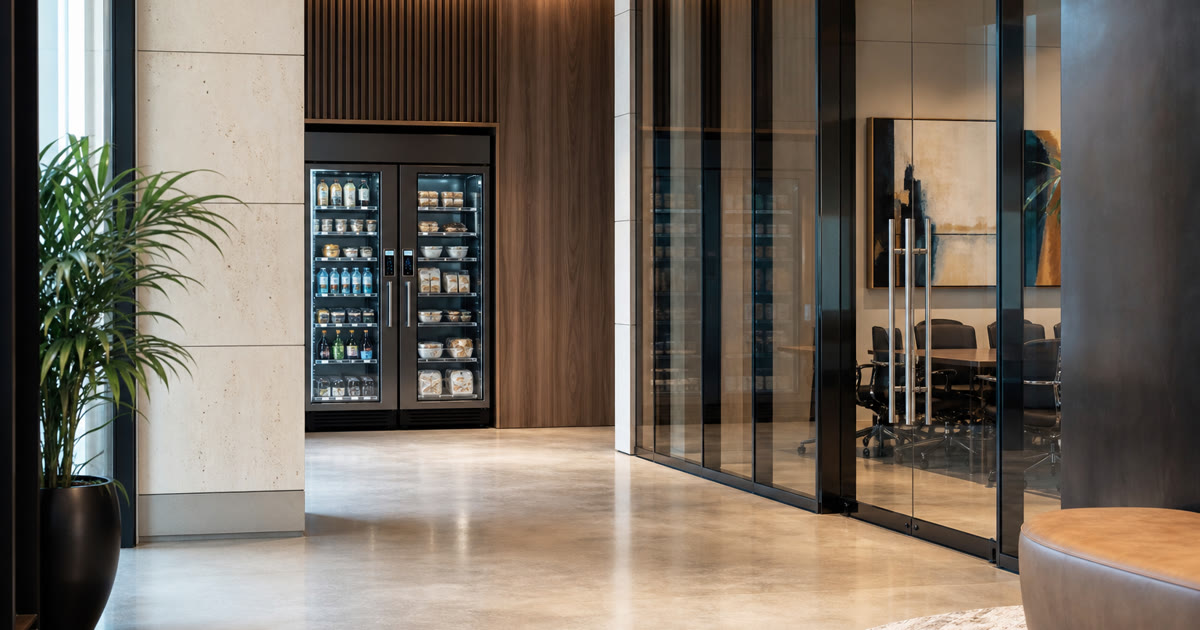
For business events, the smart move is to watch where people naturally slow down. That might be near the meeting room exit, outside the elevator bank, or beside the lounge area people use between sessions. If the unit is tucked behind a door or placed past the point where people have already decided to leave, it becomes invisible.
This is why event-heavy buildings need a placement plan, not just an appliance. The question is not whether the cooler fits against the wall. The question is whether it sits on the route people already use when they have three minutes and a half-dead phone battery.
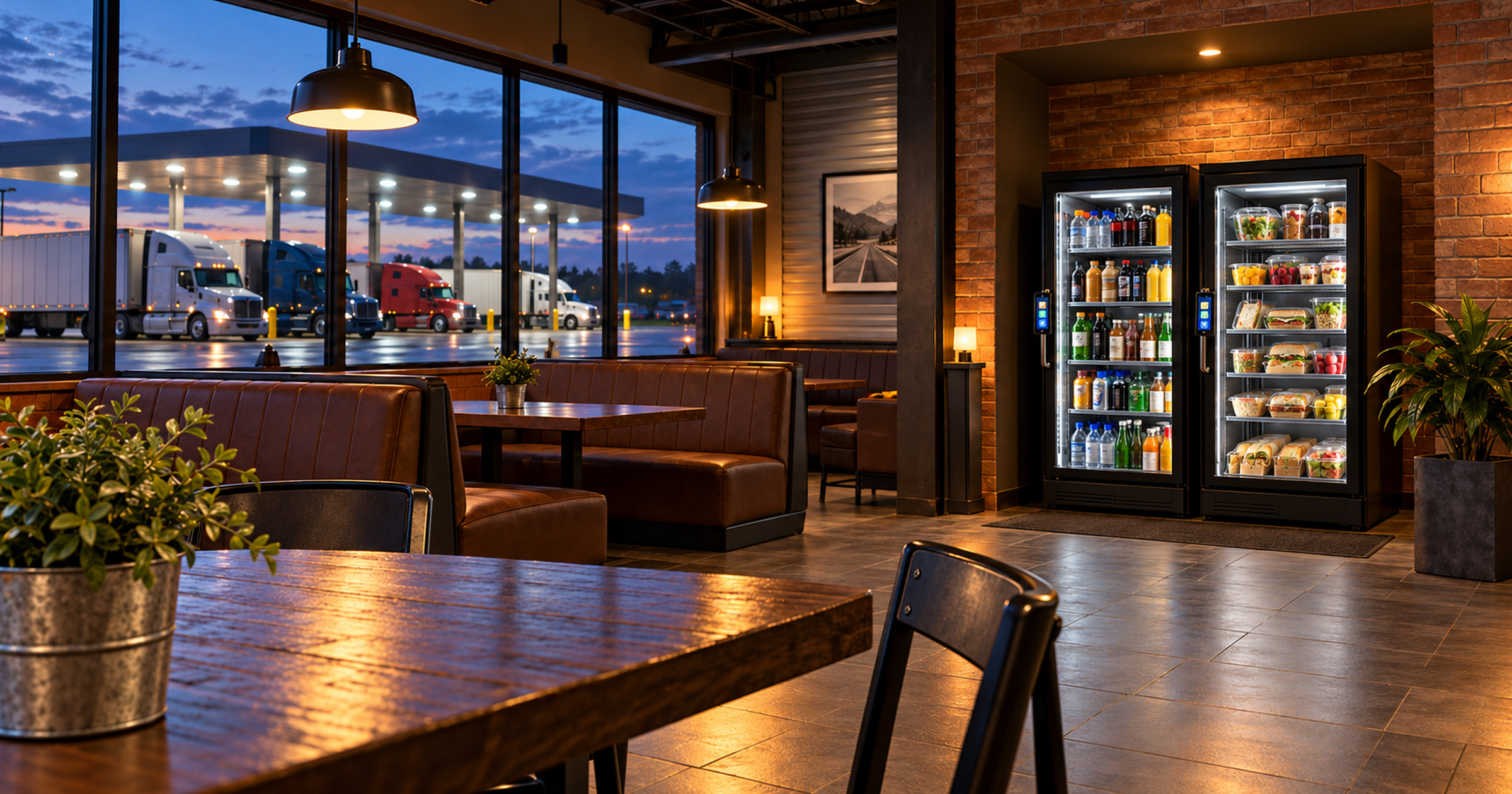
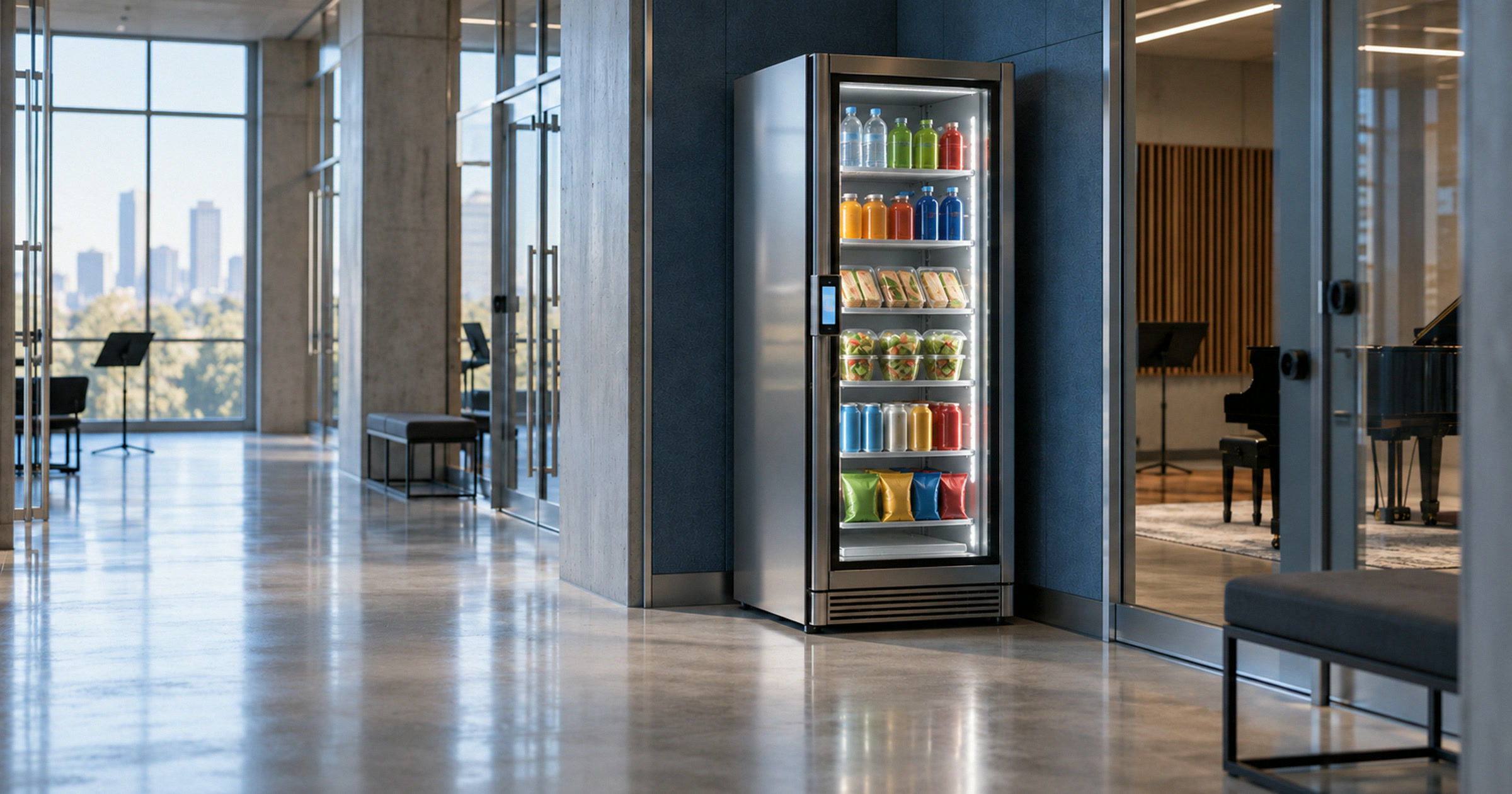
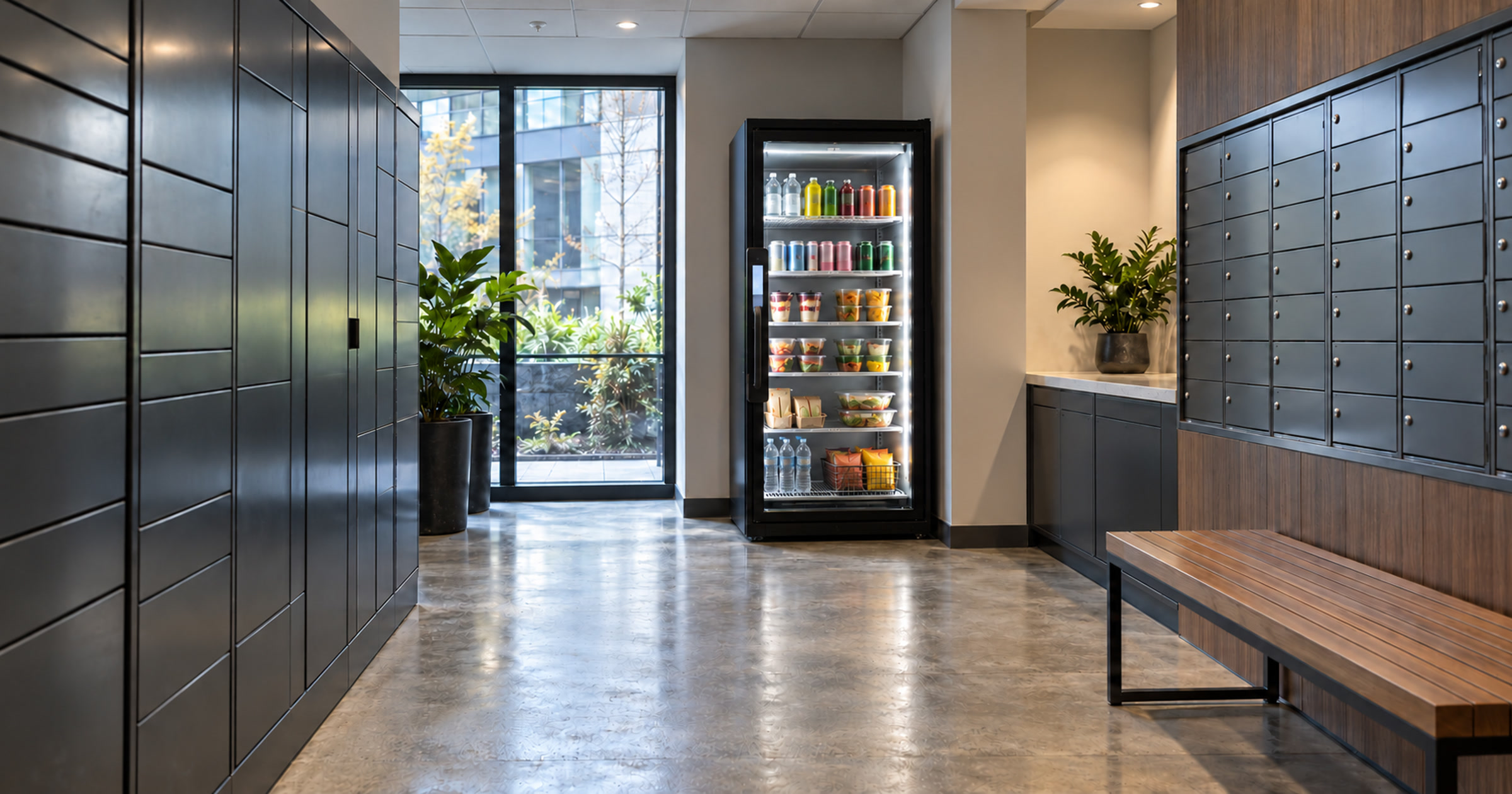
A good setup should be easy to see, easy to pay for, and easy to service without interrupting the room. Clear glass matters because people make faster decisions when they can see the product mix. A cashless payment flow matters because nobody is digging for coins at a business reception. Regular service matters because an empty unit becomes decor with a compressor.
We like this use case because it is practical. Austin has buildings that run investor meetings, tenant events, and awards receptions. Those buildings do not need a complicated food program for every gathering. They need a reliable option that handles the in-between.
The product mix should match the room
A business event cooler should not look like a gas station snack wall wandered into the lobby.
For a reception or conference setting, the mix should feel light and quick. Cold drinks and grab-and-go meals make more sense than a pile of novelty items. The point is not to impress people with variety. The point is to make the right choice obvious when they are standing there with a badge and five minutes before the next conversation.
This is where smart vending and smart fridges are useful for property teams. Purchase data can show what moves. Service visits can adjust the mix. The building does not have to guess forever, and the front desk does not have to become the snack department.
There is also a brand-fit layer. A modern office lobby or hotel meeting floor should not undermine itself with tired equipment. The unit needs to look like it belongs in the room. Hardware matters. So do shelf presentation and the simple fact that someone owns the upkeep.
Revvolto handles stocking, payment tech, and service for qualified locations. That ownership is the difference between an amenity and another chore somebody quietly inherits.
Austin buildings should plan for the calendar they actually have
The local hook is bigger than one awards program. Austin’s business calendar keeps putting people in rooms together. That creates obvious demand spikes in buildings that already serve companies and tenants.
If your property runs after-hours receptions or recurring business meetups, food access should be part of the room plan. Not an emergency run. Not a cardboard snack pile. Not a locked cafe after 4 p.m.
Start with three questions.
Where do people pause when the schedule breaks?
What do they want when the main food service is over?
Who is responsible when the answer is “we are out”?
Those questions are not glamorous. Good operations rarely are. But they tell you whether a smart vending cooler, smart fridge, or compact micro market belongs in the building.
If you are planning food access for an Austin office or mixed-use property, tell us about the location at revvolto.com/contact-us.