A recent Austin Business Journal report says a housing startup has signed a large lease for a new Southeast Austin headquarters and manufacturing operation. That is not just real estate news. It is a reminder that industrial food access is usually decided too late.
When a facility is still being planned, leaders think about production flow and loading access. Office layout gets its own pass too. Food and drink access often gets treated like a small breakroom detail. Then the building opens, shifts get busy, and someone realizes the nearest convenient option is off-site food or app delivery. The fallback becomes a half-stocked shelf that somebody has to babysit.
For Austin industrial teams, that is the wrong order. A smart vending machine, smart fridge, or small micro market works best when it is planned around the real path people already take through the building.
Industrial food access starts with the shift path
A manufacturing or flex-space building does not move like a normal office. People arrive in waves. Teams step away between production runs, training sessions, and handoffs. The useful food-access point is not always the prettiest room. It is the place people naturally pass when they have five minutes and do not want to leave the site.
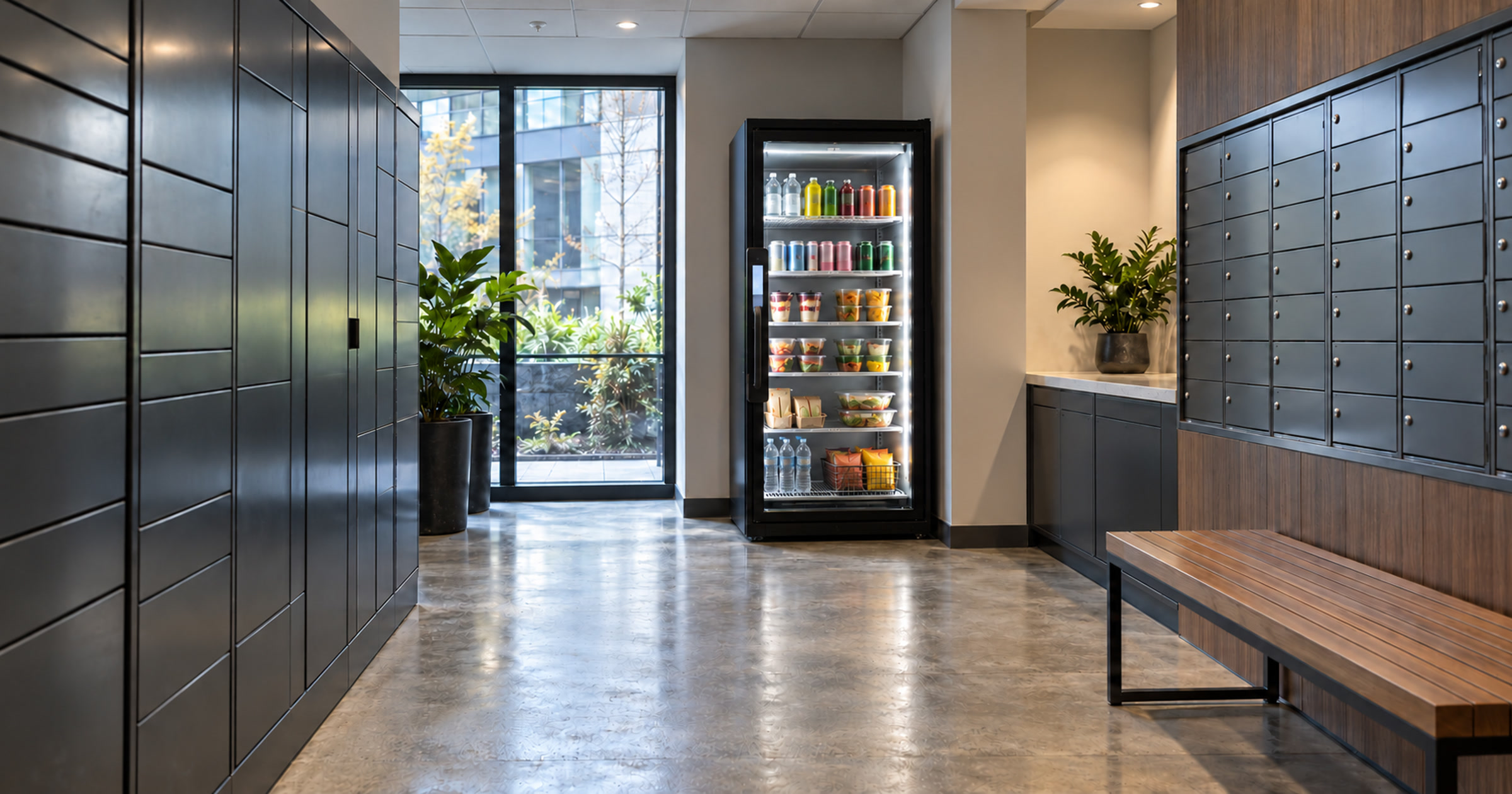
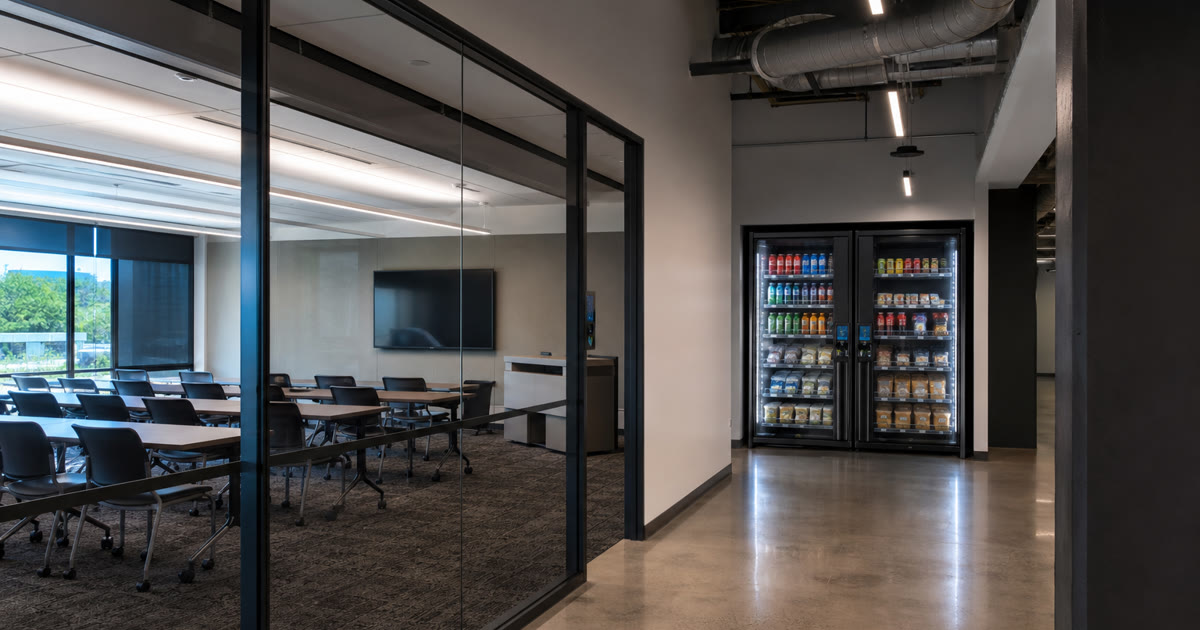
That may be near a training room. It may be between production and lockers. It may be beside the office entrance, close enough for managers and floor teams without putting food in the way of operations.
This is where the Southeast Austin lease news is useful. A headquarters plus manufacturing footprint brings different daily needs under one roof. Office staff, production teams, and visitors do not use the building the same way. If food access is only placed where it looks good on a tour, it may miss the people who need it most during the workday.
A better question is simple: where do people already pause?
That is where modern vending or a smart fridge starts to make sense. Not as a shiny amenity shoved into a corner. As a practical stop on the route people already use.
The best location is not always the breakroom
The default answer is “put it in the breakroom.” Sometimes that is right. Often it is lazy.
Breakrooms can be tucked away from the actual traffic path. They can be too small, too crowded at peak times, or too far from the training rooms and shift entrances that create quick food demand. In industrial buildings, the useful location often sits at the edge of several paths rather than inside one room.
For a site leader, the planning test should be painfully practical:
- Can a team member reach it without leaving the secure or approved work area?
- Can restocking happen without disrupting production or blocking a hallway?
- Can office, training, and floor teams use it without turning one department into the snack desk?
If the answer is no, the placement needs more thought.
Revvolto’s role is to take the food-access chore off the building team. For qualified locations, we can place a modern smart vending machine or smart fridge. We handle replenishment and payment tech. We handle service too. The building team should not have to track drink counts, chase snack requests, or figure out which payment app is broken this week.
That is the part many amenity conversations miss. The machine is only useful if the operating model behind it is handled.
Plan for training rooms, handoffs, and after-hours gaps
Industrial buildings create food-access gaps in small, predictable moments. New-hire training runs longer than planned. A floor lead has ten minutes between handoffs. An office employee stays late while production is still moving. A visitor arrives between meetings and does not have time to leave the property.
None of those moments require a full cafeteria. They do require better thinking than a box of aging granola bars in a cabinet.
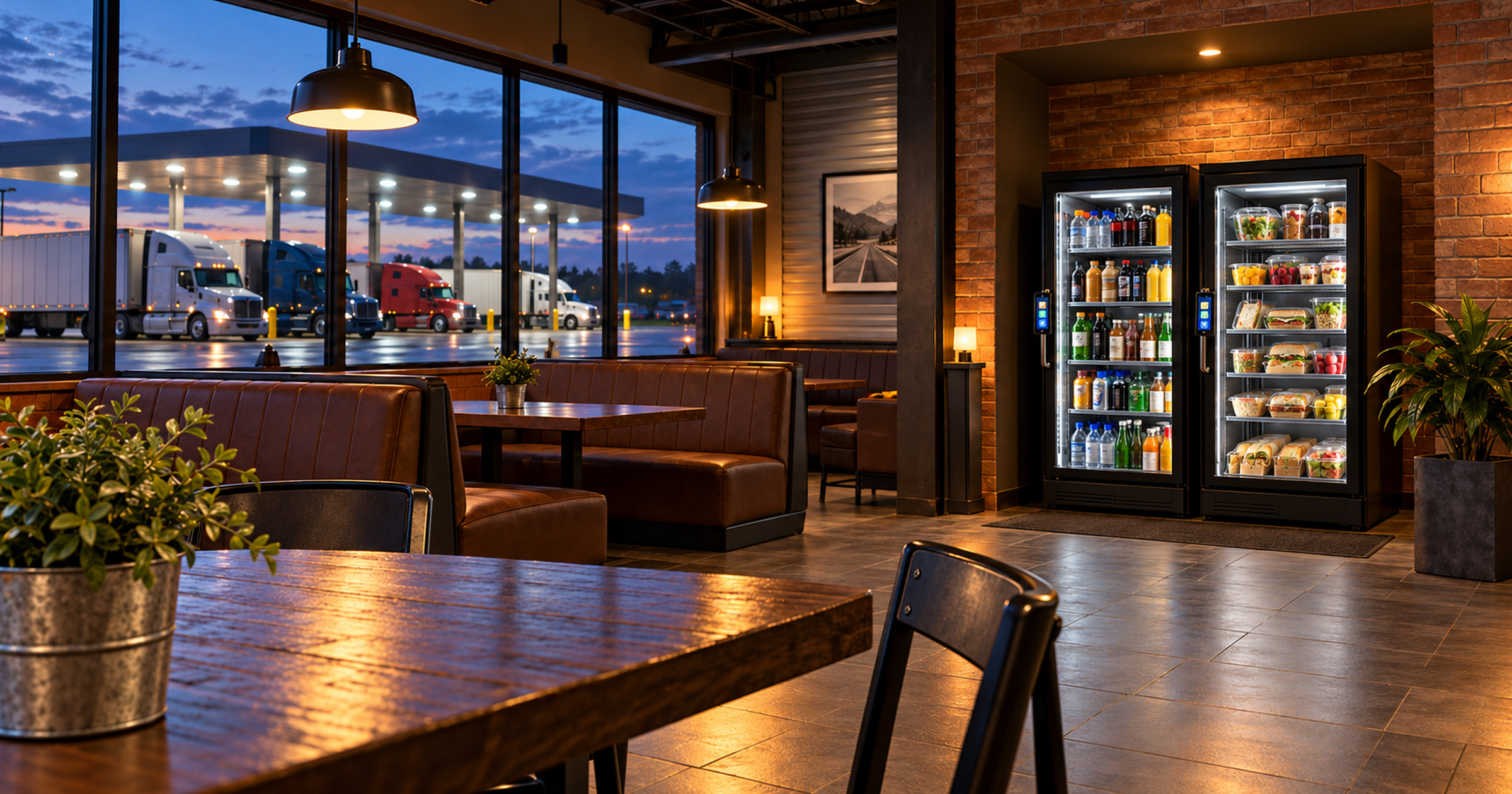
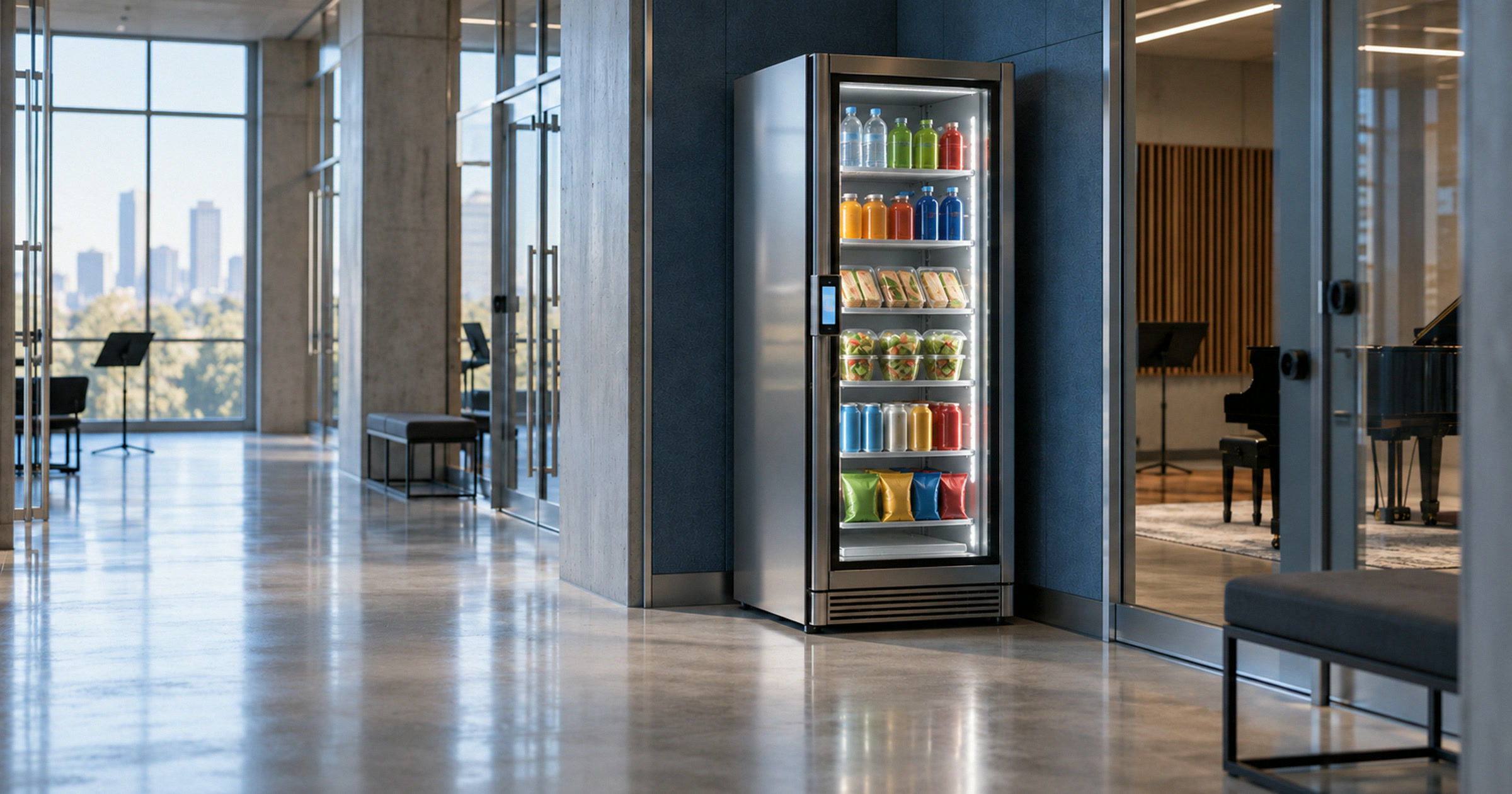
Smart vending and smart fridges fit the middle ground. They can support cold drinks, snacks, and packaged meals in a controlled cashless setup. The right mix depends on the building, the workforce, and the traffic pattern. The point is not to pretend every industrial site needs the same setup. The point is to make food access visible in the facility plan before habits form around leaving the property.
That matters in Austin because industrial and flex-space growth keeps pulling more work into buildings that combine production, office, and training activity. The food-access plan should match that mixed reality.
If the property has a long shift window, a smart fridge near the right pause point may matter more than a stocked pantry in the wrong room. If the building has frequent visitor or training activity, the placement may need to serve short breaks without creating clutter. If restocking access is awkward, the best-looking location may become a service headache.
Good amenity planning is not glamorous. It is a map of where people actually stop.
Revvolto keeps the food plan from becoming another job
The biggest mistake is treating vending as a one-time equipment decision. Industrial teams do not need another unmanaged appliance. They need a reliable food-access setup with clear ownership.
That is where Revvolto fits. We help qualified Austin-area locations add modern cashless vending, smart fridges, or micro market setups that are stocked and maintained by us. The site gets a practical amenity. The team gets food and drink access without making internal staff manage the operation.
For a new or expanding industrial space, the best time to ask the vending question is before the route is baked into the building. Walk the shift path. Look at training rooms. Watch the handoff points. Find the place where a five-minute food stop belongs.
Then make the amenity fit the workday instead of making the workday bend around the amenity.
If your Austin industrial or flex-space team is planning a new food-access point, tell us about the location at revvolto.com/contact-us.