Austin’s office market sent a useful signal this week: the buildings that get people back through the doors still have to support the day once people are inside.
Austin Business Journal’s commercial real estate page highlighted several office-market stories on August 13. The visible headlines pointed to big office buildings, vacancy pressure, and a more active office market. We are not connected to Austin Business Journal, any building owner, or any project named in that coverage. We are using the public news cycle as a planning cue.
For property teams, the point is simple. If office traffic is changing again, food access should not be left in the old breakroom corner by default. The better question is where people already pause.
Office traffic changes expose bad amenity placement
Office occupancy does not need to be perfect for building operations to feel the difference. A few more tenant visits or training days can make a weak food setup obvious fast.
The problem is not usually that a building has no food option. The problem is that the option sits in the wrong place, asks too much from the site team, or disappears outside normal café hours.
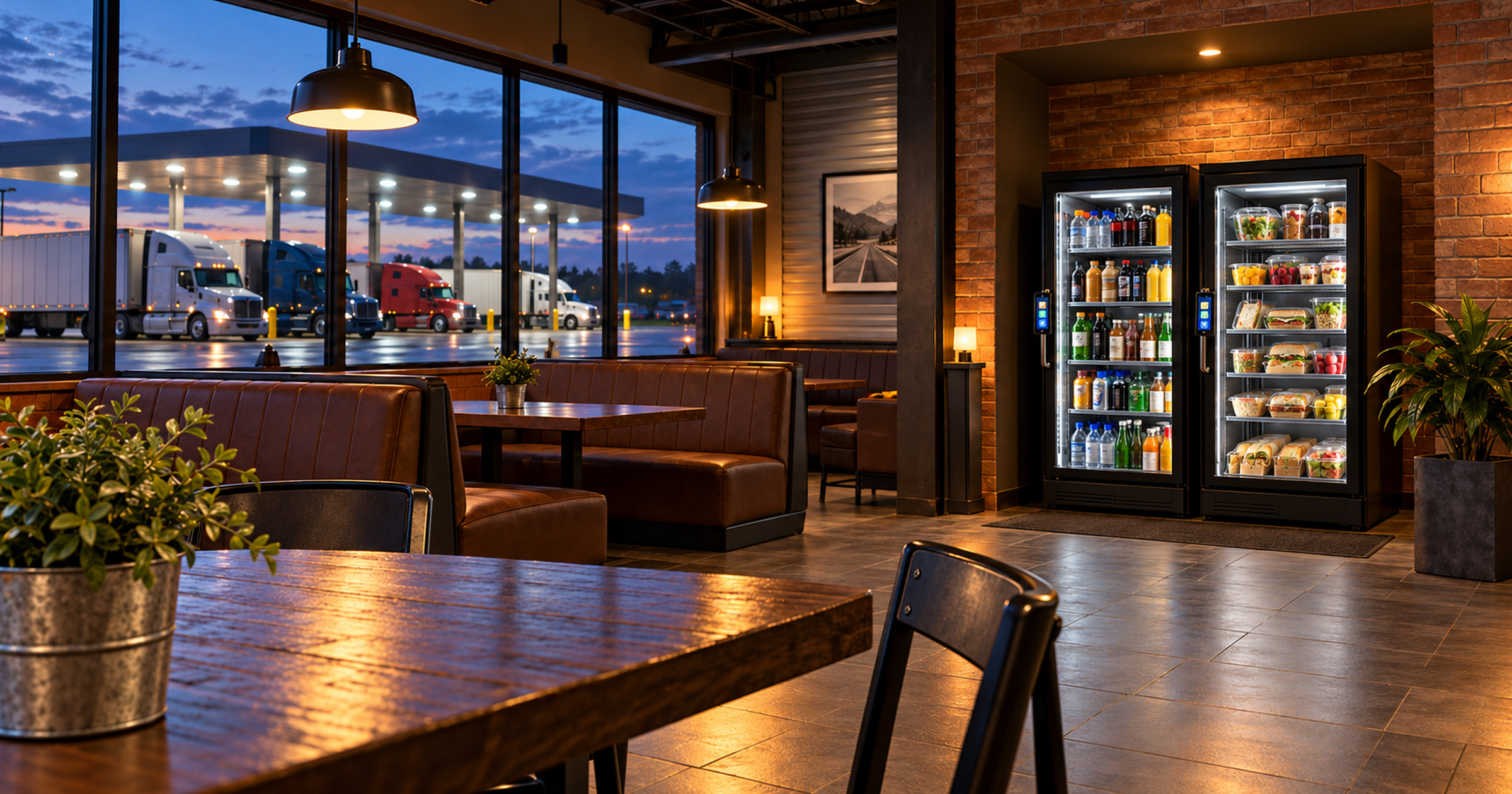
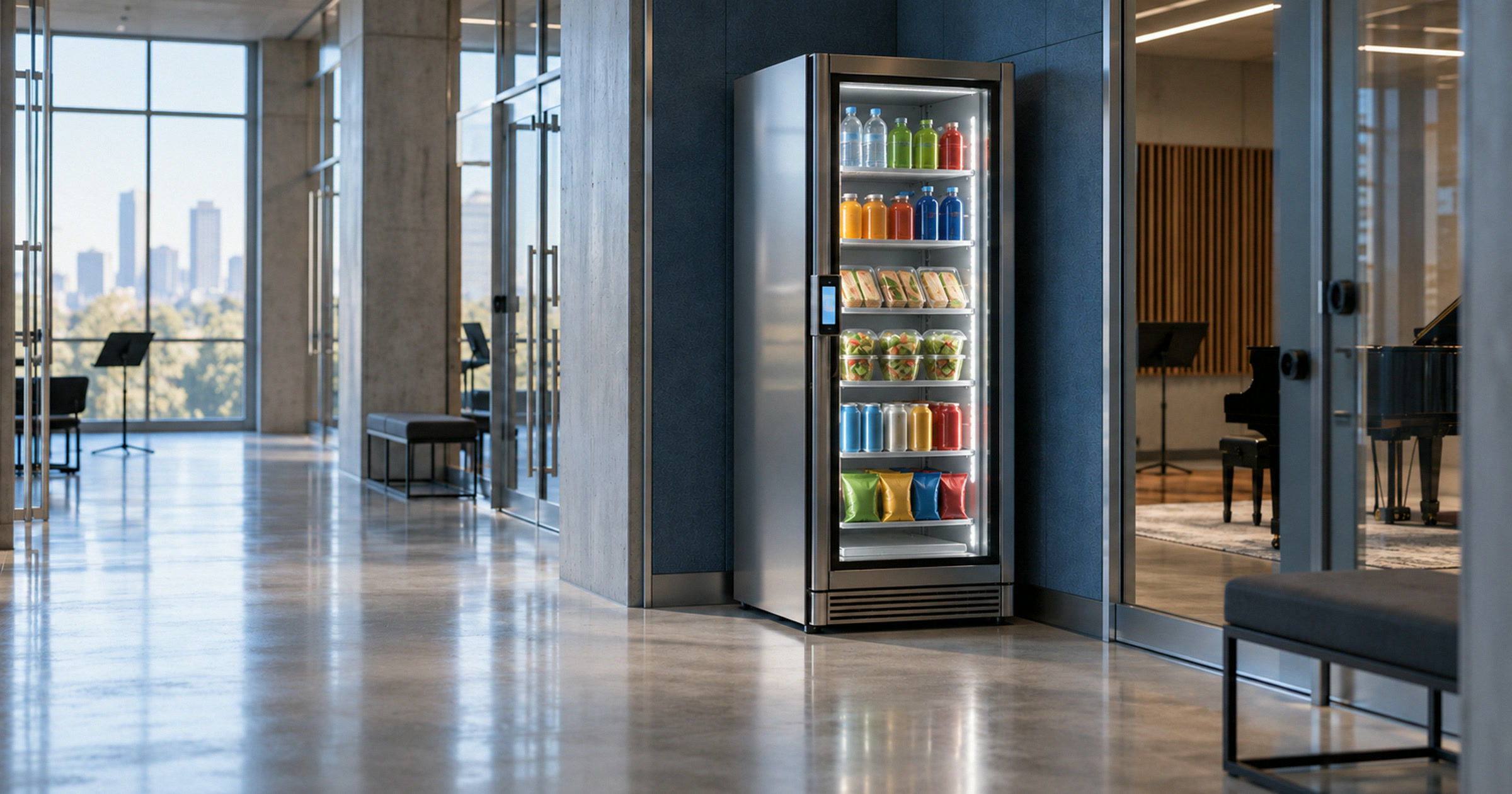
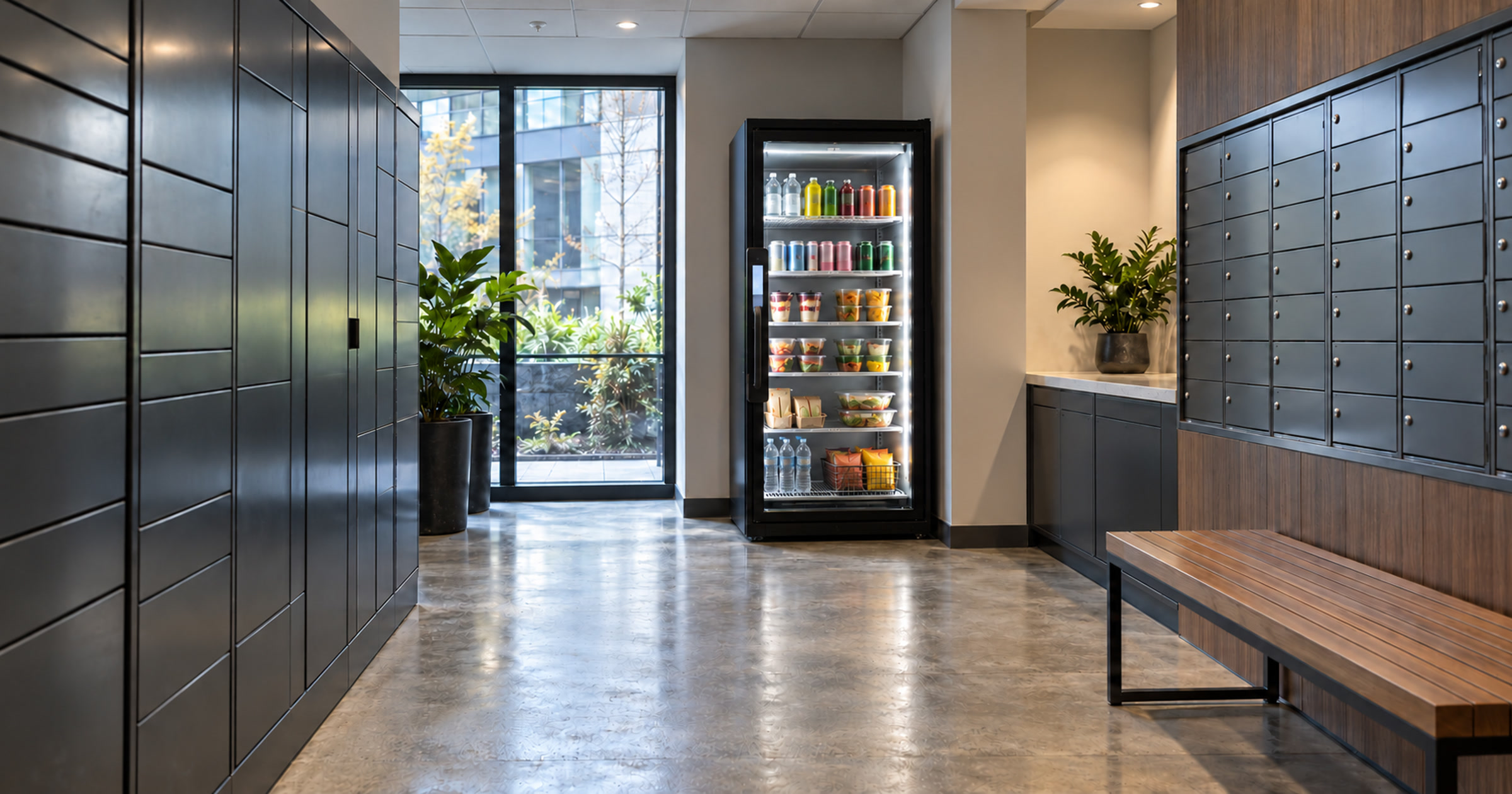
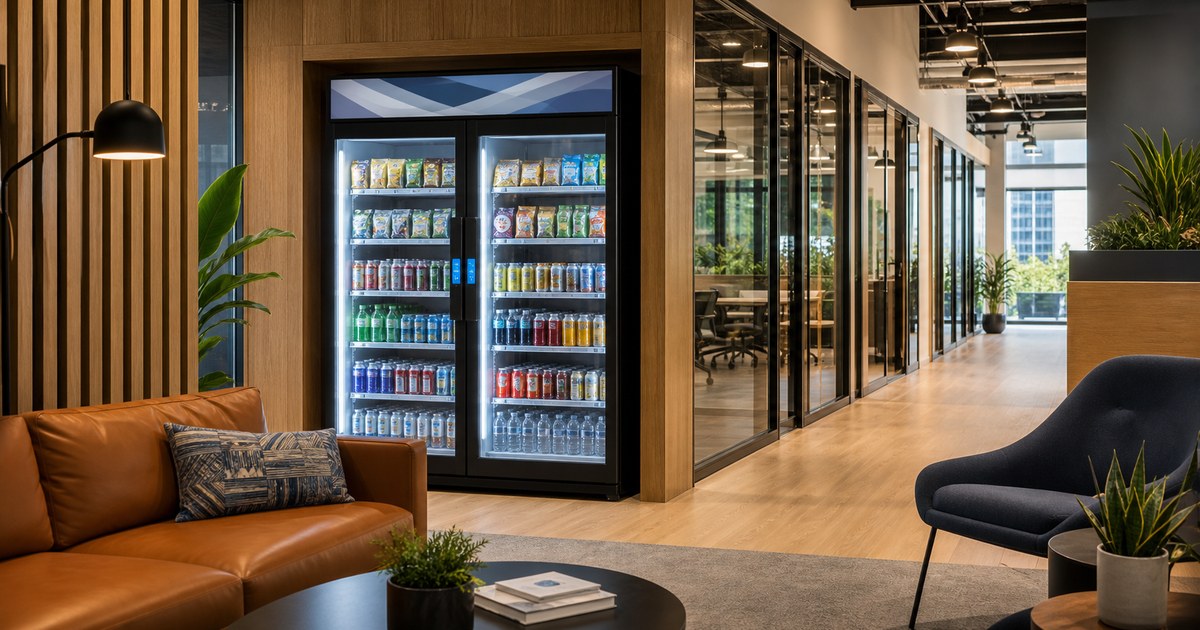
That is where smart vending and smart fridges are useful. They can support grab-and-go food and drinks near the actual movement path. Think elevator banks or shared lounges, not forgotten leftover corners. Not every location needs the same format. A compact smart fridge may fit one floor. A glass smart vending cooler may make more sense near a larger shared amenity area.
The mistake is treating food access like décor. It is operational infrastructure. If people are expected to move through the building all day, basic food and drink access should not feel like a scavenger hunt.
This is also where service ownership matters. A pretty snack shelf still becomes a building-team problem when someone has to buy product and explain why the useful items are gone. Smart vending should remove that work, not rename it.
The best location is usually not the prettiest corner
A smart vending machine can look polished and still be useless if it sits where people do not naturally stop.
Start with the path. Where do tenants enter after parking? Where do visitors wait before meetings? Where do employees pass between a conference room and the elevators? Where does the building team already answer “where can I grab something?”
Those questions beat a generic amenity checklist. They also keep the decision practical. A smart cooler near a real pause point can support a busier office day without asking the site team to run a pantry experiment.
The machine has to fit the room too. A narrow corridor needs a different answer than a tenant lounge. A training area needs clear access without blocking traffic. A mixed-use lobby needs a setup that feels professional instead of temporary.
That is why the first step should be a break path audit, not a product pick. The path tells you what format belongs there.
It also keeps the conversation honest. A building with light daily traffic may need a smaller smart fridge. A busier shared lobby may justify a larger glass cooler. The room should lead the recommendation, not the spreadsheet guesswork.
Austin office teams should plan for uneven demand
Office use is not returning in one neat line. Some days feel quiet. Some days suddenly carry team meetings or after-hours work. That unevenness is exactly where old food setups break.
A stocked smart vending cooler or smart fridge gives the building a steadier baseline. It does not replace restaurants, cafés, or catering. It covers the practical gap between them. Someone forgot breakfast. A meeting ran long. A tenant has people in the office after the nearby café closes. A visitor wants a drink before heading back to the airport.
None of that requires a giant market buildout. It requires the right format in the right pause point, with stocking and service owned by someone other than the property team.
For Austin offices trying to make in-person work feel less awkward, that matters. Amenities do not need to be flashy. They need to remove tiny frictions that make the day worse.
What to check before adding smart vending
Before choosing a vending machine, walk the building like a visitor.
Notice where people slow down. Notice where they wait. Notice where food questions already happen. Then ask whether that spot has the access and service clearance for a modern smart vending setup.
A good setup should answer four practical questions.
Can people find it without a tour?
Can they use it without interrupting the front desk or property team?
Can Revvolto stock and service it without creating a traffic problem?
Does the format match the room instead of fighting it?
That is the difference between an amenity that looks good in a leasing deck and one people actually use.
Austin’s office market does not need another vague workplace perk. It needs food access that matches how buildings are filling back in: unevenly, locally, and one pause point at a time.
If you are reviewing food access for an Austin office or mixed-use building, tell us about the location at revvolto.com/contact-us.