A current Austin development story has a practical lesson hiding behind the headline.
Community Impact reported that the UT System Board of Regents approved adding the first phase of the UT Dell Medical Center to its capital improvement program after an August 12 meeting. The story says that step lets early design and development preparation work move forward for a medical complex planned inside the larger UT Dell Campus for Advanced Research off MoPac.
Revvolto has no affiliation with UT, the UT System, or the medical center project. We are using the update as a local planning cue for Austin buildings where healthcare and research teams may eventually spend long days on site.
The point is simple: staff food access should be planned while the building path is still being designed, not after the support route has already been decided.
Healthcare buildings run on more than clinical space
Medical and research buildings are usually planned around big visible needs first. That makes sense. Clinical space and support infrastructure both matter.
But staff support space is where a lot of the daily workday either gets easier or more annoying.
A medical building can have a beautiful lobby and still leave employees improvising when a shift runs long. A clinic can have a polished reception area and still push break food into a back counter that nobody really owns. A research floor can have serious equipment planning and still forget that people need fast access to a drink or snack without crossing the whole property.
That is not a luxury problem. It is a building operations problem.
When staff food access is treated as an afterthought, the building usually pays for it in small ways. People leave the floor for quick errands. Breaks run longer than expected. Front-office teams get pulled into snack questions. Someone has to manage a shared refrigerator that was never meant to serve that many people.
None of that makes the project fail. It just adds friction every day. Friction is boring. That is why it is easy to miss.
The break path should be part of early planning
A smart vending machine or smart fridge works best when it fits an existing staff path.
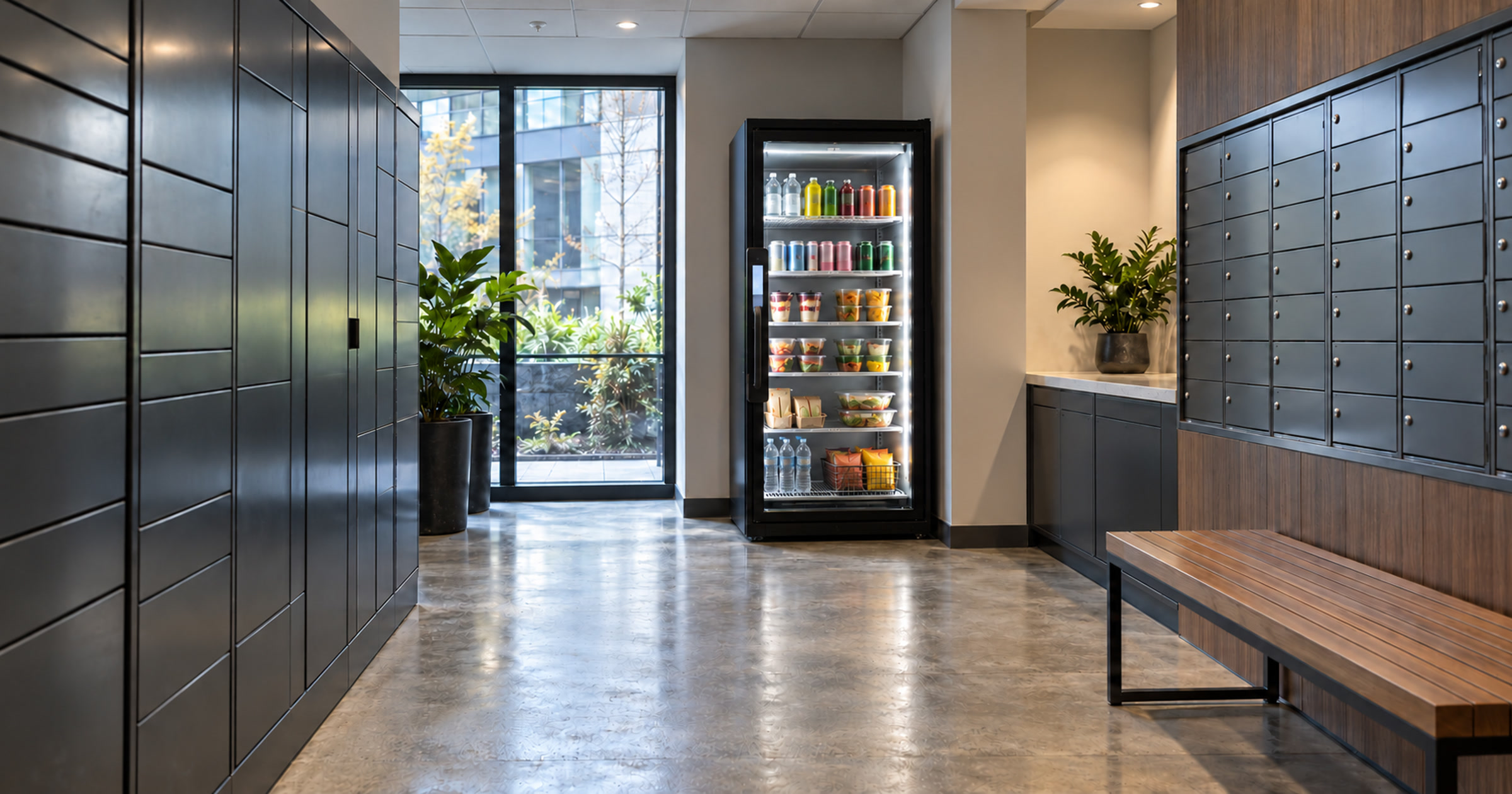
That path may be near a staff entrance. It may sit between lockers and a break area. It may belong near a training room where teams already pause between sessions. The right spot depends on how the building actually works, not where a machine looks best in a rendering.
For healthcare and medical office settings, that distinction matters.
Patient-facing areas are usually the wrong default. Back-of-house staff spaces are often better because they support employees without turning the machine into public lobby clutter. The placement also needs room for restocking, room for people to stand without blocking a corridor, and a clear line between staff food access and sensitive clinical operations.
That is why the vending conversation should not wait until opening month.
If a property team waits too long, the only available spot may be the awkward corner nobody wanted for anything else. That is how a useful amenity becomes an appliance in exile. It may technically fit, but it will not serve the team well.
The better question is: where do employees already pause when they have three minutes, not thirty?
Smart vending is also a workload decision
Food access is not only about convenience. It is also about ownership.
A shared snack shelf sounds easy until someone has to own the buying, payment, and cleanup. A break room fridge sounds harmless until it becomes a rotating mystery box of forgotten containers.
Revvolto’s role is to remove that job from the internal team when the location is a fit. We place modern cashless smart vending machines or smart fridges, then handle stocking and service.
That matters in staff-heavy settings because the internal team already has enough to do. The goal is not to make vending the star of the building. Please do not make vending the star of the building. That would be weird.
The goal is to make food and drink access feel like a normal part of the workday, without handing another operational chore to people who are already busy.
In healthcare-adjacent spaces, the copy should stay honest. A vending machine does not improve care. It does not make clinical claims. It does not solve staffing. What it can do is support the practical layer around the work: quick access, cashless checkout, and a placement plan that respects staff flow.
That is enough. Useful does not need a cape.
Austin planners should ask the boring questions early
The UT Dell Medical Center update is large-scale news, but the lesson applies to much smaller Austin spaces too.
Medical offices and healthcare support sites face the same basic planning question: when people are on site for long stretches, where do they get something quick without creating more work for the team?
The answer should be sketched before the building is finished.
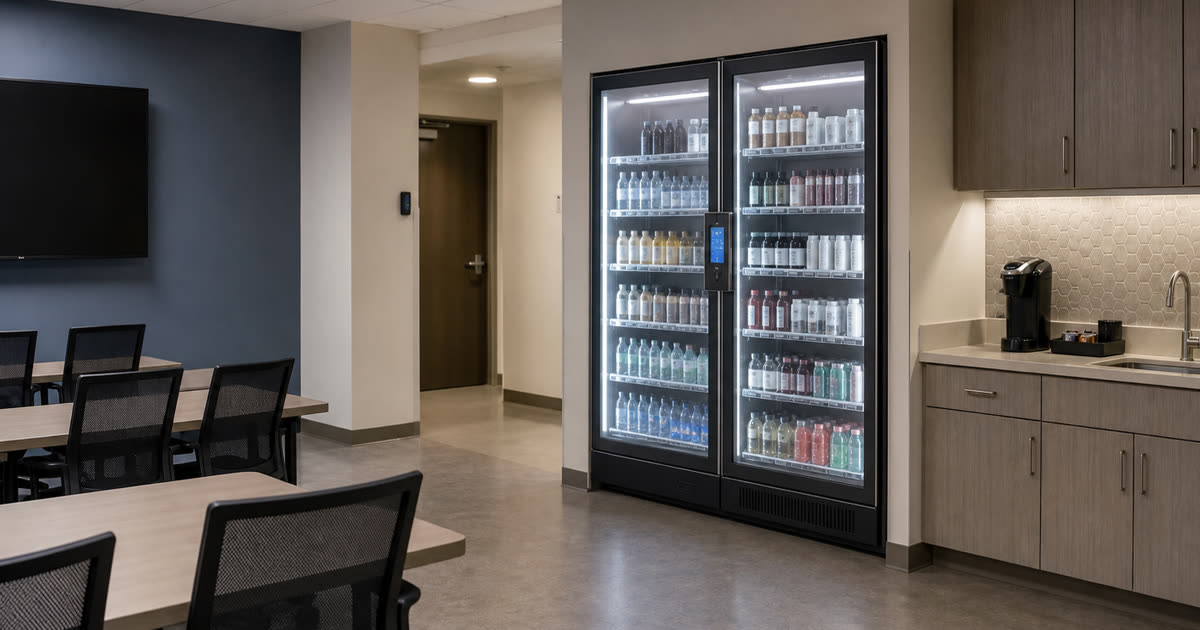
Ask where staff enter. Ask where breaks already happen. Ask which areas should stay patient-facing and which should stay staff-only. Ask whether restocking can happen without disrupting the workday. Ask whether a compact smart fridge, a clear-glass smart cooler, or a full smart vending setup fits the space better.
Those are boring questions. Good. Boring questions save people from ugly fixes later.
If you are planning an Austin-area healthcare or research location and want staff food access handled without turning it into another internal job, tell Revvolto about the location. We will help you think through fit, placement, and service before the break path becomes somebody else’s problem.