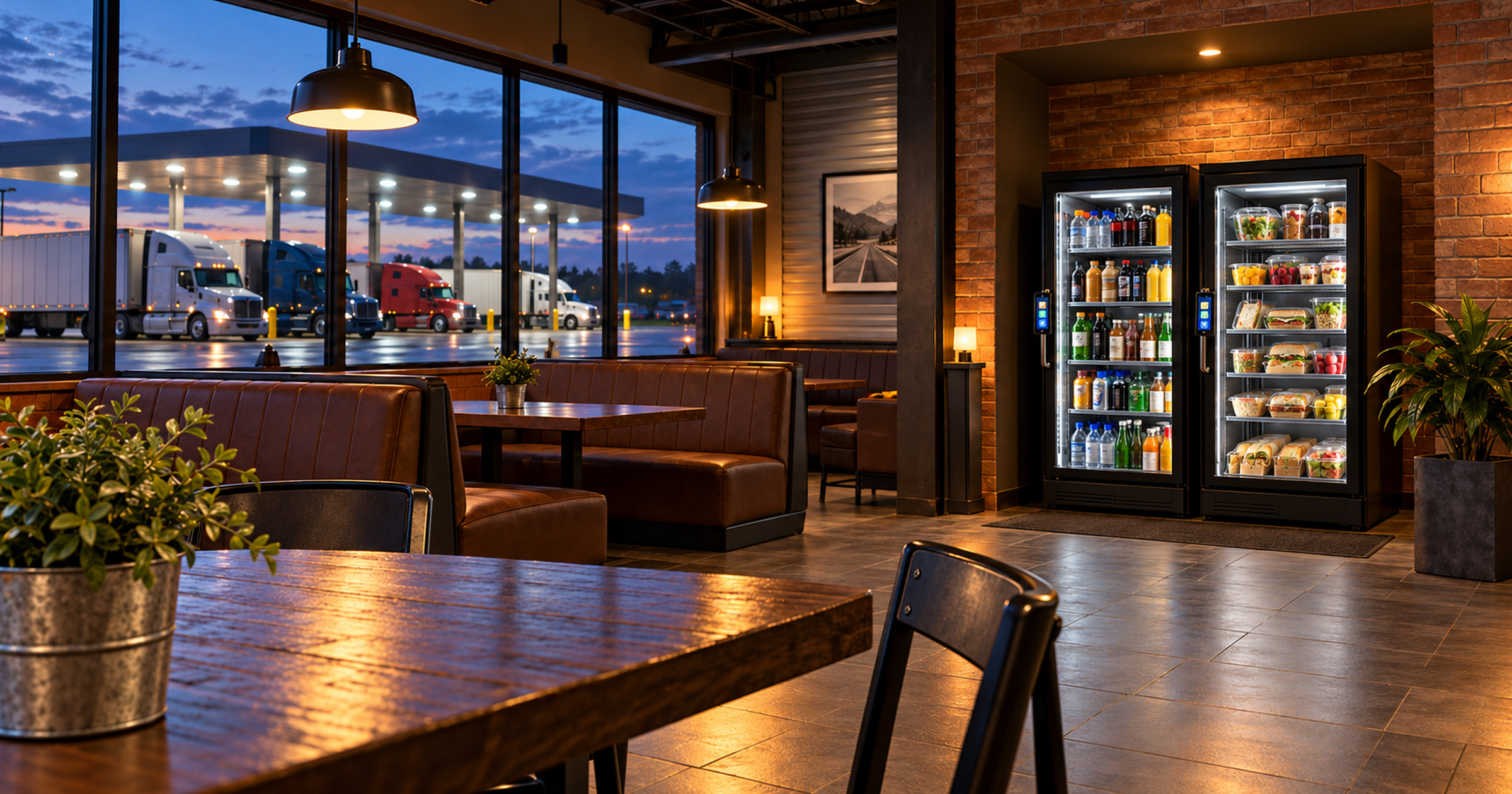
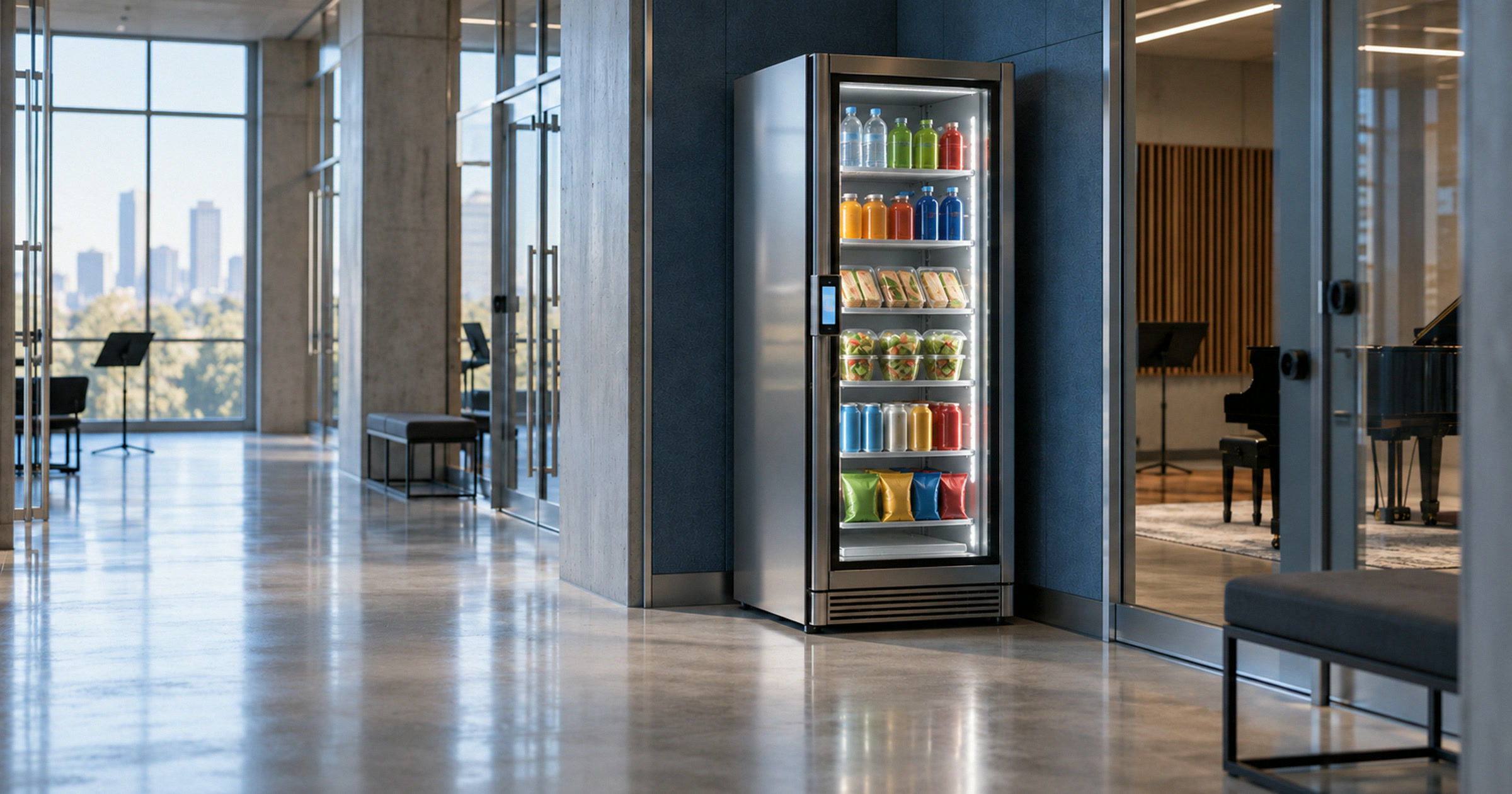
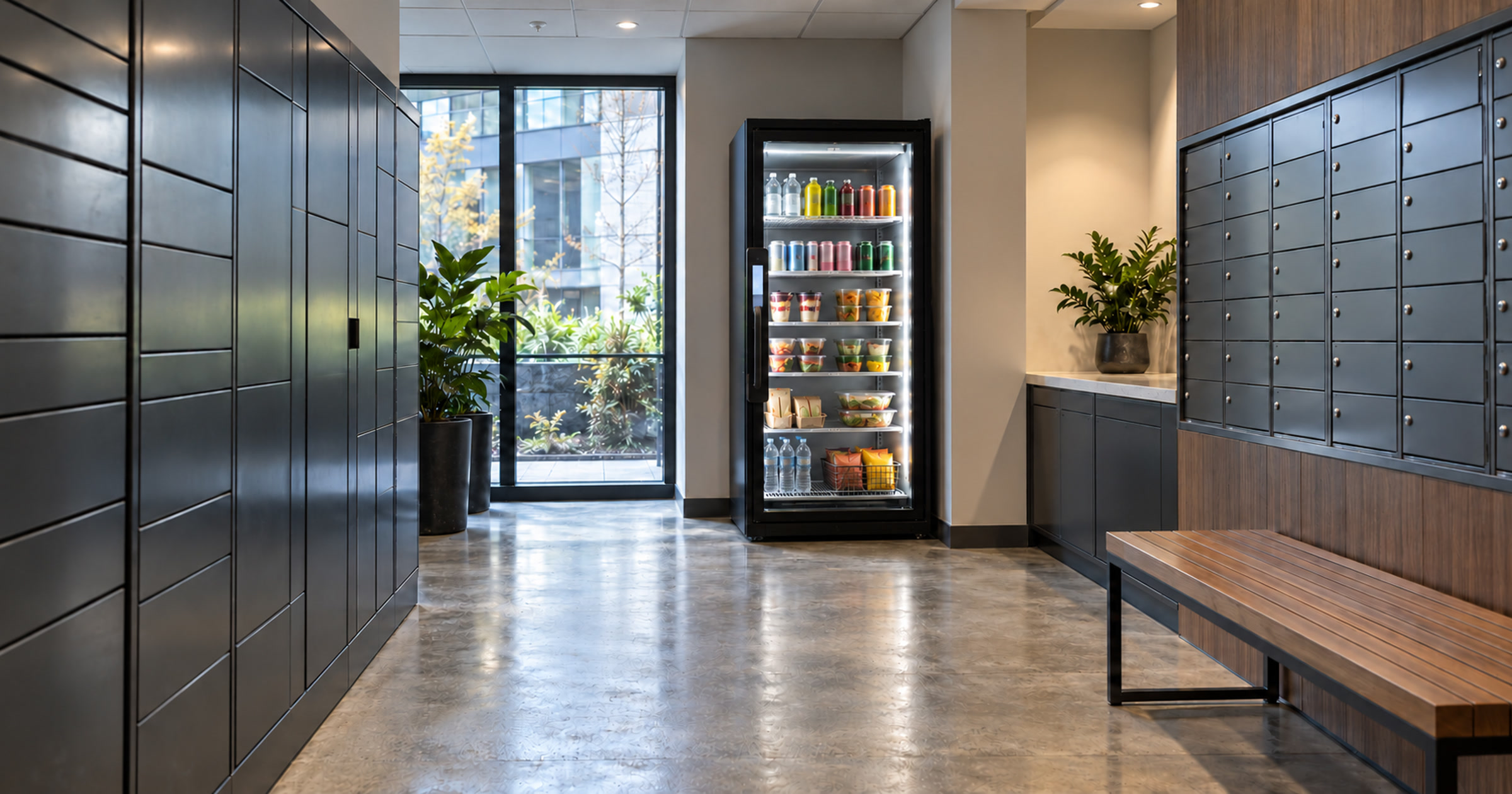
A new hotel filing on East 7th Street is a useful reminder for Austin property teams: food access works best when it is planned before the building opens, not patched in after guests and staff start improvising.
Community Impact reported on August 18 that an East Austin 7th Street hotel was among major Austin area permits filed that week. The Texas Department of Licensing and Regulation record shows a registered 86,797 square foot, five story commercial hotel planned at 1612 East 7th Street. The project was registered August 17, 2026.
Revvolto has no affiliation with the project, owner, or design firm. We also have no affiliation with TDLR or Community Impact. The filing is simply a clean local signal. When hospitality rooms are being planned, food and drink access should be part of the operations conversation early.
Hotel food access is a building-flow decision
Hotel food access usually gets discussed like a retail amenity. That misses the point.
Guests do not move through a hotel like shoppers in a store. They arrive tired. They wait for rides. They come back from dinner late. They leave for meetings before a full breakfast setup feels worth it. Staff have their own timing problem, especially when the public-facing food option is not where employees actually take short breaks.
That is why vending machines, smart fridges, and compact micro market setups belong in the planning conversation early. Food access should be considered before wall finishes, outlet locations, and service paths are locked.
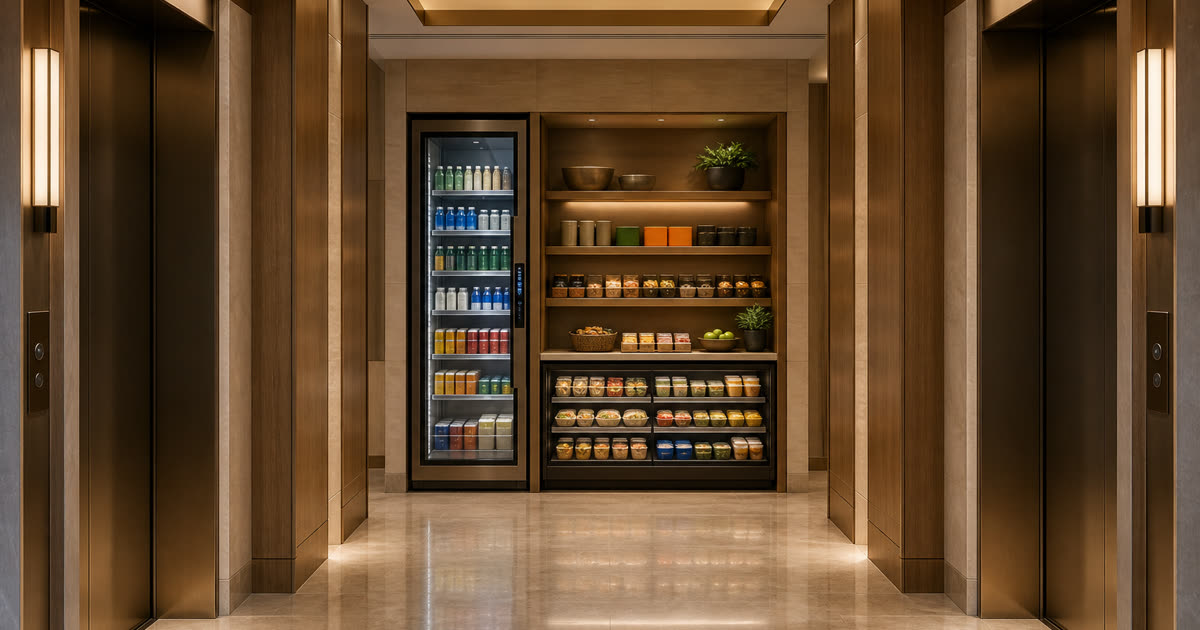
The East 7th Street filing is not a vending story by itself. It is a reminder that a five story hotel has more than one food moment. A lobby can cover guests. A staff area can support the team. A corridor or elevator-adjacent nook can catch the pause path without asking the front desk to become a snack counter.
The bad version is easy to spot. A beautiful hotel opens, the lobby looks finished, and the food plan depends on people leaving the building for every small thing. That sounds fine in a planning meeting. It feels less fine at 10:40 p.m. when someone wants water, a sandwich, or coffee for the room.
The lobby is not the only pause point
Most food access mistakes start with one lazy assumption: put everything near the lobby and call it done.
The lobby matters, but it is not the whole building. Guests pause near elevators. Staff pause near service corridors. Event groups collect around meeting rooms. Delivery drivers, housekeeping teams, and night staff use paths guests never see.
A smart vending plan should ask where people already stop. If the machine sits outside the real path, it becomes furniture with snacks inside.
For a hotel, the useful question is simple: where will someone naturally pause for sixty seconds without creating a service burden? That could be a lobby alcove, a staff break area, or a compact market wall near the elevators. The right answer depends on the building, but the question should be asked before the opening punch list is already on fire.
This is also where modern smart vending beats the old mental picture of a vending machine. A clear glass smart cooler or smart fridge can feel like part of a polished hospitality space when the placement, product mix, and service plan are handled properly. It should not feel like someone rolled a breakroom box into a hotel corner and hoped nobody noticed.
Staff food access deserves its own plan
Hotels tend to think about guest experience first. Fair. Guests are the business.
But staff food access is not charity. It is operations. If your team depends on whatever is open nearby, short breaks get worse and managers inherit little friction all day.
A stocked smart fridge in a staff-only area can support the shift path without touching the guest experience. It can also keep the public lobby cleaner because employees are not forced to use the same tiny grab-and-go setup intended for guests.
The line matters. We are not talking about employee wellness claims or magic productivity promises. We are talking about basic availability: food, drinks, and cashless checkout with a service model that does not turn the hotel team into inventory support.
If the East 7th Street hotel plan reminds Austin operators of anything, it should be this: a new building gets one clean chance to design food access around how people actually move. After opening, every fix is more annoying.
Smart vending works when service is owned
The machine is the visible part. Service is the part that decides whether people keep using it.
A modern smart vending or smart fridge setup should answer four questions before it goes in. Who stocks it? Who handles payment support? Where does service happen without blocking guests or staff? What product mix makes sense for the specific audience using that spot?
Revvolto’s role is to remove that burden in qualified locations. We install and service the unit, including stocking and payment tech. The building team should not have to become a tiny grocery department with worse lighting.
That matters in hospitality because the room is already doing a job. A hotel lobby has to look intentional. A staff pantry has to stay practical. A corridor market nook has to stay clear and easy to service. If the vending plan ignores those realities, the machine becomes one more thing people work around.
Smart vending is not about stuffing more hardware into a property. It is about putting the right food option where the pause already exists.
The takeaway for Austin hotel and mixed-use teams
The East 7th Street filing is early, which is exactly why it is useful. Permits and registrations are not the time to pick snacks. They are the time to notice where food access could become a problem later.
For Austin hospitality teams, the planning prompt is blunt: do not wait until guests and staff show you the food gaps the expensive way.
Walk the building plan. Find the pause paths. Separate guest access from staff access when that makes sense. Leave room for service. Then decide whether a smart vending machine, smart fridge, or compact micro market setup fits the space.
If you are planning a hospitality or mixed-use amenity space in Austin, Revvolto can help you pressure-test the food access plan before it turns into a daily nuisance. Tell us about the location at revvolto.com/contact-us.