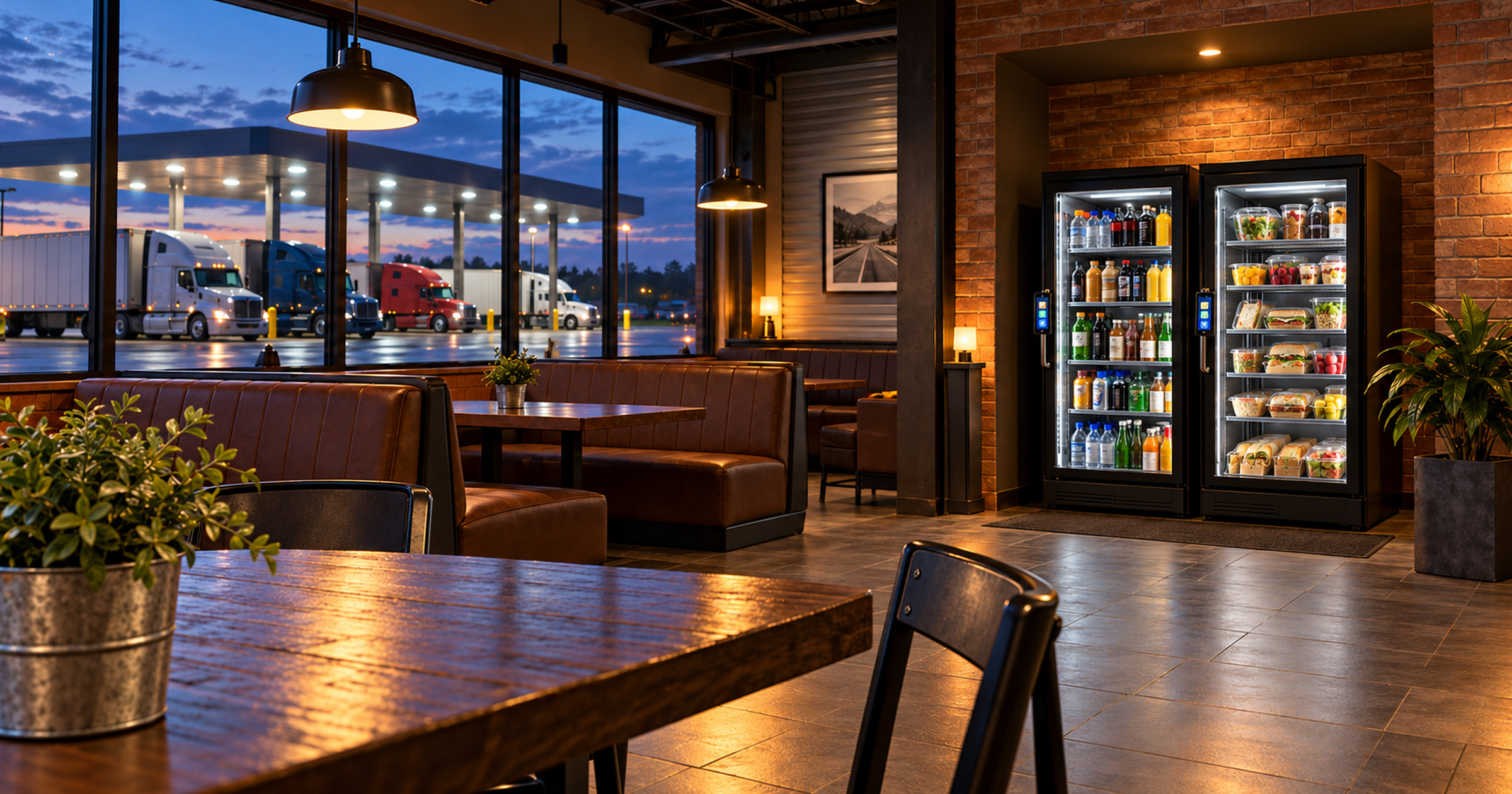
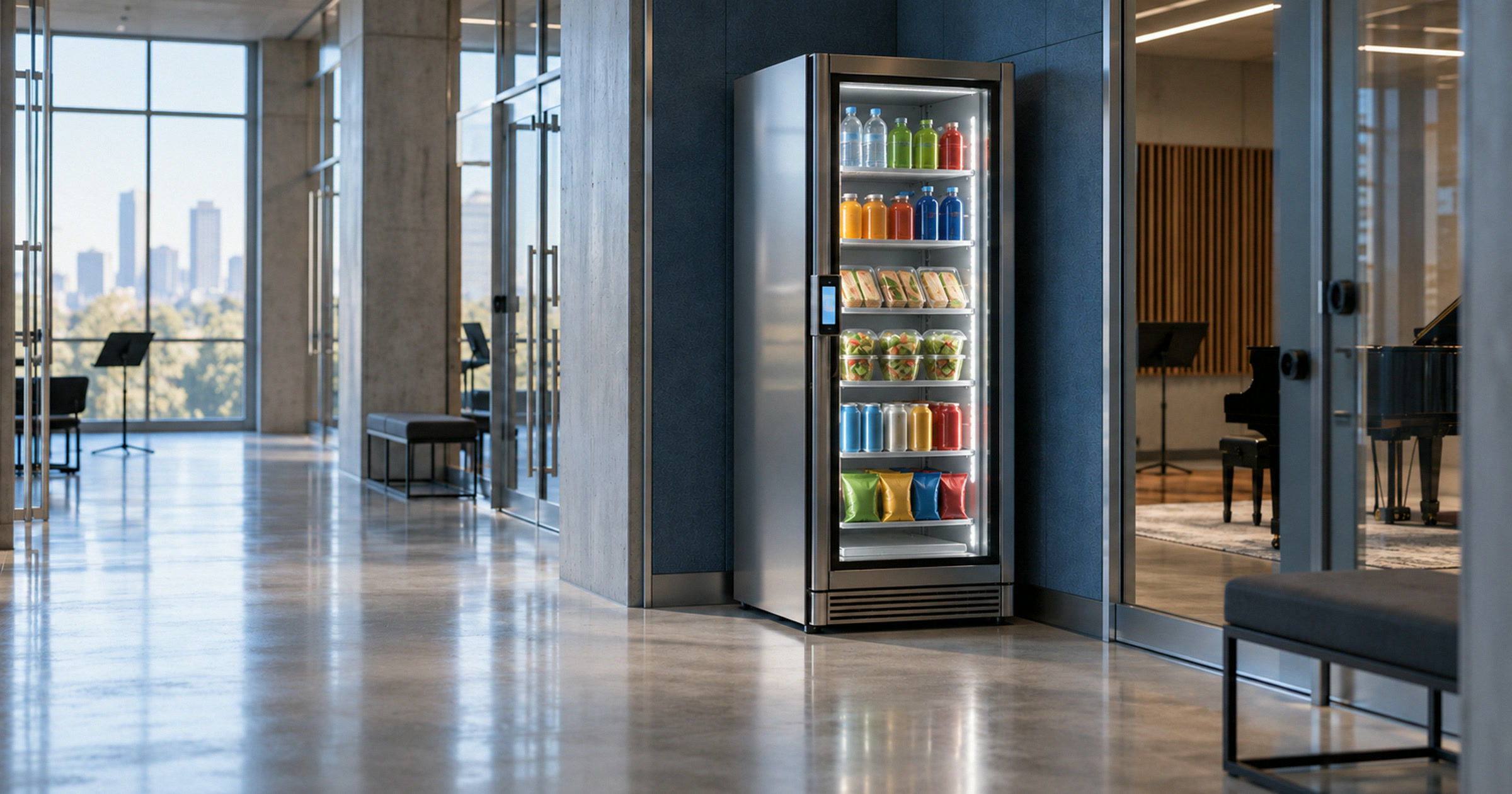
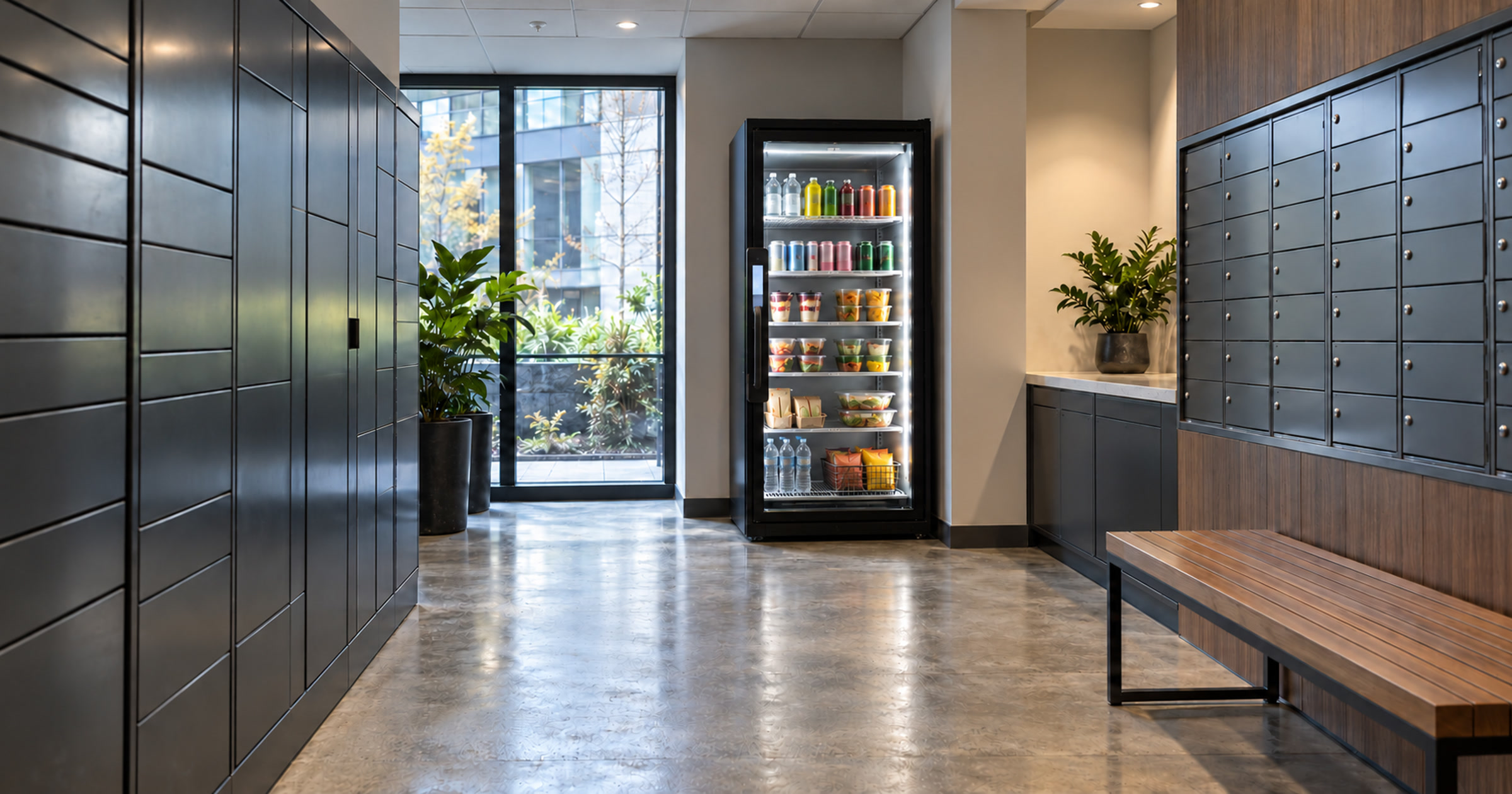
Manufacturing vending works when the product mix respects the way your floor actually runs. That sounds obvious until a machine gets stocked like a generic office snack shelf and everyone wonders why it feels wrong by the second week.
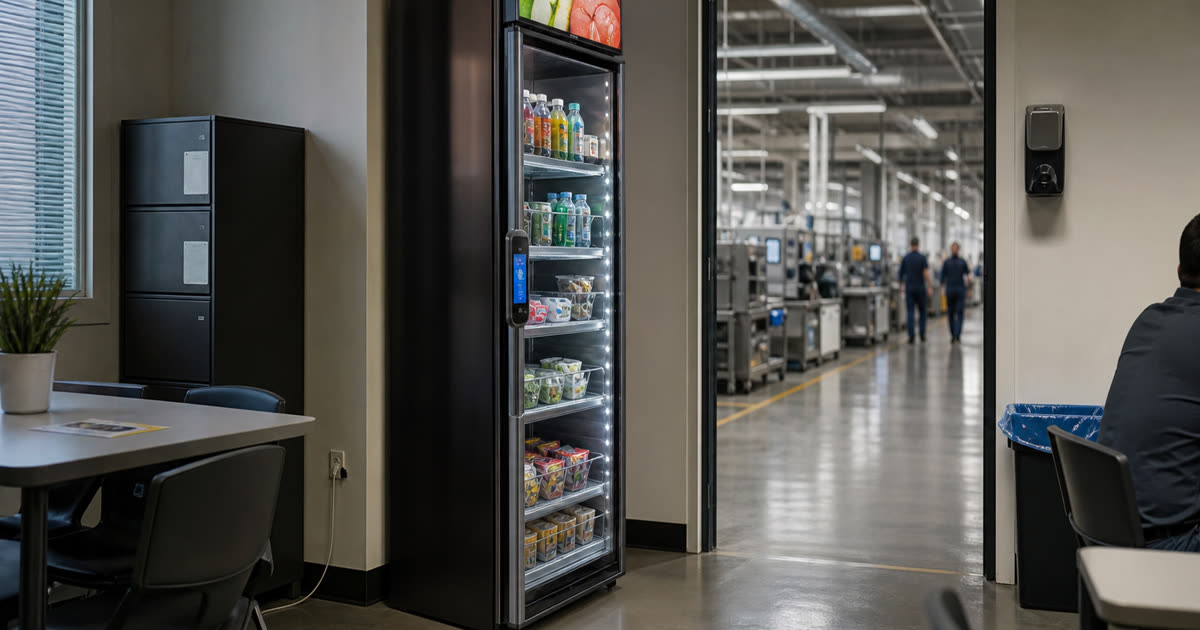
A plant breakroom has a different rhythm than a lobby. People may be coming off a line, leaving a training room, or grabbing something between scheduled tasks. They do not have unlimited time to browse. They need food and drinks they can recognize fast, buy fast, and carry back without creating a mess.
That is why product mix is not a taste exercise. It is an operating decision.
Why shift timing changes the product mix
Start with the break window. A short break and a meal break ask for different vending choices.
For a short pause, the useful options are usually simple: cold drinks and quick snacks. For a longer break, the machine can support more filling items if the building has the right storage plan behind it.
The problem is pretending one shelf can serve every moment equally well. It cannot. If your team has ten minutes, a complicated item might as well be locked in a cabinet. If the second shift arrives after the main food options are gone, the mix has to hold up later in the day, not just at 10 a.m.
OSHA notes that long work hours and irregular shifts are common. It also notes that workers may be scheduled outside a standard day shift. That does not make vending a safety program. It does make timing a real planning input. A machine serving shift work has to match the building’s work pattern, not a daytime office fantasy.
The best assortment starts with where people pause
Product mix should follow movement first. Where do people already stop without blocking a doorway, a forklift path, or a supervisor’s line of sight?
If the machine sits near the wrong pause point, even a good assortment gets ignored. If it sits in the right breakroom or shift path, the mix can be simpler and still feel more useful.
For manufacturing and warehouse locations, we look at the walking path before the assortment conversation gets cute. Then we check service access and payment support. Traffic tells us who will use the machine. Service access tells us whether restocking can happen without turning the area into an obstacle. Payment support matters because cashless vending only helps when the checkout flow is clear and someone owns the support path when a transaction needs attention.
That last point is easy to underrate. The PCI Security Standards Council describes payment security as a lifecycle issue across systems that store, process, or transmit account data. A site buyer does not need to become a payments expert to add vending. You do need to ask who handles the payment technology, support questions, and equipment service after install.
We handle that operating layer for qualified Revvolto locations. The point is not to drop a stocked box in the corner. The point is to make the amenity feel maintained.
Avoid product mix theater
Product mix theater is when the machine looks impressive on day one and annoying by day thirty.
It usually starts with too many options, too many assumptions, or too much focus on what looks premium in a photo. A manufacturing breakroom does not need a museum exhibit of snacks. It needs an assortment that people can use during a real break, with enough variety to stay relevant after the first rush.
That means the first mix should be practical, then adjusted with actual buying behavior. A smart vending setup can report what moves and what stalls. People still make the decisions. The machine gives the operator better signals than a handwritten complaint on a breakroom counter.
There is a compliance line here too. Do not turn product mix into health claims. Stocking cold drinks and meals does not mean a vending provider should promise wellness outcomes. That is marketing nonsense with a lawsuit-shaped shadow.
A safer buyer question is this: will the mix make breaks easier without creating new work for your team?
What manufacturing buyers should decide before install
Before you ask for a machine, write down the shift problem in plain English.
Maybe the issue is second-shift access. Maybe the breakroom has traffic but no good cold food option. Maybe the plant has training days where visitors and employees crowd the same small space. Those are different problems, so they should not get the same vending plan.
Then decide what you do not want your team managing. If your staff has to restock shelves and chase refunds, you did not buy convenience. You bought chores.
Revvolto’s better-fit model is simpler: we install smart vending or smart fridge options for qualified locations. We keep them stocked, manage payment tech, and handle service. The location still needs to be a fit. Foot traffic and placement matter. So does product demand. But when the fit is there, the internal workload should stay light.
Use the site review to pressure-test the boring details. Door swing. Power access. Restock path. Nearby trash. How people move when the area gets busy. OSHA’s sanitation standard is a useful reminder that food service areas need sound hygienic handling and storage, even though vending planning is not the same thing as running a cafeteria.
The boring details are where premium starts to feel real.
A good mix should get less dramatic over time
The first assortment is a bet. A good operator treats it that way.
After install, the mix should get sharper. Items that sit too long come out. Items people actually buy earn more space. Drink choices, meal items, and quick snacks can shift by location without pretending every facility is unique in some magical way.
That is the practical promise of smarter vending for manufacturing and warehouse sites. Not hype. Not a machine that “knows” your workforce. Just better information, regular service, and a product mix that can respond to how the building actually uses the amenity.
If your manufacturing facility needs food and drink access that fits real shifts without adding another staff chore, tell us about the location.