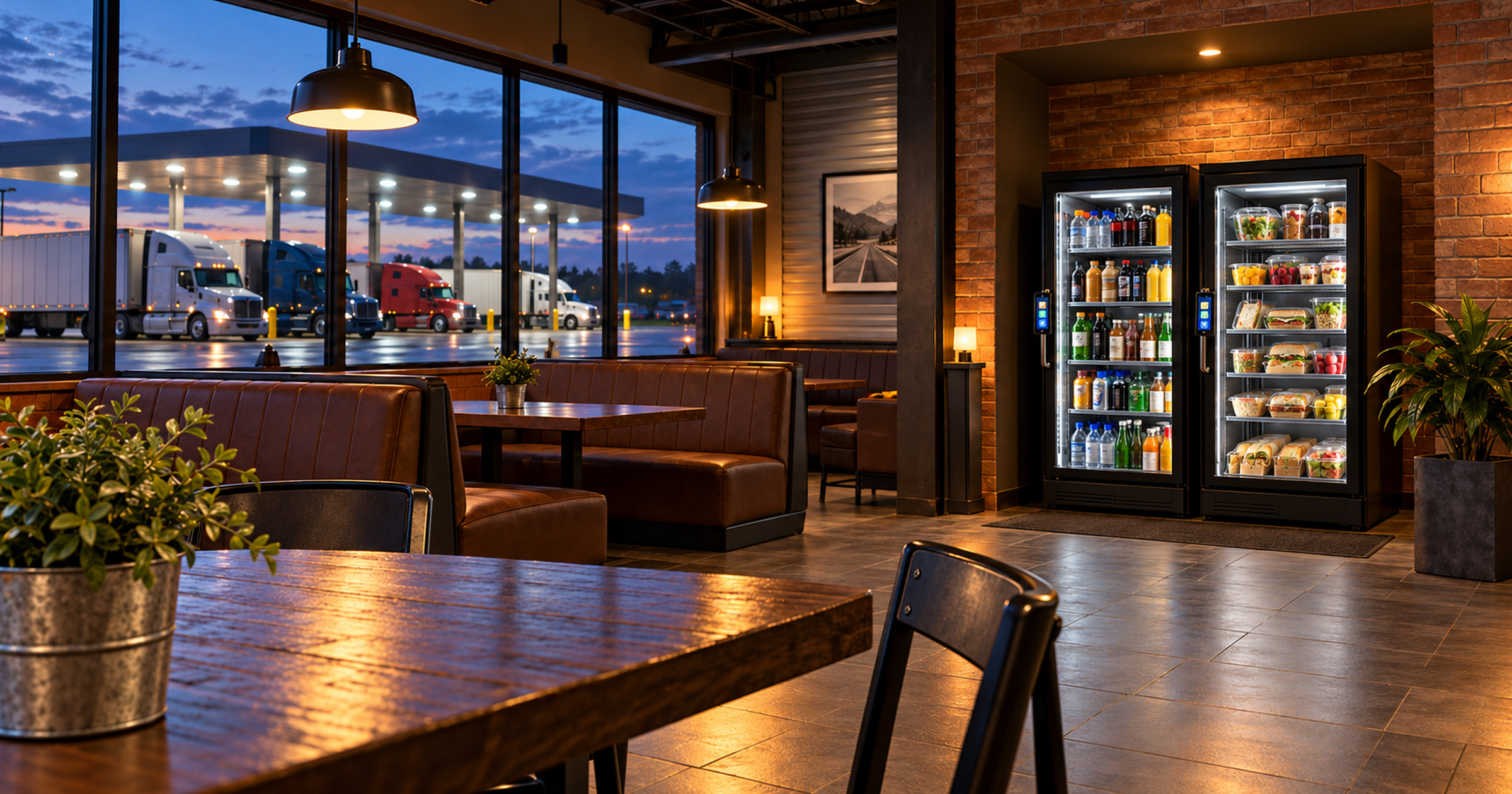
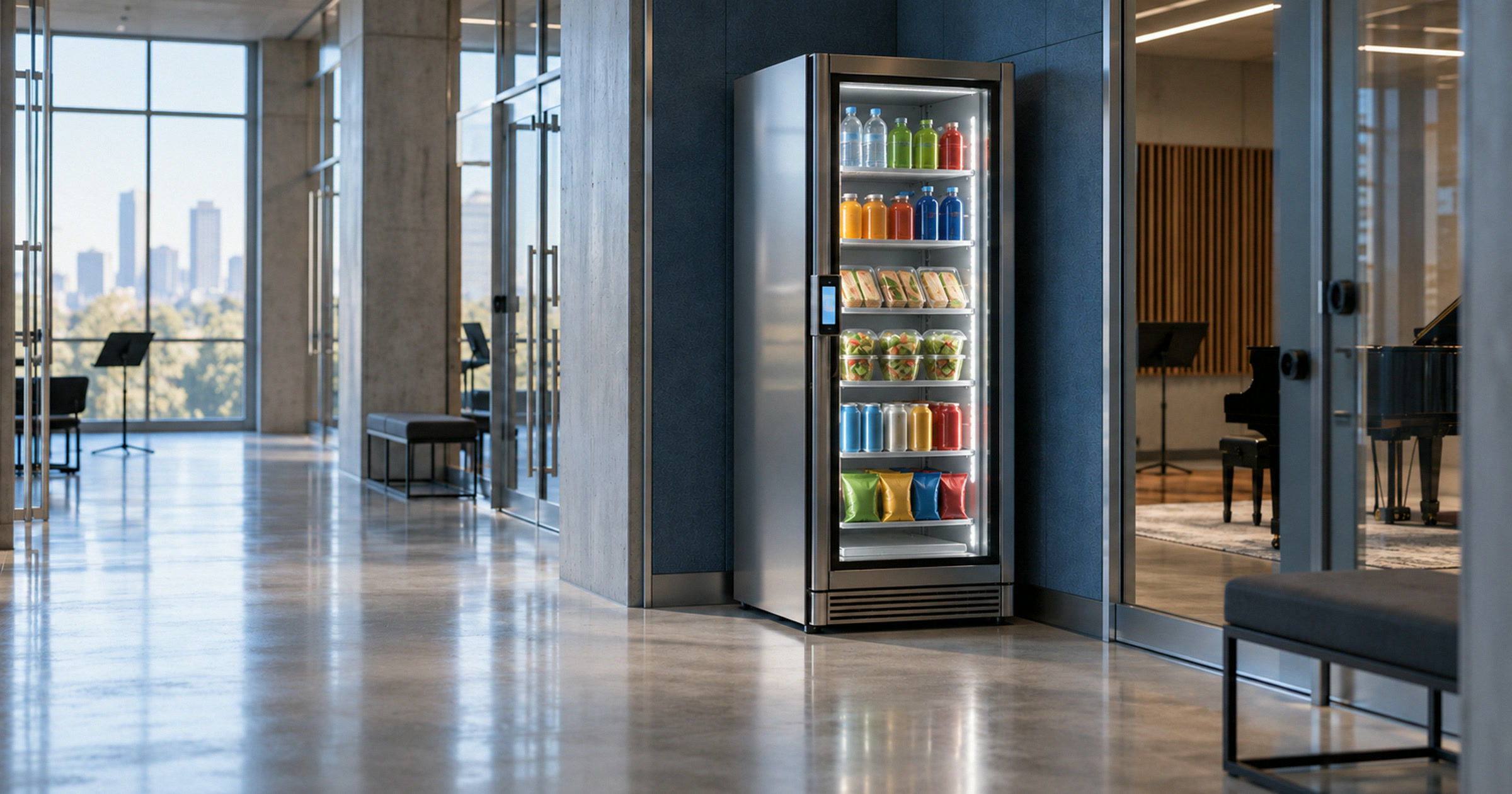
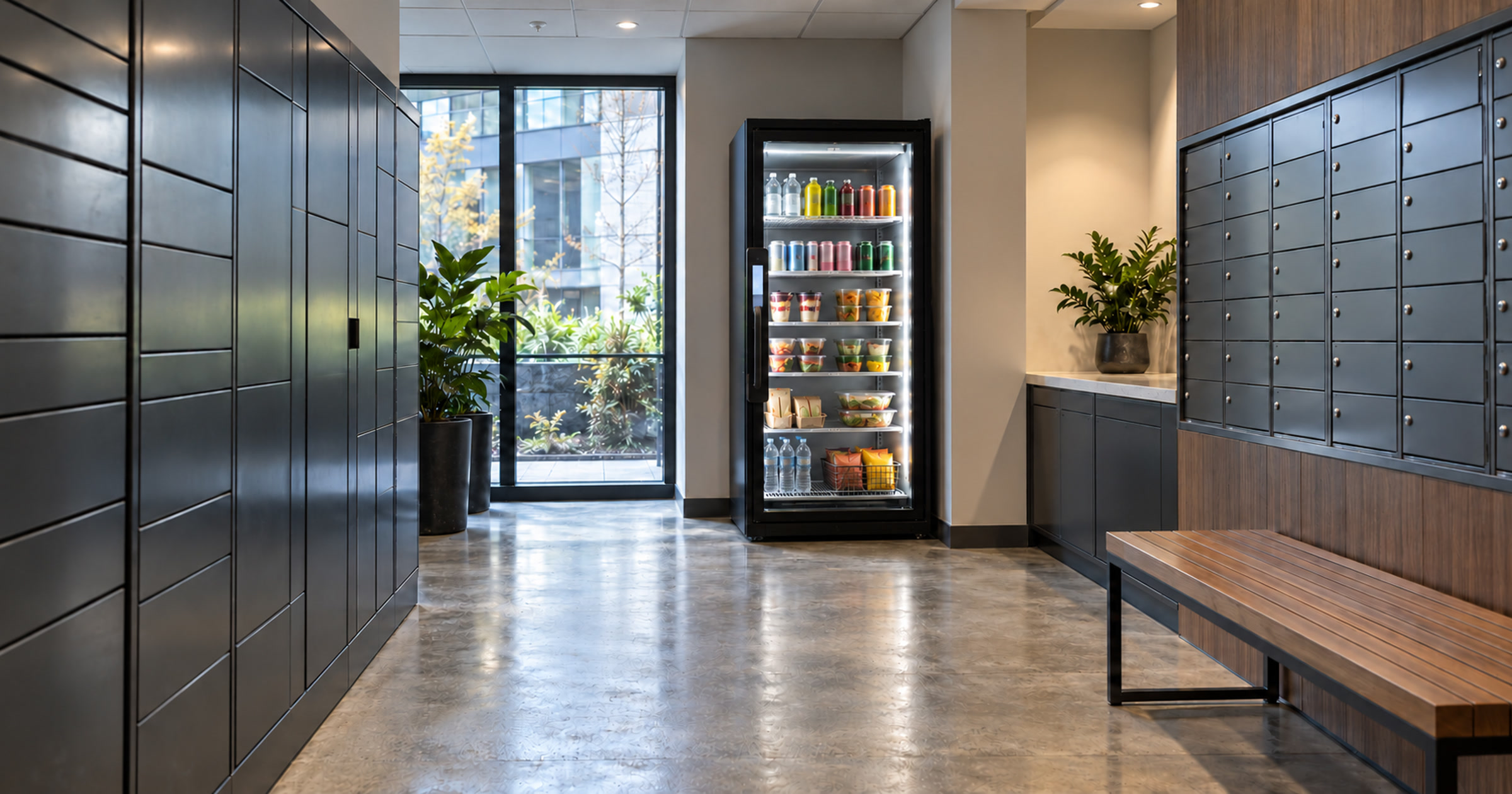
Mixed-use building vending has to serve more than one routine. That is the whole point and the whole trap.
A resident coming back from work, an office tenant between meetings, and a visitor waiting in the lobby may all pass the same corner. They do not use the building the same way. If the vending plan only serves one of those patterns, the machine ends up looking convenient on a floor plan and awkward in real life.
For mixed-use communities, the better question is not “where can we fit a machine?” The better question is where people already slow down long enough to use it.
That is where smart vending machines and smart fridges can make sense. They let the building add food and drink access without building a full market room or handing snack duty to the leasing desk.
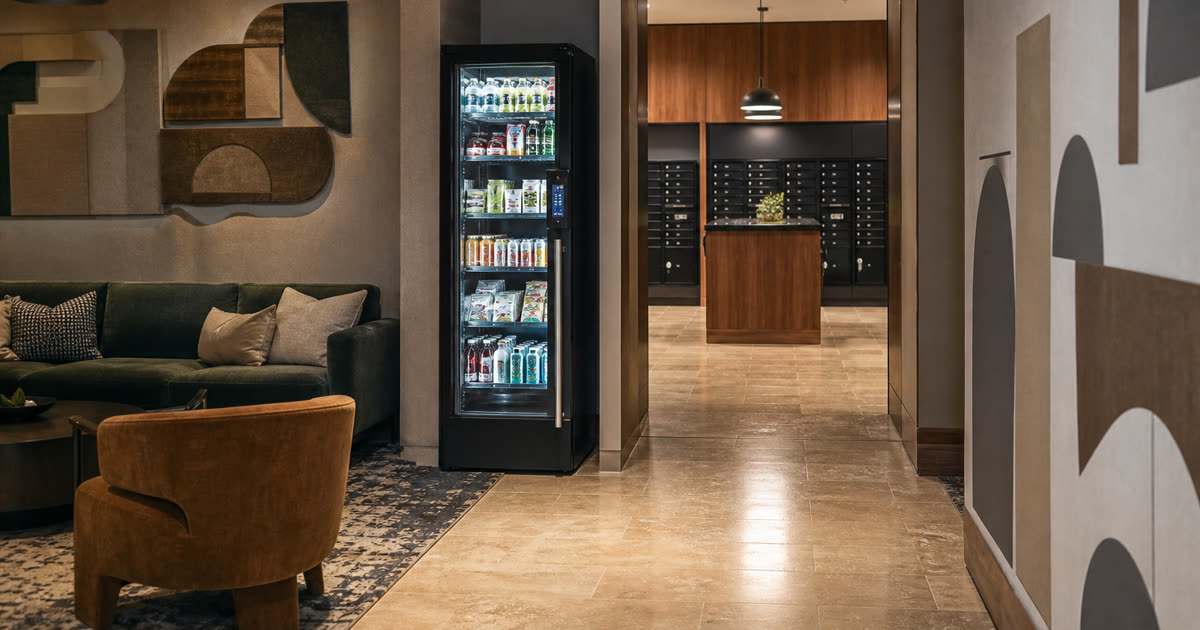
Shared buildings need a shared-path test
A mixed-use property usually has several rhythms stacked on top of each other. Residents move through package rooms and shared lounges. Office tenants care about short breaks and meeting-day convenience. Visitors want something obvious when they are already waiting.
That does not mean the vending machine belongs in the busiest possible spot. Busy can be bad if it blocks circulation or makes service awkward.
The right spot usually has a clean pause point, a clear service route, and enough room for people to keep moving. It should also feel intentional. A premium building can make a smart cooler feel like part of the amenity plan, or it can make the same cooler feel like somebody rolled it in after the fact.
This is especially true in buildings where the lobby does double duty. A corner near package pickup may work better than a formal seating area. A lounge edge may work better than the elevator pinch point. A staff-only nook may make more sense than a resident-facing wall if the goal is employee food access.
Start with movement, not square footage. Square footage tells you what fits. Movement tells you what gets used.
The vending unit should not become a desk problem
A mixed-use amenity fails fast when every small issue rolls back to the front desk or leasing team.
That can happen even when the equipment is modern. Someone asks where to pay. Someone wants to know when a product will be restocked. Someone complains that the machine is in the way during a delivery. If the building team has to answer every snack question, the amenity is no longer simple.
A better setup defines ownership before the machine arrives. Who stocks it? Who handles restocking rhythm? Who deals with payment support? Who keeps the product mix useful as the building changes?
This is where Revvolto should be judged on more than the cabinet. We install modern cashless smart vending and smart fridge options, then handle the stocked service plan for qualified locations. Your team should not have to become a tiny grocery department in business casual.
The building still has a job. It needs to choose the right area, keep the path clear, and give service teams practical access. The machine provider should carry the vending work.
Placement has to respect access and service
Good vending placement is partly an accessibility and operations question.
The ADA Standards cover accessible routes and clear floor space requirements in public accommodations and commercial facilities. That does not mean a vending provider can certify a whole property by looking at one wall. It does mean the vending plan should avoid creating a new obstacle in the path people already use.
Payment planning matters too. PCI guidance treats payment data as sensitive, so the building team should know who owns payment-support questions and how card-related issues get routed. Keep that clear before launch. Nobody wants a service desk guessing its way through a payment problem.
For mixed-use buildings, service access deserves the same attention. A unit beside a narrow door may look fine until restocking blocks the passage. A machine tucked deep inside a lounge may look elegant until service becomes a disruption. A package-room path may work well if the service route is clean and the stop does not clog the room.
This is not glamorous. It is also the part that keeps a vending amenity from becoming annoying.
Product mix should match the building moment
Mixed-use vending should not copy a generic breakroom shelf.
Residents may want evening drinks, snacks, and quick grab-and-go items. Office tenants may care more about coffee, cold drinks, and lunch-adjacent options. Visitors may only need something simple while they wait. The right assortment depends on who passes the unit and when they are most likely to use it.
Smart vending machines and smart fridges help because the setup can be adjusted over time. Purchase data can point toward better assortment decisions, and the product plan can change when the building’s usage pattern changes. That is useful in mixed-use properties where the same space can feel different at 9 a.m., 3 p.m., and 8 p.m.
Keep the first product plan focused. A smaller, well-chosen mix beats a crowded machine full of guesses. Drinks, fresh grab-and-go options, and familiar snacks can do more than an overbuilt assortment nobody understands.
The best vending setup feels boring in the right way. People see it, use it, and move on. The building team does not have to explain it all day.
The best fit feels planned, not added later
Mixed-use buildings already ask a lot from shared spaces. The same lobby may support residents, tenants, and visitors while service work happens around them. Vending can fit that world, but only when it is planned around the room instead of dropped into leftover space.
Before adding a smart vending machine or smart fridge, walk the building at the times that matter. Watch the package-room route. Check the elevator path. Notice where people pause with a phone, a bag, or ten minutes between commitments. Then ask whether a stocked, serviced unit would make that pause easier or just add clutter.
If the answer is clutter, pick another spot.
If the answer is easier, the next question is simple: who owns the work after installation? With Revvolto, qualified locations can get a modern cashless vending or smart fridge setup that we keep stocked and maintained, typically at no cost to the building.
Mixed-use building vending works when the unit fits the path, the service plan is clear, and the product mix respects how people actually use the property.
If you are reviewing food access for a mixed-use property, tell us about the location at revvolto.com/contact-us.