Austin has a fresh local reminder that entertainment spaces are not just about the main attraction. COTALAND says its grand opening is September 26 at Circuit of The Americas. Community Impact reported the park is built around attractions, racing experiences, and on-site food stops. That is a public local hook, not a Revvolto partnership claim.
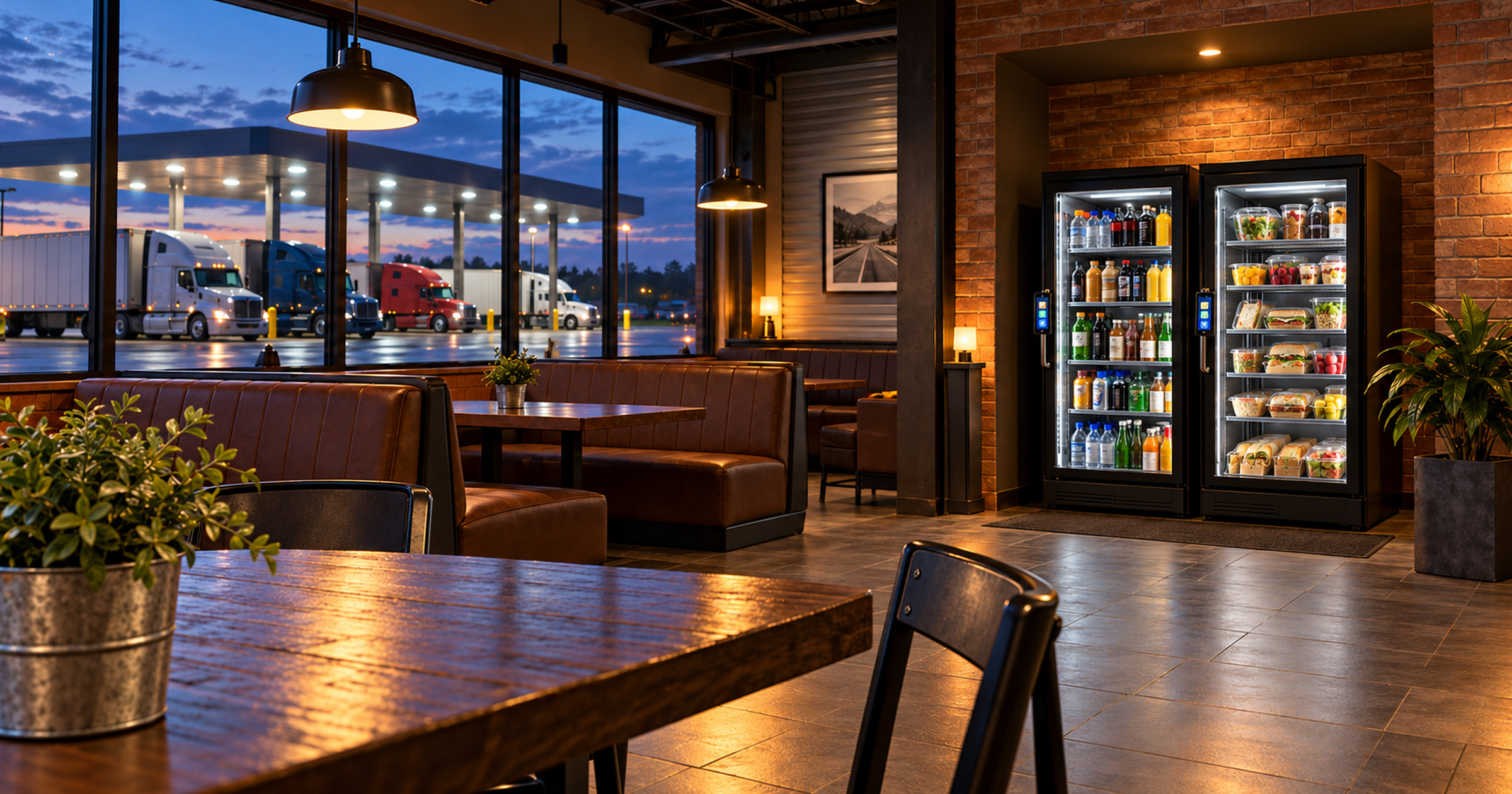
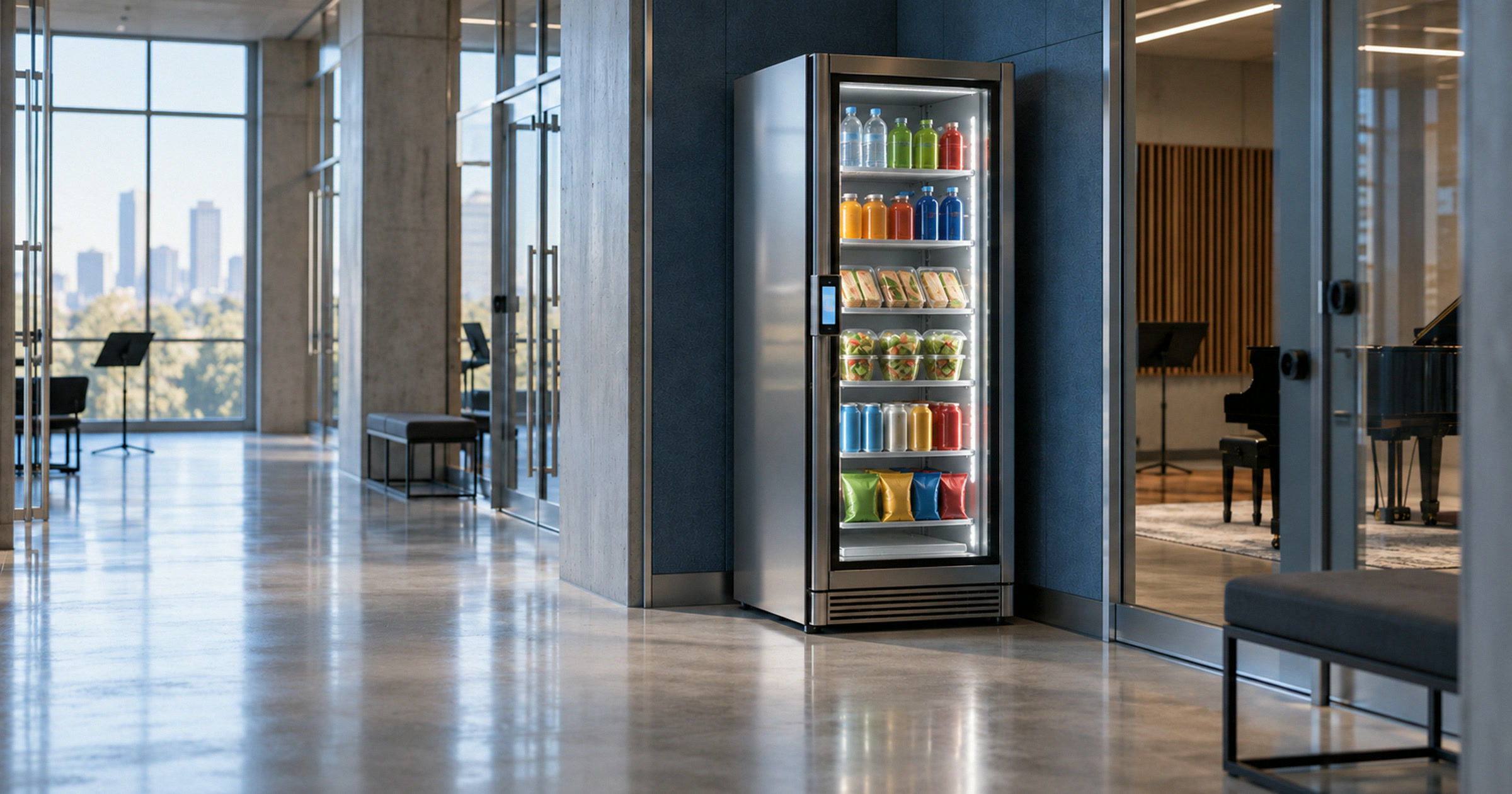
For other Austin entertainment venues, the useful takeaway is simpler: smart vending should be planned around the places people already pause. The best location is not always the flashiest wall. It is the spot where visitors slow down, staff can still reach the unit, and service does not fight the guest path.
Why a theme park opening is a smart vending planning cue
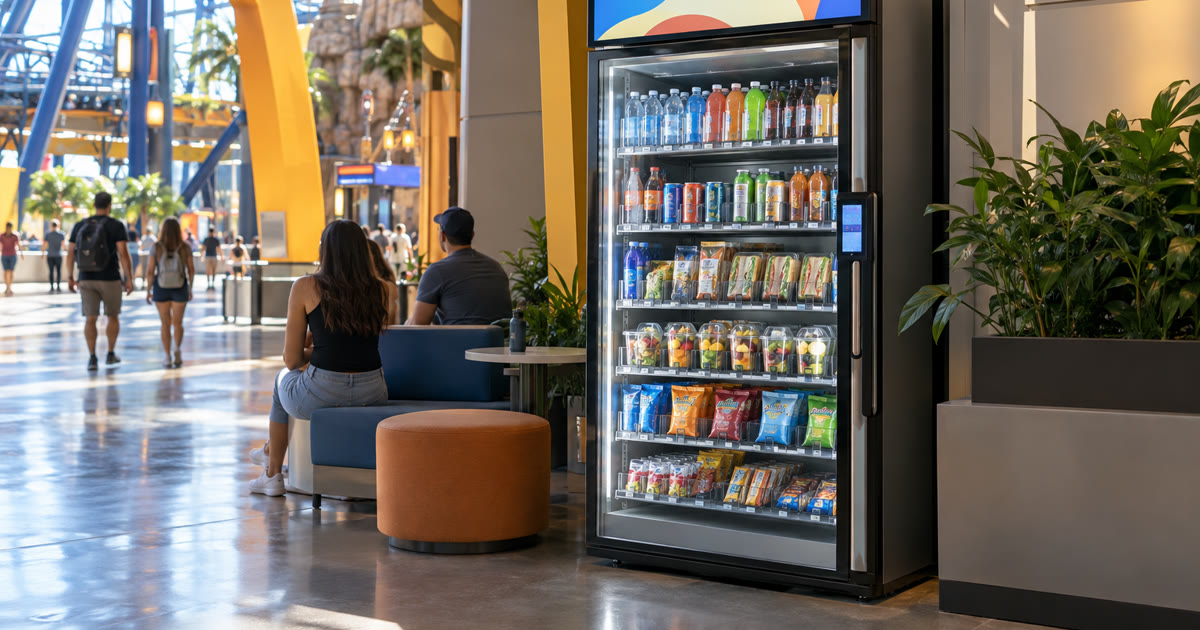
A new attraction creates obvious visitor movement. People arrive in waves. They wait between activities, regroup after rides, and look for quick food or drinks before moving again. COTALAND’s own opening page points to rides, dining, and entertainment. That kind of mix creates more than one pause point.
The mistake is treating food access as one central destination. Large venues often work better when smaller support points sit near the natural breaks in the day. A smart vending machine, smart fridge, or compact grab-and-go cooler can support the gaps between larger food areas without asking staff to manage another counter.
This matters for venues beyond theme parks. Family entertainment centers, indoor sports facilities, and museums all have versions of the same problem. People may not want a full meal every time. They may want a cold drink, a snack, or something easy while the group decides where to go next.
Revvolto is a fit when the site has enough traffic, a clear placement area, and a team that does not want to own the service work. The point is not to replace every food outlet. It is to cover the moments where a full-service option is too much and an empty hallway is too little.
Put smart vending near the pause, not the bottleneck
Entertainment venues tend to have obvious bottlenecks. Entrances and ticketing areas pull attention, but they are not always the smartest food-access spots. A vending unit placed directly in a rush path can become visual clutter or a service headache.
The better test is the pause path. Where do families wait while someone checks a schedule? Where do staff members reset between rushes? Where do visitors leave an activity and look around before choosing the next one? Those spots can support smart vending because people are already slowing down.
Service access belongs in the same conversation. A modern cooler still needs restocking and maintenance. If the unit looks great to visitors but is painful to reach, the location will create friction. The best placement lets guests see it naturally while giving service teams a realistic way to keep it stocked.
Visibility matters, but so does restraint. A theme park or venue already has enough signs, screens, and motion. Smart vending should feel like part of the building, not another loud object shouting for attention.
Food access should support staff areas too
Public-facing placement gets most of the attention, but staff food access is often the quieter operational problem. Entertainment spaces can have long days, uneven rushes, and teams that cannot always leave the property for a meal break.
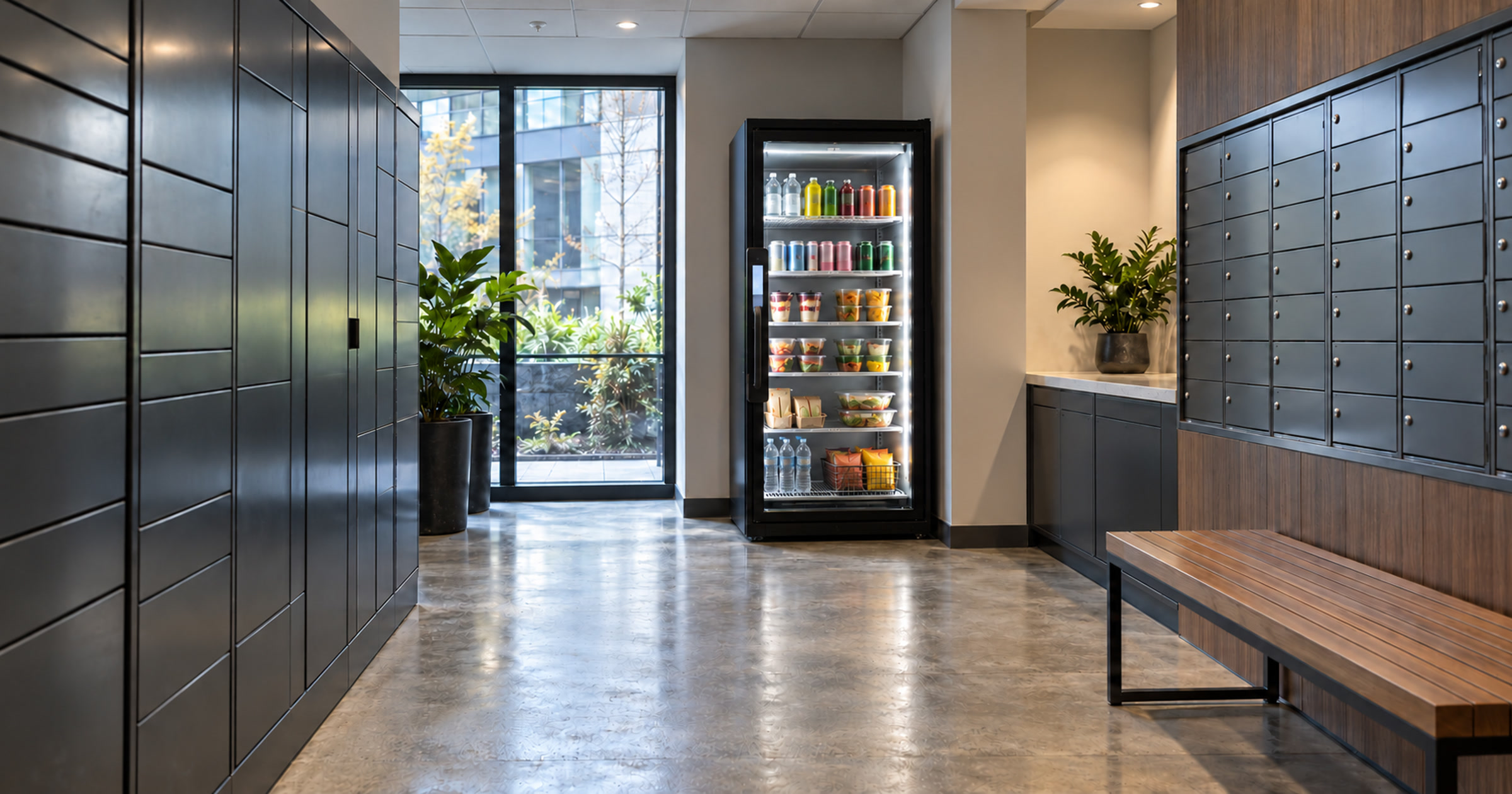
A staff-side smart fridge or vending cooler can help cover the back-of-house pause path. That could be a breakroom, service corridor, or employee lounge area where people naturally pass during the day. The goal is practical access, not a perk that creates more work.
This is where service ownership matters. If an internal team has to shop for products and answer every machine issue, the amenity becomes another job. Revvolto’s model is designed to take that work off the site team in qualified locations.
For larger venues, the public and staff questions should be answered separately. A visitor-facing unit may need different product mix, placement, and traffic visibility than a staff-area unit. Trying to make one machine solve every path usually leads to a mediocre fit.
The buyer question before traffic peaks
The smartest time to think about vending is before a venue is fully in rhythm. Once traffic patterns are baked in, every change is more annoying. Opening periods, renovations, and seasonal traffic shifts are good moments to ask where food access actually belongs.
For Austin entertainment venues, the question is not “Can we add vending somewhere?” That is too vague. The better question is: where do people pause long enough that a stocked, cashless option would be useful without adding staff workload?
A smart vending plan should consider three things first. The first is the buyer moment: visitor, employee, or resident. The second is the route: arrival, break, or exit. The third is the service path: how the unit gets stocked without disrupting the room.
That simple filter keeps the conversation grounded. It also prevents the classic bad placement move, where a nice machine ends up in the wrong corner because nobody mapped the day around it. It gives operators a practical way to judge fit before the crowd teaches the lesson the hard way.
Revvolto helps qualified Austin-area businesses plan modern vending, smart fridges, and stocked grab-and-go options around real building movement. If you are evaluating food access for an entertainment venue or staff area, tell us about the location.