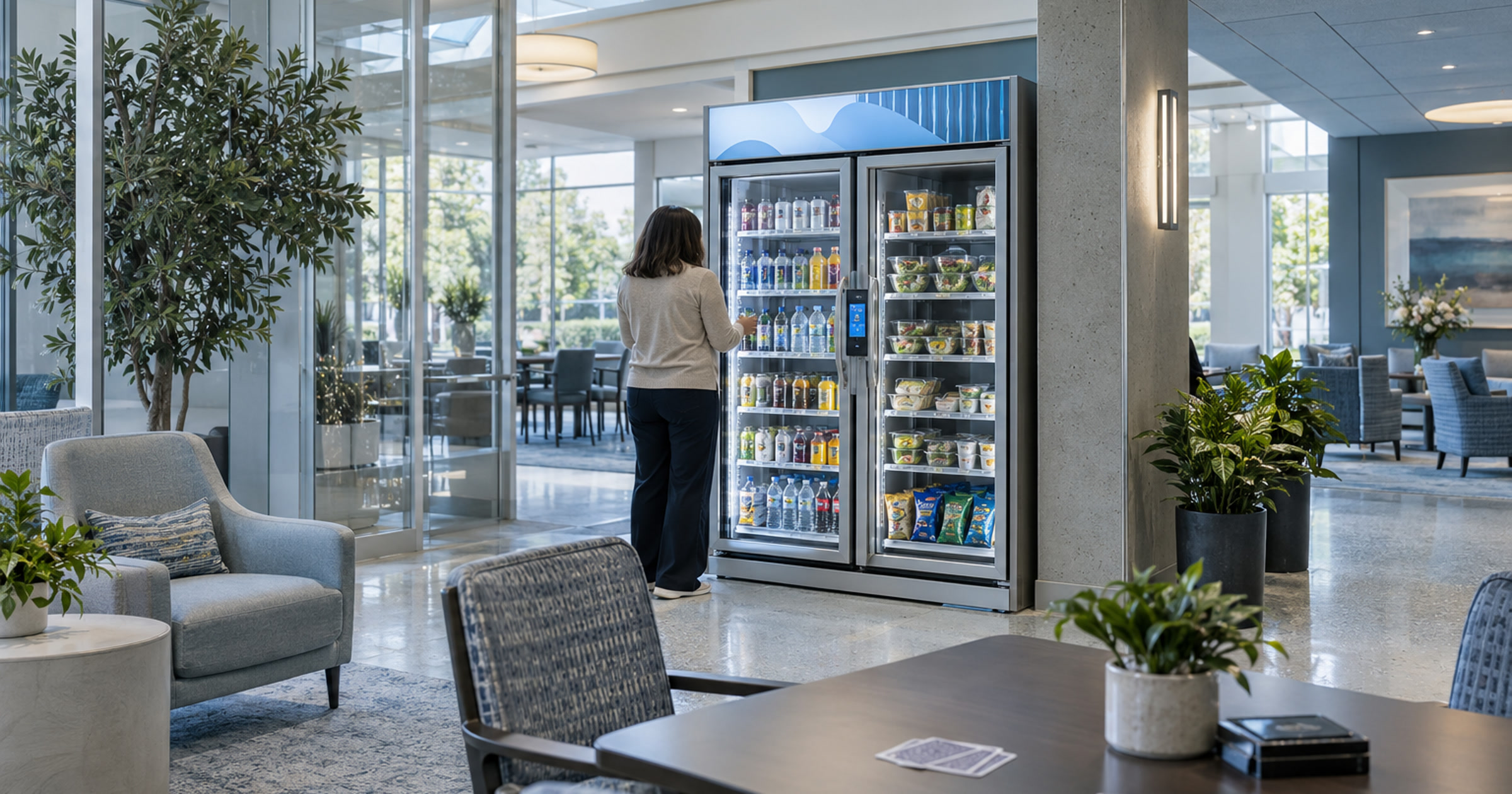
Shared rooms in a senior living community carry a lot of quiet work. A lounge can be a waiting spot in the morning, a card-table corner after lunch, and a visitor stop later in the day. Food and drink access usually depends on what is nearby, who is working, and whether the building planned for grab-and-go use at all.
That is where modern vending earns its place. The point is not to turn a community lounge into a store. The point is to place a stocked cooler where people already spend time, then use cashless access and inventory visibility to keep the amenity easier to run.
For operators, the buyer question is practical: can the setup make the room more useful without creating desk work or drifting into care claims?
The room comes first
A shared lounge is not a breakroom with nicer chairs. People use it before activities. Families may wait there before a visit. Staff may pass through during a long shift. The vending setup has to respect that rhythm.
Placement matters before assortment. A cooler tucked into a leftover corner can look fine on a floor plan, then become a daily irritation when someone opens the door or when service crews restock it. A unit placed near the natural walking route feels more intentional.
The 2010 ADA Standards use a 30 by 48 inch clear floor space as a common accessibility reference. That does not make any vending location automatically compliant, and it is not a substitute for a site review. It does give planners a concrete reminder: leave real approach space around the unit, not whatever space is left after the furniture arrives.
The room test is simple. Can someone notice the unit and choose an item without turning the lounge into a bottleneck? If the answer is no, the technology is not the problem. The placement is.
The technology should remove interruptions
Old vending problems usually show up as little interruptions. Someone asks where to get a drink. Someone checks whether the cooler is empty. Someone has to explain payment. Someone deals with a machine that looks out of place in a residential-style setting.
Cashless vending helps when it takes those interruptions off the building team. A modern cooler can support self-service, cleaner checkout, and better stock visibility. That matters because community teams already have enough moving parts.
Payment also has to be handled carefully. PCI guidance is not a badge to paste into a blog or onto a machine. It is a reminder that payment systems belong in a managed process. The operator should own the payment technology, and the location team should know where responsibility begins and ends.
That is the difference between adding hardware and adding an amenity. Hardware sits there. An amenity has stocking, service, and a clear owner.
For Revvolto, that ownership is the point. We install the unit and manage stocking, payment tech, and service for qualified locations. The building team should not become a vending department because a cooler showed up in the lounge.
The assortment should fit shared use
Senior-living content gets sloppy fast when it starts making wellness promises. Do not do that. A stocked cooler in this setting is an amenity. It can offer convenient food and drink access. It should not promise better health, better care, or better outcomes.
A better assortment starts with the room. A library lounge may work best with bottled drinks and simple snacks. A clubhouse area may call for cold drinks and grab-and-go meals. A visitor waiting space may call for familiar items that do not require explanation.
The best setups avoid the junk drawer effect. If the cooler tries to serve every possible occasion, it becomes messy and harder to maintain. A focused mix is easier to stock and easier to adjust based on what people actually buy.
This is where the technology helps after install. Purchase and inventory data can show what moves and what sits. That does not mean the machine knows what people want. It means the operator has better signals than guesswork.
That is enough. Keep the choices useful and the stocked area orderly. Let the data guide the next restock, then keep improving the assortment with actual buying behavior instead of hallway guesses.
A good setup feels calm and owned
The right vending setup should feel like it belongs in the building. The cooler should look modern. The glass should stay clean. The products should look orderly. The service plan should be obvious before anyone approves the placement.
Ask these questions before choosing the spot:
- Where do people already stop without blocking the room?
- Who owns stocking and payment help after install?
- How will service happen without disrupting the lounge?
Those questions are less flashy than talking about artificial intelligence, but they are better buyer questions. Technology helps only when it makes the room easier to operate.
A stocked cashless cooler can be a strong fit for shared community spaces because it gives the building an around-the-clock option without asking the front desk or activity team to run a snack counter. The win is not hype. The win is a room that works a little harder while still feeling like itself.
If you are planning vending or smart fridge options for a senior living common area, tell us about the location at revvolto.com/contact-us.