
The opening assortment in a library should start with the room, not a generic bestseller list. A drink that works in a recreation center may be a poor fit beside study tables. A snack that looks harmless may leave crumbs, strong odors, or extra cleanup where quiet use matters.
The practical job is to choose products that fit the library’s own food rules, the people using the space, and the way the unit will be serviced. Popularity still matters. It just comes after fit.
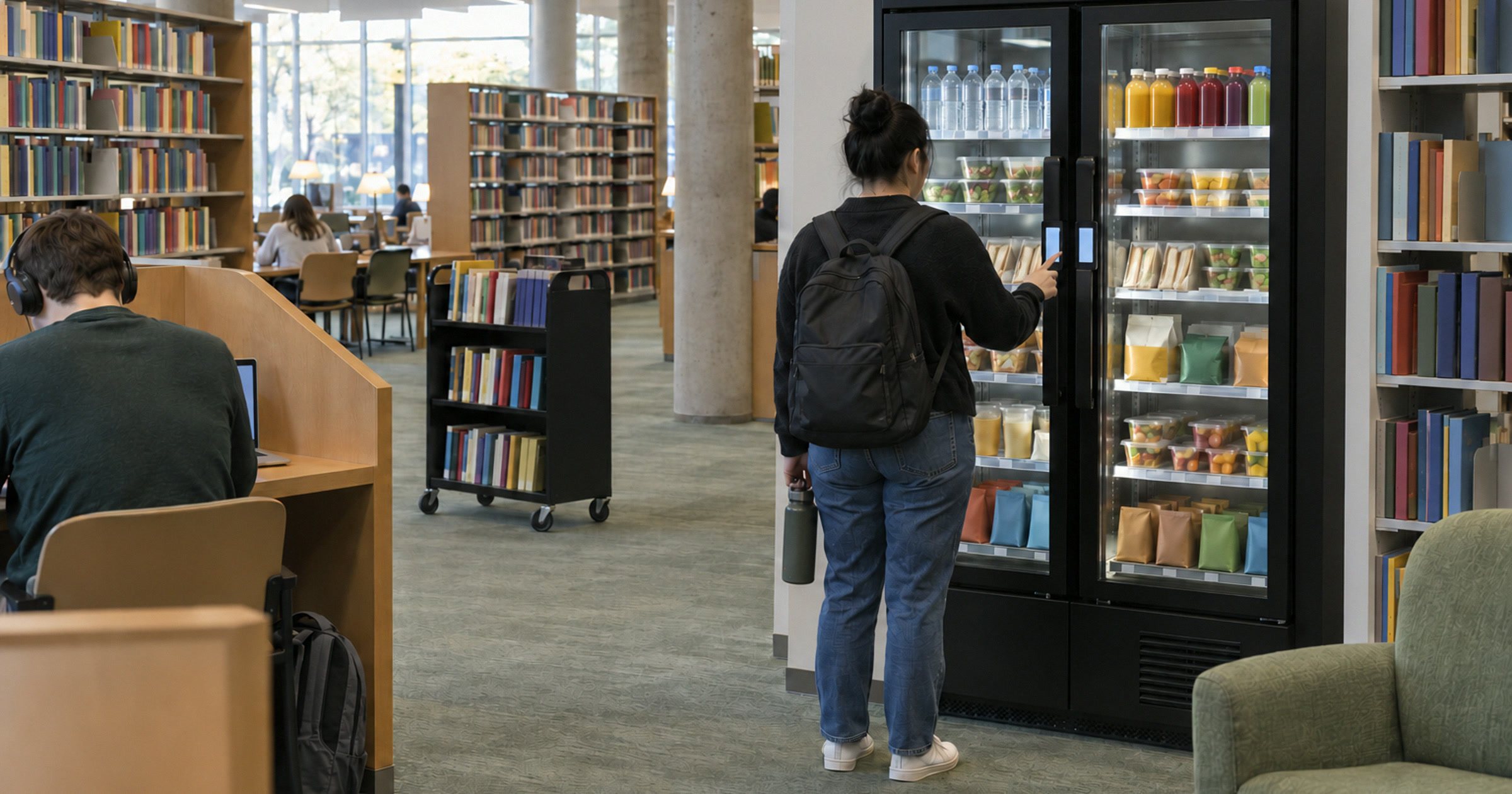
A library smart cooler product mix starts with rules
Food policies vary by library and sometimes by room. Austin Public Library offers a useful local example. Its Library Use Rules allow snacks and nonalcoholic beverages with a cover, cap, or lid in designated areas. That is not a rule for every library. It shows why product selection has to follow the building’s policy instead of working around it.
Start by asking where food and drinks may be consumed. Then check whether certain rooms have tighter limits. A community meeting room may work differently from a teen area. Staff rooms and quiet floors can follow another operating pattern.
That answer shapes the assortment. Resealable drinks can make more sense than open cups. Individually packaged snacks can be easier to manage than loose food. Refrigerated items belong only where the equipment plan and local handling responsibilities are clear.
A product that sells well but conflicts with the room’s rules is the wrong product.
Build the first selection around use
The audience changes through the day. Staff may use the building before public hours. Students may settle in for a long study block. Families may arrive around scheduled programs. A useful starting range serves those moments without trying to stock a miniature convenience store.
Give each part of the cooler a job. Reserve one area for resealable drinks. Use another for compact packaged snacks. If refrigerated food is allowed, give it a defined section rather than scattering it across the shelves.
Shelf-stable items are the safer opening choice when demand is uncertain or the room has tighter handling rules. Refrigerated items earn space when the location can support their rotation and disposal plan. That split keeps the first assortment disciplined.
Treat the opening selection as a test. Purchase and inventory data will show what moves and what stalls. Remove slow items after a planned review, then expand only the roles people are actually buying. Data cannot decide whether an item fits library policy. That judgment still belongs to the operating plan.
We inspect the location before recommending the opening selection. The same machine can serve a staff room differently from a public lounge. Product choice and placement belong in the same conversation.
Keep cleanup in the decision
Assortment planning is also a facilities decision. Crumbs and spills show up after the purchase, not on the assortment spreadsheet.
This does not mean a library has to choose dull products. It means packaging and portion format deserve attention. A sealed bottle behaves differently from an open drink. A compact wrapped snack behaves differently from a large meal. A refrigerated cup can be useful where there is a clear disposal and cleaning plan.
Walk the area with the people who maintain it. Look at trash placement and the route to approved eating zones. Check whether the unit will sit near computers or collections that call for more caution.
The U.S. Access Board’s guide to operable parts explains that clear floor space and usable reach matter for controls in accessible spaces. That source does not certify a machine or a location. It supports a narrower planning point: product choice is only useful when people can approach and operate the unit without the surrounding layout getting in the way.
Make service ownership boring
The library team should not become the vending department. Someone still has to watch inventory and adjust the mix. Payment questions and equipment upkeep also need an owner before the unit arrives.
Our vending machine service guide explains the operating side in more detail. For qualified locations, we manage the equipment and its inventory, including payment support. Your team should know where to route an issue, not learn how to run a retail operation between desk shifts.
The same principle applies to assortment changes. Staff feedback is useful, but it should not trigger a new purchasing chore. A managed operator can combine that feedback with actual movement in the machine and make a measured adjustment.
Clear ownership protects the assortment from two bad outcomes: empty favorites and shelves full of items nobody wants.
Use a three-part buyer test
Before approving an opening assortment, test it against three questions.
- Does it fit the library’s written food and drink rules?
- Does it match the people and time periods this location actually serves?
- Can the operator stock, rotate, and maintain it without adding desk work?
If the answer to one of those is no, change the mix before launch. A smaller assortment with a clear purpose beats a crowded cooler built from guesses.
The goal is not to put every possible product behind glass. It is to give visitors and staff a dependable grab-and-go option that respects the building around it.
Planning a library refreshment area? Tell us about the location, including the food rules and the rooms you want the setup to serve.



