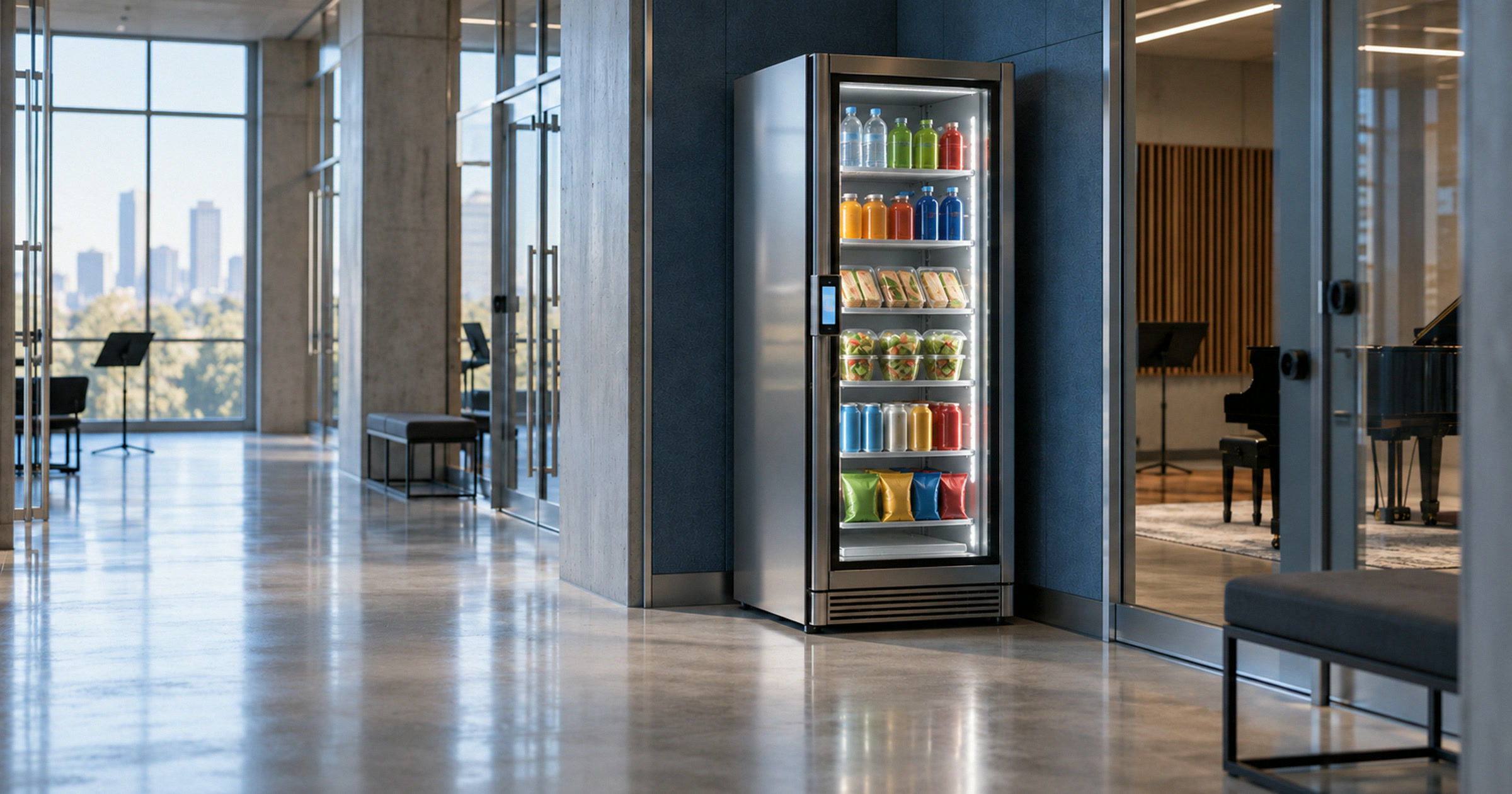
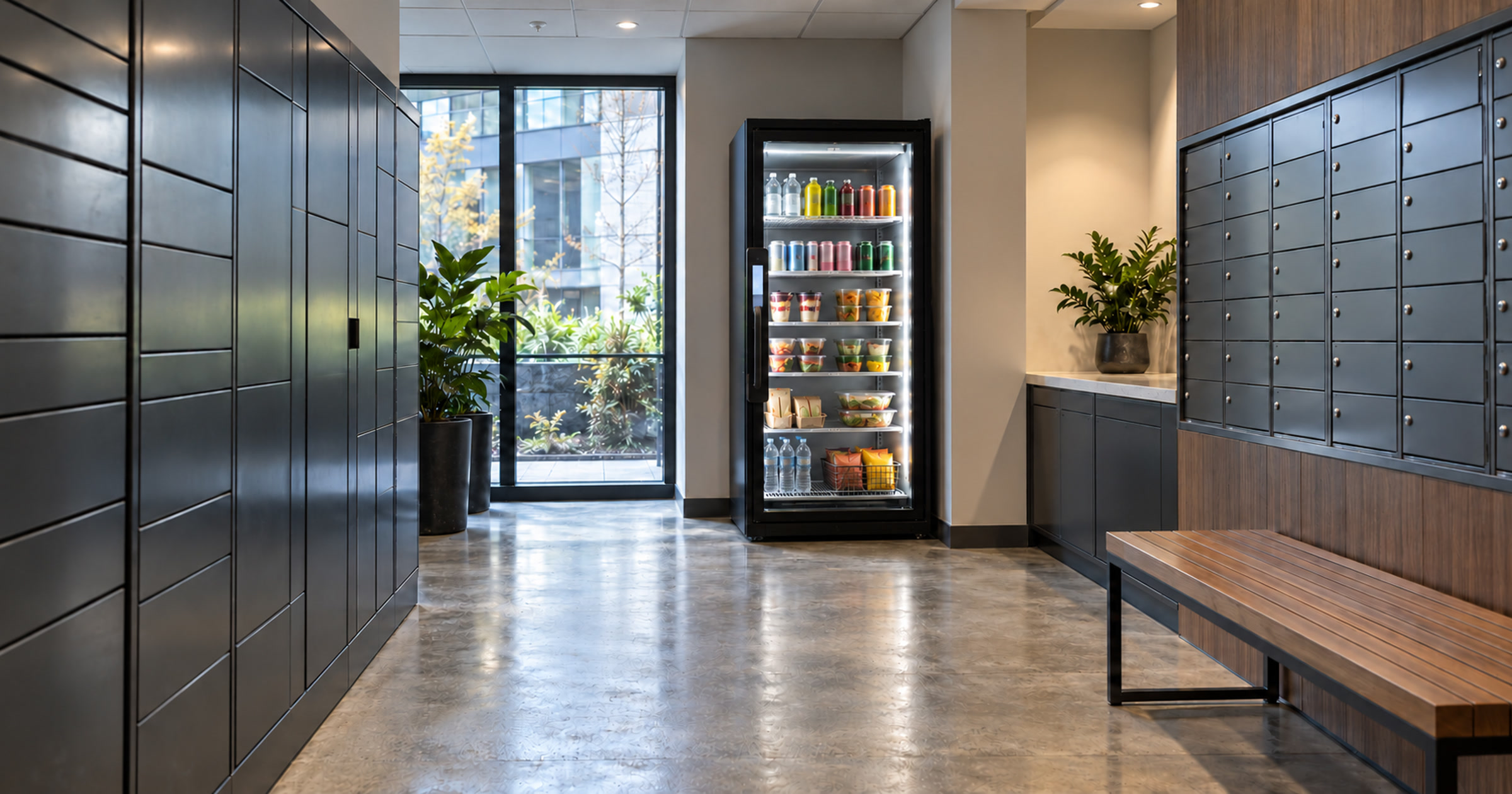
Smart vending technology earns its place at a truck stop when it turns machine information into clear operator action. A bright screen and a long feature list are easy to sell. The harder question is what happens after someone buys a drink, a shelf runs low, or the unit loses its connection.
For a roadside property with activity outside normal office hours, that handoff matters. Your team should know who is responsible for the machine, which signals reach the operator, and what the customer can do when something goes wrong. The technology should make the operation quieter, not give the counter staff another system to watch.
Smart vending technology should answer a service question
A connected cooler can report information, but information is not the outcome. Someone still has to review it, decide what matters, and act.
That is the first buyer test. Ask the provider to explain the service loop in plain English. If inventory information shows a low row, who sees it? If a payment attempt fails, where does the customer go? If the machine stops reporting, who checks the device before your staff starts troubleshooting?
We think the best technology disappears into a well-run operating routine. The roadside team should not have to become a vending department. At qualified locations, we handle installation and monitoring. Stocking and maintenance stay with us too. That service model is described on our smart retail overview.
This distinction matters at a roadside facility. The room may stay active well beyond a typical business day, while the people using it arrive in uneven waves. A system that only looks impressive during a sales demo is not enough. The provider needs a practical response when the machine sends an alert or stops sending one.
Start with the network and payment handoff
Connected equipment should come with a direct conversation about network responsibility. Do not assume the machine can simply join any available connection. Ask what connectivity it uses, who monitors that connection, and how the unit behaves during an interruption.
You do not need to turn the site review into an information-security audit. You do need ownership. The National Institute of Standards and Technology lists device identification, data protection, and software update capability among its baseline considerations for connected devices. NIST also says that the right capabilities depend on the customer and use case. Its IoT device baseline is a planning reference, not a certification of any vending unit.
The same ownership question applies to cashless payments. The Payment Card Industry Security Standards Council gives merchants a vendor-question guide because payment security depends partly on knowing which vendors touch the system and how to contact them. That guidance does not certify a particular machine or provider. It does reinforce a sensible buyer habit: get the support chain in writing.
For your location, the questions are concrete. Who supports the reader? Who resolves a disputed or failed purchase? Who receives the first call when the interface freezes? If every answer points back to the travel-center counter, the operating model is unfinished.
Turn machine data into real work
The worthwhile side of connected vending is not a dashboard by itself. It is the work the dashboard starts.
Inventory information should help the operator prepare a more informed service visit. Transaction records should help resolve a customer question. Device status should help someone notice that the unit is no longer communicating. None of those signals replaces a person. Each one gives the responsible person a better starting point.
That is why buyers should ask for examples of decisions, not just screenshots. What does the operator do with a low-stock signal? How is an unresolved device alert escalated? Which information is reviewed during assortment changes? A credible answer names the owner and the next step.
The limits matter too. A machine can report what its sensors and software capture. It cannot explain every empty slot, predict every rush, or guarantee that the right item will always be available. Good operations still require restocking, equipment care, and judgment about the product mix.
Our stance is simple: technology earns its keep when it shortens the distance between a machine problem and the person responsible for fixing it. If it only creates another login for the property team, it missed the point.
The room still decides whether the system works
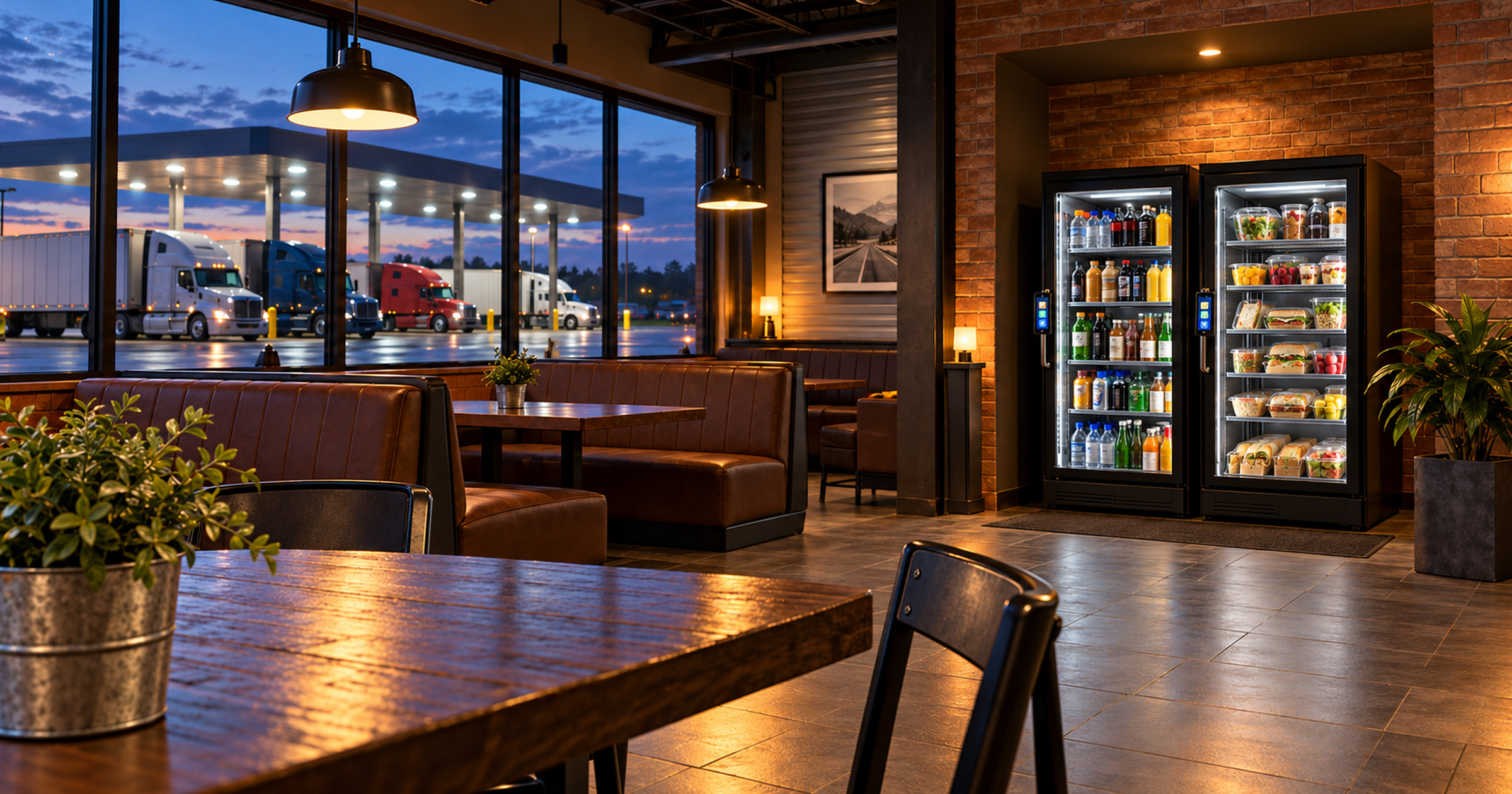
Connected features do not rescue a poor location. A roadside smart cooler still needs a buying area that is easy to understand and a refill route that works during normal property activity.
Start with the room where people already spend time. A driver lounge or waiting area can make sense when the machine stays visible and does not crowd the seating. A back corner chosen only because power is nearby may be easier to install, but harder to use.
Then trace the service trip. The operator has to bring products to the unit, open the doors, and work without blocking the room. That route should be checked before the equipment arrives. A clean stocking plan is part of the technology plan because alerts are only valuable when the resulting service visit can happen smoothly.
The unit also has to fit the audience and the food gap. A property with limited food service may benefit from a managed refrigerated option. The final format depends on traffic and available space. Site qualification matters too. A smart cooler is not automatically the right answer for every roadside location.
Ask for the operating map before you sign
A credible proposal should show more than equipment. It should identify who owns connectivity questions, customer payment support, and machine service. It should explain how monitoring reaches the operator. It should also name the site conditions that could change the recommended format.
That operating map lets you compare providers on the work that happens after installation. Fancy software is easy to admire. Clear responsibility is what keeps the amenity from landing on your staff.
We design and manage smart retail for shared spaces and handle the ongoing operating work at qualified locations. If you are reviewing food access for a roadside property, tell us about the location. We will look at the room, the audience, and the service plan before recommending equipment.