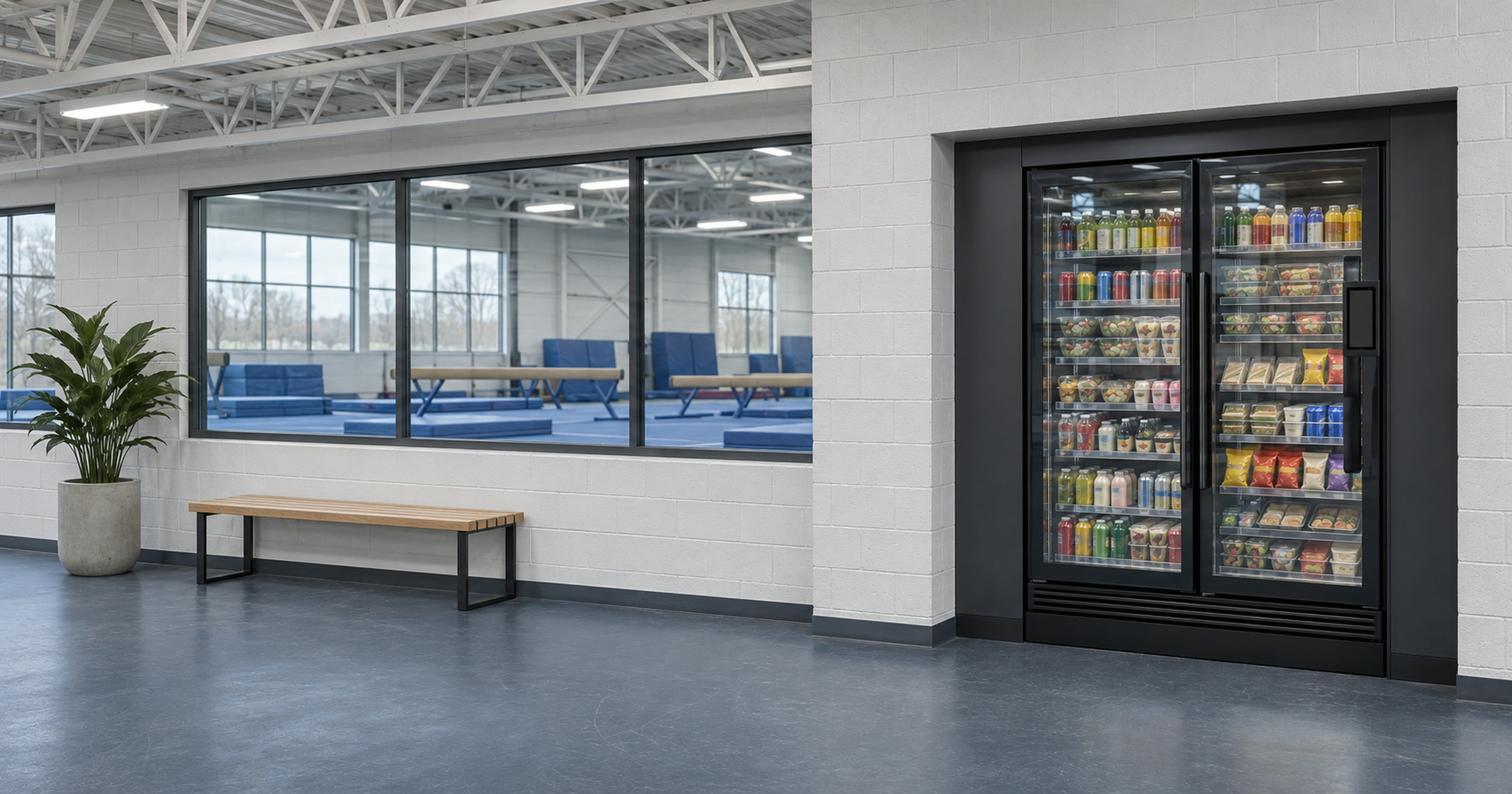
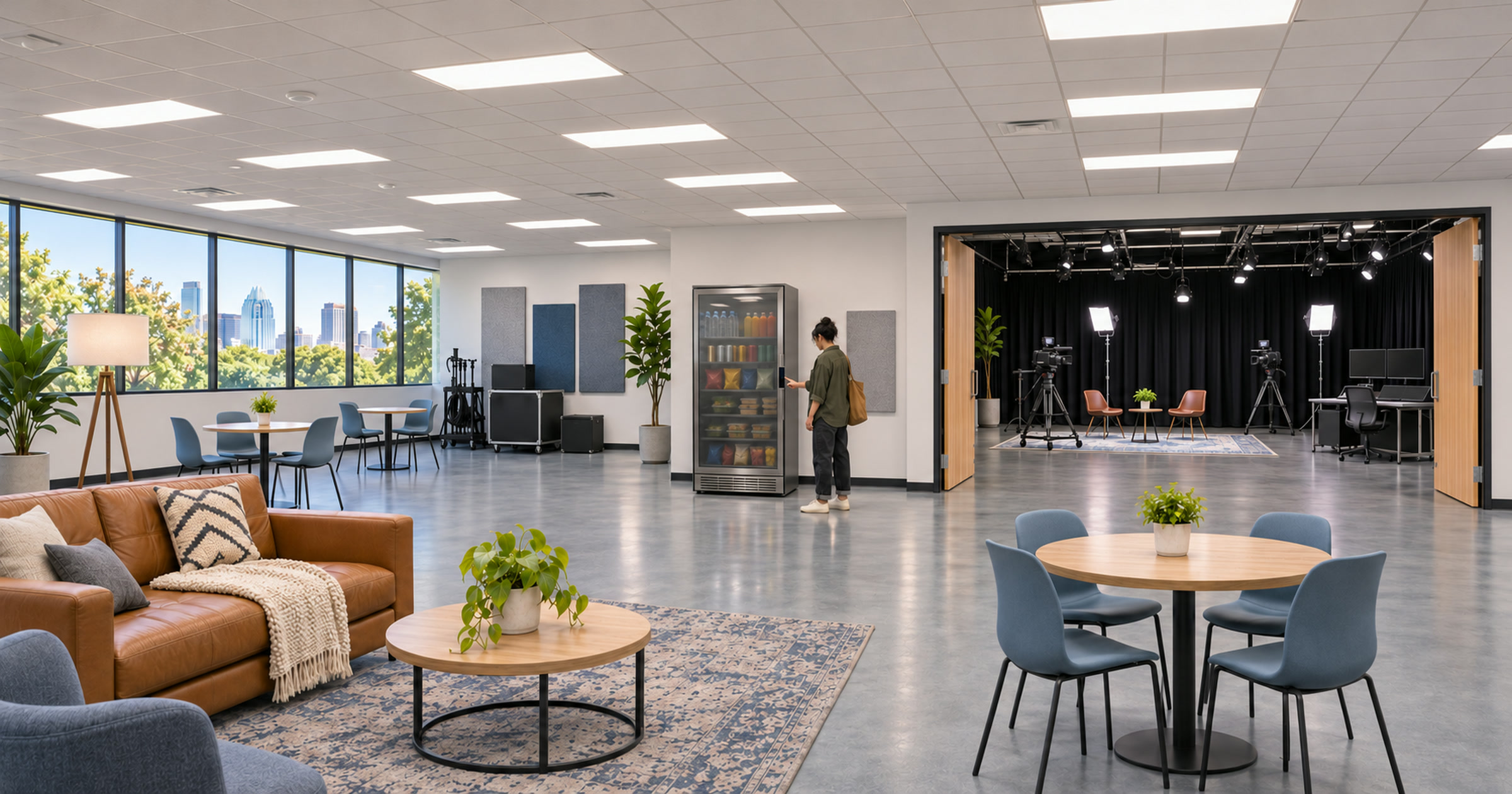
Austin Career Institute has scheduled a December 3 opening for its new welding facility at 7900 US 290. The school describes a 720-hour certificate program with flexible schedules, including night and evening classes. That local milestone creates a practical facilities question: where can campus users get something to eat during long training blocks without turning the front desk into a snack counter?
A smart fridge for a training center can work well, but only if the facility treats it as part of the operating plan. The cabinet is the easy part. The harder decisions are location, operating hours and who handles the routine work.
Revvolto is not affiliated with the school or the Austin Chamber of Commerce. The opening details come from their public pages. The recommendations below are Revvolto’s analysis for training-site operators.
A new campus is the right time to plan refreshments
The best moment to review grab-and-go food is before daily routines harden. Once classes begin, every corridor acquires a job. One route becomes the trip from the classroom to the welding lab. Another becomes the route to lockers or the parking lot. A wall that looks empty during a tour may become a crowded handoff point between sessions.
Campus teams can avoid that mess by watching how people will actually move. Start with the longest scheduled class block. Mark the point where students can step away without missing instruction. Then identify a nearby indoor area that has power and enough room for the door to open without narrowing circulation.
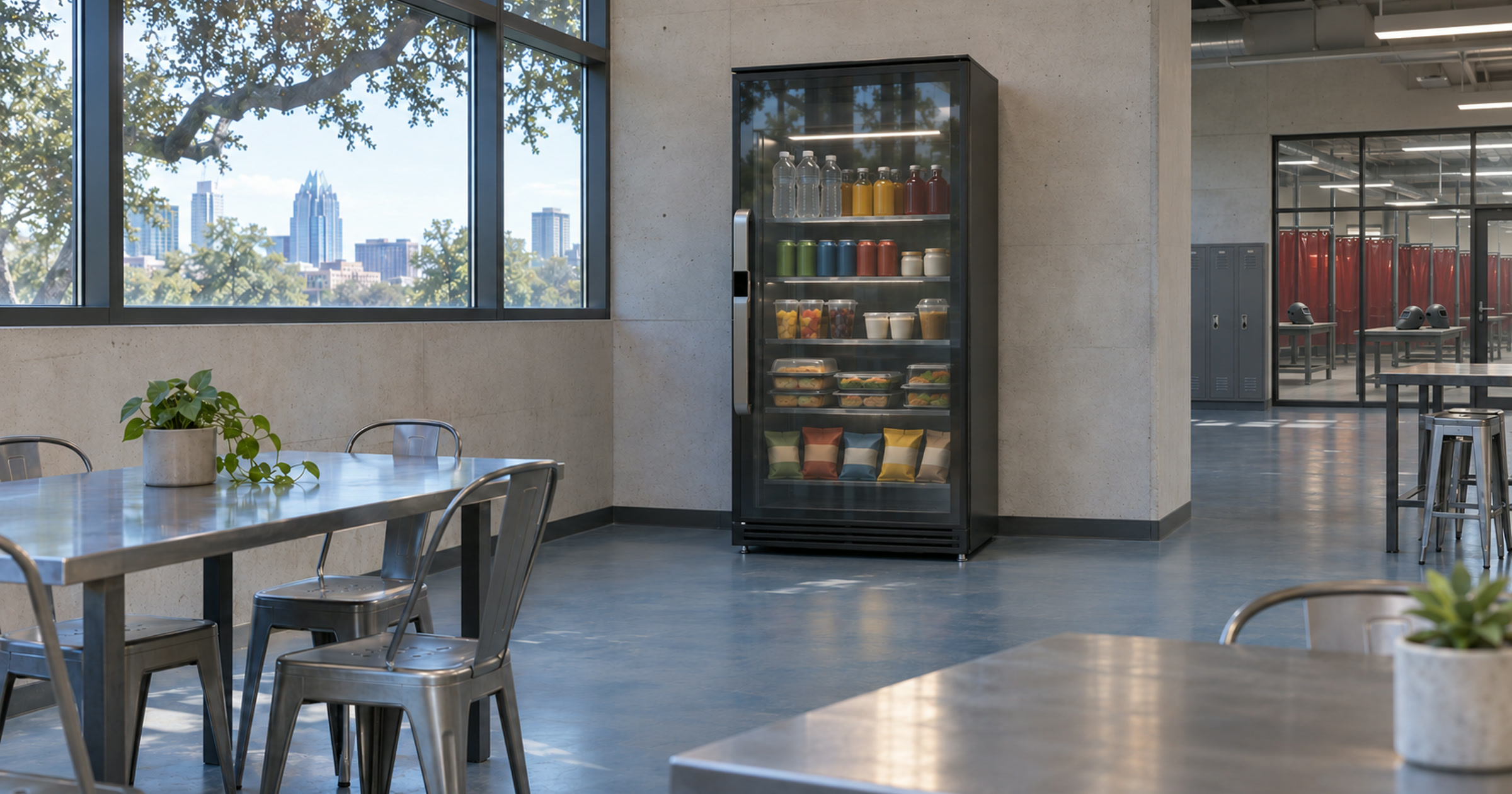
The right location is usually easy to see but outside the teaching zone. It should not sit beside welding equipment or occupy the same queue as admissions. Food access belongs near a real commons or student lounge, not wherever a cabinet happens to fit.
Flexible schedules change the vending decision
Austin Career Institute says flexible schedules are available, including night and evening classes. That matters because nearby restaurants may not match every training block. A student who has ten minutes between activities does not have time for a long off-site trip. An instructor closing a lab may also finish after the busiest food-service window.
The buyer decision is not simply whether to add a vending machine. It is whether the building has recurring demand outside staffed meal hours. If the answer is yes, a maintained cashless option can fill a narrow gap without requiring the school to run a pantry.
Before selecting equipment, compare two periods: the busiest daytime handoff and the latest class dismissal. If the same indoor location serves both periods without interfering with instruction, it deserves a closer site review. If demand appears only during occasional events, a permanent unit may be the wrong answer.
Keep the cooler away from the shop boundary
A welding school has a sharper room division than a typical office. Food should not drift into areas designed for hands-on training. The vending location must make that distinction obvious.
Put the unit where a student can buy something and remain in the break area. Do not place it along the route used to return tools. Avoid any spot that encourages people to stand beside a lab entrance while choosing products. The location also needs a normal service route so restocking does not cross an active class.
This is a facilities test, not a safety certification. The school controls its training rules and room policies. Equipment specifications and actual site conditions determine the final setup.
Decide who owns the routine work
An unattended food option stops being convenient when school staff inherit the operation. Someone has to select products, monitor stock and resolve payment questions. Someone also has to clean around the unit and coordinate service visits.
That ownership must be settled before installation. Revvolto provides modern cashless cooler and vending options. We stock and maintain the equipment for qualified locations, typically at no cost to the property. Placement depends on site fit and qualification, so that is not a universal pricing promise.
The campus still has a role. It provides an appropriate location and keeps the agreed service route available. It also directs users to the correct vending contact rather than asking instructors to troubleshoot transactions.
A simple division of responsibility protects the student experience. School teams keep teaching. The vending operator handles the vending operation.
Use a two-window demand test
Campus leaders do not have to guess from a floor plan. A short observation can answer most of the important questions.
Watch one daytime class change and one evening class change. Count how many people leave the building for food. Note whether they return late. Ask where instructors currently go during short gaps. The goal is not to produce a grand forecast. It is to see whether the problem repeats.
Next, tape the proposed footprint on the floor. Open an imaginary door and leave room for one person to browse. Walk the normal route to the lab. Then walk the restocking route from the building entrance.
A location fails if it blocks a teaching route or competes with a staffed counter. It also fails if deliveries would require crossing a controlled training area. A strong location lets customers step aside and lets service happen without disrupting class.
Match the product mix to the schedule
A technical campus does not need a random wall of snacks. The assortment should reflect when people use the building and how long they stay.
Morning demand may favor breakfast items and cold drinks. Evening students may want more substantial grab-and-go food. The operator can adjust the mix after real sales data replaces assumptions.
That is one advantage of a managed cooler. The school does not have to buy inventory and hope it moves. Product decisions can follow actual use, while Revvolto manages stocking for qualified locations.
The buyer still needs to be honest about traffic. A new campus with uncertain enrollment may benefit from a measured launch rather than an oversized setup. The goal is reliable food access, not a machine that dominates the room.
What Austin training campuses can take from this opening
The December 3 event is a useful reminder for any training facility preparing to open. Refreshment service is easier to plan before students are moving through the building every day.
Start with the schedule, not the equipment catalog. Find the recurring gap between class time and nearby food availability. Choose a break-area location that keeps purchasing separate from instruction. Then assign the operating work to the vending provider instead of quietly handing it to school staff.
A managed unit will not fix a poor floor plan. In the right location, with enough recurring use, it can give the school community a practical option across longer training days.
For a broader look at campus placement, read our technical-school vending guide. You can also review how managed vending works. If you are planning refreshments for an Austin training facility, send Revvolto the site details.