Vocational campuses run on movement. Students move from lab bays to classrooms, from hands-on practice to testing rooms, and from day programs to night cohorts. That rhythm can make on-site food weirdly hard to solve.
A cafeteria may be too much. A staffed counter can become one more job for the front office. A basic snack shelf gets messy fast. Modern vending gives vocational training centers a middle lane: stocked food and drinks in the spaces students already pass, with payment and upkeep handled outside the school team’s daily workload.
The best question is not “can we add a vending machine?” It is where the unit fits without interrupting training, safety, or the student experience.
Why vocational campus food planning is different
Career and technical education is built around practical skills, lab time, and career pathways. The U.S. Department of Education’s Office of Career, Technical, and Adult Education describes its work as helping students build academic and technical skills for in-demand occupations. That kind of schedule is not always a neat lunch-break calendar.
Different programs can run staggered sessions. Some students arrive before work. Others come after work. Instructors may only have short windows between hands-on blocks.
That creates a small but real facilities problem. If food is too far away, students leave the building. If the only option is a counter, someone owns the mess and every payment question. If the school ignores the gap entirely, people improvise and leave campus more often.
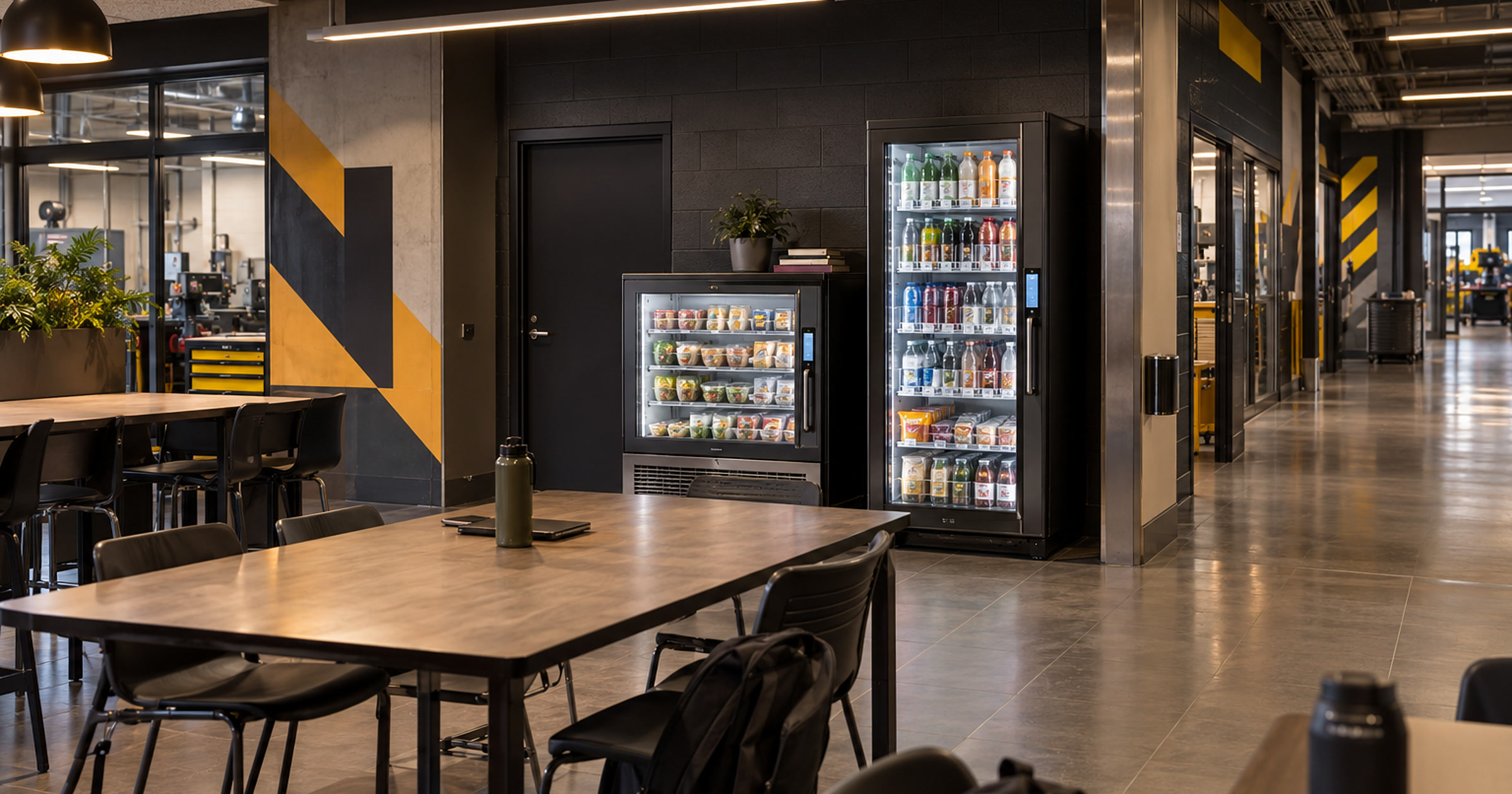
The setup works best when it is treated as part of the building plan, not a random appliance near the front door. The unit should serve the break between sessions, the lounge, or the corridor people already use between training areas.
The right placement is close, but not in the way
Trade school buildings often have practical traffic patterns. Students carry gear. Some areas have safety rules. Some rooms are instructor-only. A vending unit that looks convenient on a floor plan can become annoying if it narrows a hallway or lands beside the wrong doorway.
Start with the natural stopping points. A student commons or shared break area usually beats a doorway. The unit should be easy to find without becoming a bottleneck.
Accessibility matters too. The U.S. Access Board’s guide to ADA operable parts explains that covered controls in accessible spaces and along accessible routes have reach and operation requirements. A school does not have to turn every vending decision into a legal thesis, but it should think about route width and comfortable interface use.
The service side is just as important. A smart cooler or vending unit should have enough room for restocking without blocking class change traffic. If a restock visit turns into a hallway obstacle course, the placement is not done.
Payment support should not become front-desk work
Cashless vending is useful in a training center because students, visitors, and staff can buy quickly without someone handling cash or making change. But payment convenience only helps if the school is not dragged into every support issue.
The PCI Security Standards Council’s merchant resources frame payment security around people, process, and technology. For a school evaluating vending, the practical takeaway is simple: know who owns the payment system and transaction support.
That is where the operating model matters. Revvolto owns the operating work for qualified locations. The school should not have to become a snack retailer just because it wants better on-site options.
For vocational programs, that distinction is the whole point. The amenity should make the building feel more complete without adding another job to student-facing or facilities teams.
Product mix should match the training day
A vocational training center is not the same as a corporate breakroom. The product mix should match the rhythm of the campus.
For morning programs, that may mean quick breakfast items and cold drinks. For afternoon or evening cohorts, grab-and-go meals may matter more. For programs with hands-on work, the unit should be placed where people can step away cleanly instead of eating in the wrong training area.
The mix can also change over time. Smart vending gives the operator a better view of what actually moves, which helps refine assortment without asking the school team to guess. That does not mean the machine magically knows what students want. It means purchase data can help guide stocking choices after the unit is in use.
The best setups are boring in the right way. Students find the unit. They buy quickly. Products are replenished on a regular cadence. Staff are not chasing refunds, filling shelves, or answering where the forks went.
What to ask before adding vending
Before approving a unit, walk the campus like a student between sessions. Where do people already wait? Where do instructors step out? Where could a restock visit happen without getting in the way?
Then ask the operator direct questions. Who handles product selection? How often is the unit serviced? What payment options are supported? Who answers payment issues? What happens if the campus schedule changes for a new cohort?
A strong amenity setup should answer those questions plainly. It should respect the building, the training schedule, and the people using the space.
For qualified training centers, Revvolto can help add modern vending or smart fridge options with stocking and service handled by Revvolto. Tell us about the location at revvolto.com/contact-us.