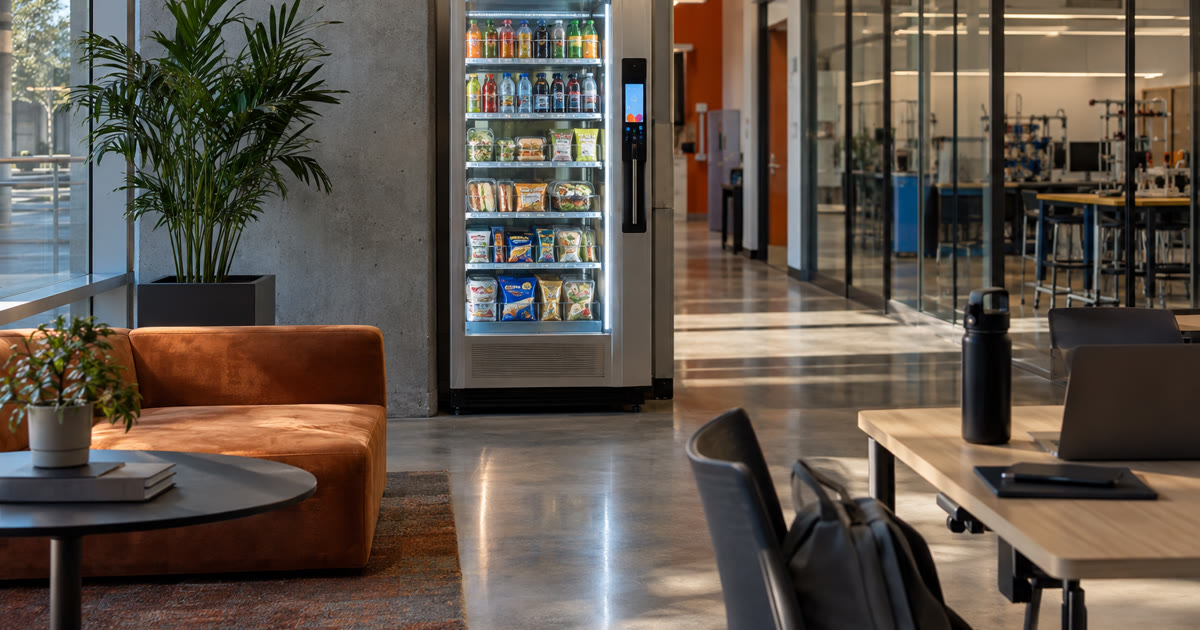
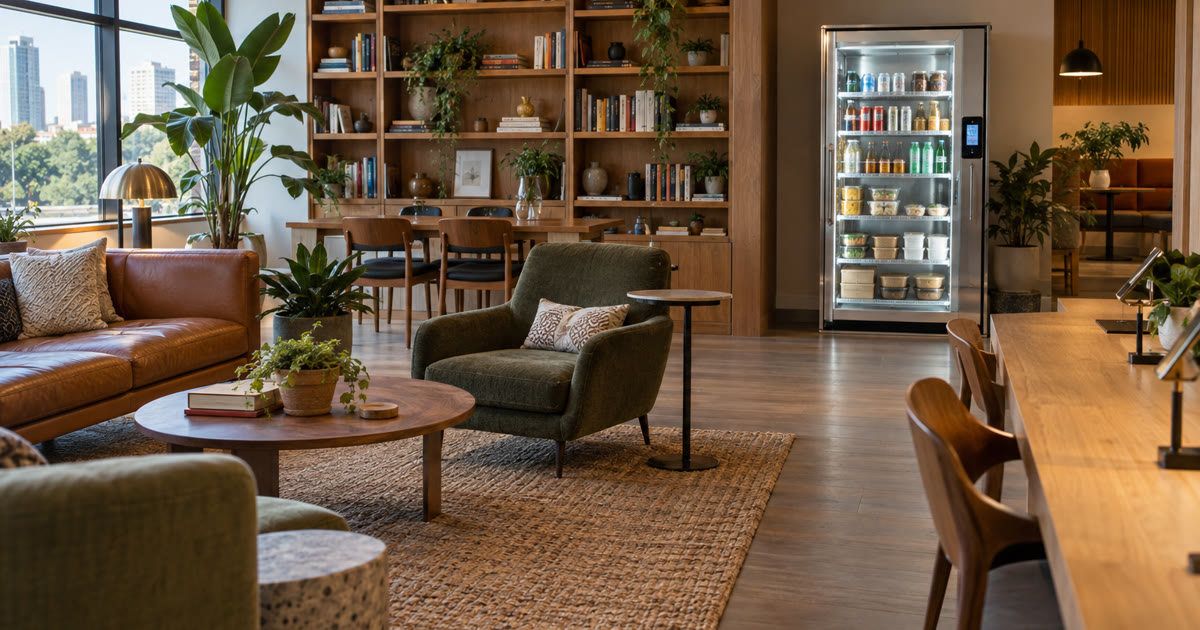
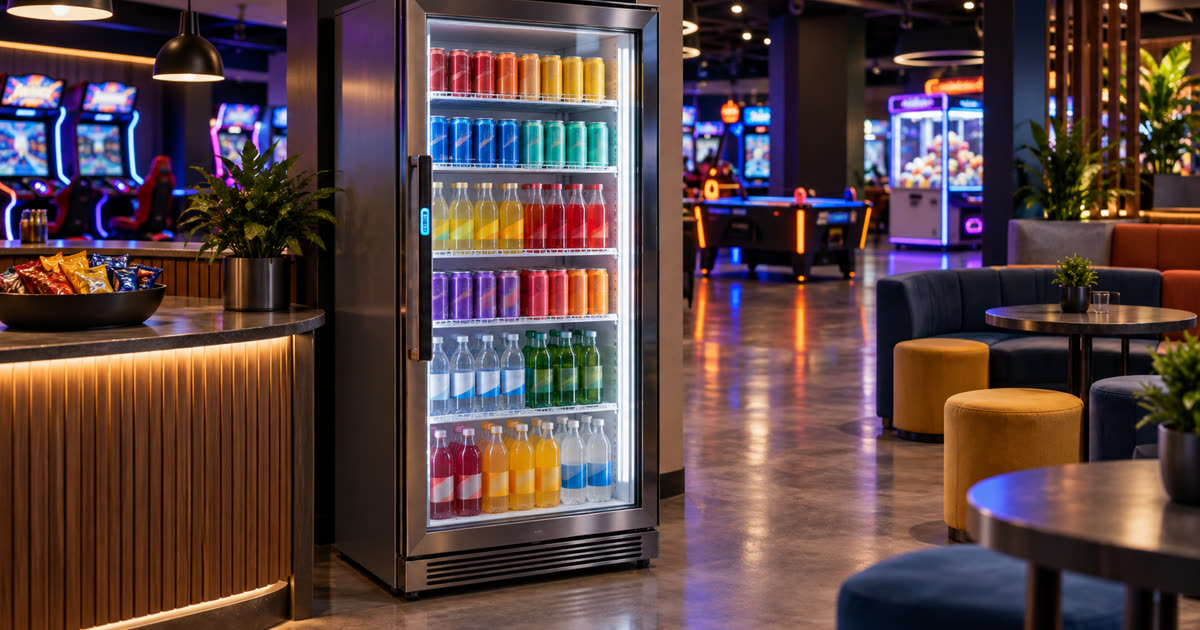
A vending product mix should not be chosen like someone is filling a junk drawer with snacks.
The right mix starts with the site: who is nearby, when they use the machine, how long they have to decide, whether they need shelf-stable snacks or cold drinks, and how often the operator can restock without getting in the way. A gym, hotel, warehouse, clinic staff area, apartment lobby, and office breakroom can all support vending, but they should not all get the same shelf.
That is where modern vending machines, smart fridges, and compact market-style setups get more useful. The machine is not just a cabinet. It is a service point that should be stocked, reviewed, and adjusted around real use.
A product mix starts with the use moment
Before anyone chooses drinks, chips, bars, or refrigerated items, the first question is simple: what job is this machine doing at this location?
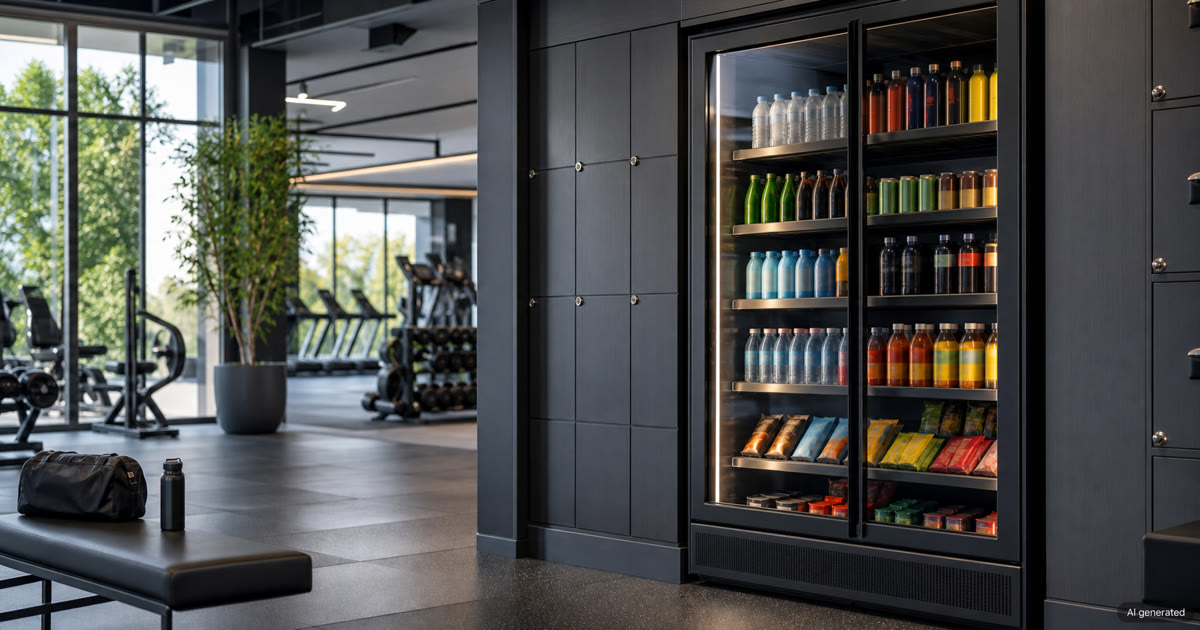
A hotel corridor may need quick travel snacks, bottled drinks, and simple grab-and-go options that work when the restaurant is closed. A warehouse breakroom may need faster, durable options for short breaks and shift changes. A gym may lean toward cold drinks and convenient snacks people can grab without leaving the building. An apartment amenity area may need a broader mix because residents use it at different hours for different reasons.
That does not mean every site needs a huge assortment. More choices can help when people have time to browse. Too many choices can also slow people down when the machine sits in a high-traffic path. The better question is not “How much can we fit?” It is “What will people actually use here without making the area feel cluttered?”
This is why product mix belongs in the same conversation as placement. A machine hidden in a quiet hallway cannot fix the problem by holding better snacks. A smart fridge in a premium lobby still needs traffic, visibility, power, service access, and a product mix that matches the people passing by. Revvolto’s guide to vending machine placement covers that setup side in more detail.
Smart vending product mix should change after launch
The first assortment is a strong guess. It should not become a permanent monument.
A good operator watches what moves, what sits, and what creates service friction. Modern smart vending machines and smart fridges can support better decisions by reporting purchase and inventory behavior. That does not mean the machine “knows” what people want. It means the operator has better information than vibes, memory, and the one person who always asks for the same drink.
External researchers have used vending machine sales data to study how product choices and messages affect purchases, which is a useful reminder that machine-level behavior can be measured. That JAMA Network Open study does not prove anything about Revvolto’s equipment, any specific site, or any promised result. It simply supports the common-sense point that vending decisions improve when operators review actual purchase behavior instead of guessing forever.
The practical buyer question is this: who reviews the assortment after installation?
If the answer is “nobody unless someone complains,” the machine may drift. If the answer includes regular review, restocking notes, inventory visibility, and product changes based on use, the host is less likely to inherit a snack side quest. That is the difference between a stocked box and an operated amenity.
Shelf-stable, refrigerated, and compact market items have different jobs
Not every product belongs in the same format.
Traditional vending works well for familiar packaged snacks and drinks where speed matters. Smart fridges can make sense when the site needs refrigerated drinks or grab-and-go items and has the right traffic, power, service access, and restocking discipline. Compact market-style setups can work when the location has enough space and browsing time to support a wider selection.
The product mix should follow the format, not fight it. A narrow hallway may be better with a simpler vending setup. A staff breakroom may support a refrigerated smart fridge if people use the space throughout the day. A hospitality corridor may benefit from cold drinks and travel-friendly snacks. A warehouse break area may need items that can be grabbed quickly during short breaks.
Food labeling rules are also a reminder that vending is still a real retail environment, not a decorative amenity. The FDA says vending machine operators who own or operate 20 or more vending machines, or voluntarily register with fewer machines, must disclose calorie information for covered foods subject to exemptions. That source does not mean Revvolto is making a compliance promise here. It simply shows why product presentation, packaging, and operator responsibility deserve a serious conversation before launch.
Hosts should ask who owns the product decisions
The host should not have to become the snack manager.
Before adding vending, ask the provider:
- Who chooses the opening product mix?
- How does the mix differ by site type?
- How often is the assortment reviewed?
- Who handles slow-moving products?
- Who adjusts the mix when traffic patterns change?
- What happens when people request items that do not fit the machine, format, or service model?
- How are refrigerated items handled differently from shelf-stable snacks and drinks?
Those questions matter because product mix touches everything else: stocking cadence, service access, payment experience, refrigeration needs, and whether the amenity feels useful after the first few weeks.
For qualified locations, Revvolto typically installs and operates vending machines, smart fridges, or compact market-style setups at no cost to the host. Site fit still matters, and so does what the vending operator keeps handling after launch. The useful conversation is about traffic, placement, product mix, service access, and what the operator will keep managing after the machine is in place.
The best mix is useful before it is impressive
A vending setup does not need to look like a convenience store audition to work. It needs the right products for the right people in the right spot, with an operator paying attention after launch.
That is the cleanest way to think about vending product mix: start with the site, choose the format, stock for the real use moment, then adjust based on what people actually buy. The shelf should not be random. It should have a job.
If you are deciding what type of vending machine, smart fridge, or compact market setup fits your building, talk with Revvolto. The first step is not picking snacks. It is figuring out what the location actually needs.