A data center looks quiet from the outside. Inside, the workday is more controlled. People move through secured entries. Maintenance windows matter. Equipment rooms are not casual pass-through spaces. Even a simple lunch break can become inconvenient when leaving the building is not easy.
That is why Austin’s data-center growth is not only a power, zoning, or construction story. It is also a building-operations story.
KXAN reported that the former 3M campus in northwest Austin is being positioned for a major technology-campus transformation tied to data-center and advanced-compute use. The local debate is bigger than workplace amenities, obviously. But for property teams, the practical lesson is simple: when a building is designed for controlled technical work, on-site refreshments should be planned before staff support gets treated like leftover square footage.
This is a planning cue, not a Revvolto project.
Why technical-site break planning is different
A normal office can lean on nearby restaurants, lobby coffee, or people leaving for lunch. A secure technology campus is different. Movement is more intentional. The work can run past normal business hours. The wrong amenity location can create extra trips through controlled parts of the building.
That does not mean every technical facility deserves a full market room. Sometimes the better fit is a refrigerated vending setup near the employee lounge. It should stay away from sensitive work zones and close enough that people can use it without turning a snack run into a campus tour.
The best question is not, “Can we fit a cooler somewhere?” The better question is, “Where do people naturally stop without creating more work for the facility team?”
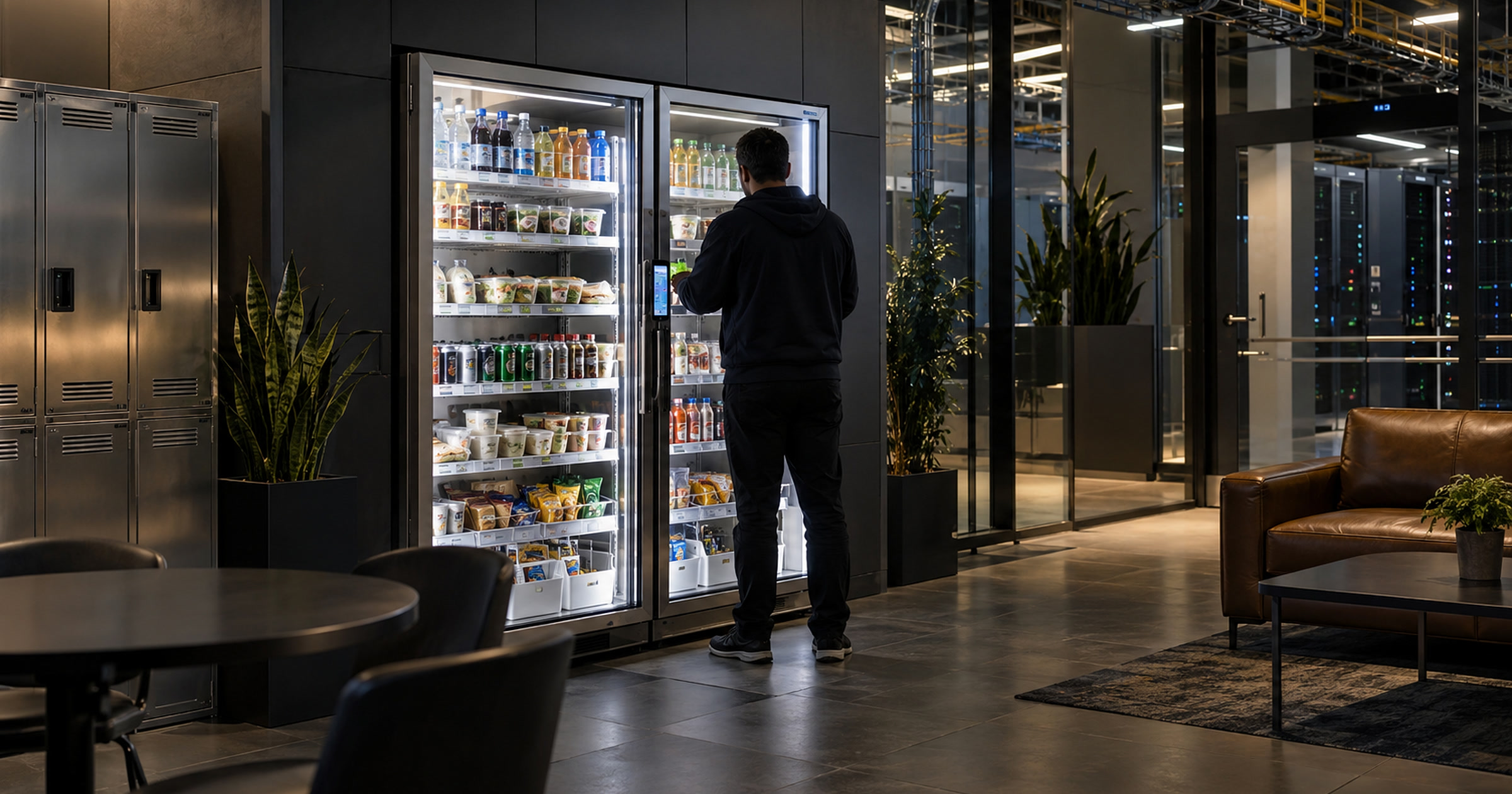
For secure sites, that usually points to staff-only break rooms or operations lounges. Those spaces already handle employee movement. They are easier to service. They keep the refreshment program separate from equipment rooms and visitor-facing paths.
Smart fridges for data center staff areas
A refrigerated smart cooler can work well when it matches the building’s rhythm. In a technical facility, that rhythm may include early starts and evening maintenance. Some teams also stay on-site through long work blocks.
The value is not novelty. It is boring in the best way: cold drinks and quick meals available where staff can actually use them. Cashless checkout matters because it keeps the experience simple. Remote monitoring helps the operator see what needs attention. A clean restock route matters because replenishment should not compete with technical operations.
That is where Revvolto’s model fits qualified sites. We bring the equipment and keep it stocked. We support the payment tech and maintain the unit. The building team should not have to become a snack buyer or repair desk.
For data-center-adjacent properties, the planning decision is really about location discipline. Put refreshments too far from the work pattern and people ignore them. Put the unit in the wrong place and it becomes one more operational wrinkle. Put it near the right staff area and it becomes part of the building’s support system.
One overlooked detail is visitor separation. A good staff setup does not invite public traffic into the wrong corridor. It gives employees a reliable place to grab something while keeping the rest of the building’s movement rules intact.
What property teams should decide early
Before a secure facility locks in its staff-area layout, a few vending questions deserve a place in the room.
First, where do employees naturally stop between tasks? That could be a break room near lockers, a staff pantry near operations offices, or a support lounge outside controlled corridors.
Second, how will the unit be serviced? A refrigerated vending program may be simple for users, but it still needs a practical restock route. If every service visit requires awkward access steps, the layout is fighting the amenity.
Third, what product mix fits the workday? A data-center staff area may call for cold drinks and simple meals more than impulse candy. The mix should follow real use, not a generic shelf plan.
These are not glamorous questions. Good facilities work rarely is. But they decide whether the amenity becomes part of the daily pattern or a nice-looking machine that people walk past.
The earlier the question gets asked, the less the team has to compromise later. A few feet of better placement can change user adoption, service access, and the daily friction the site team feels.
The point is to make the decision while the building plan is still flexible. Waiting until after occupancy usually means the vending option gets squeezed into whatever corner is left. That is how otherwise good amenities become underused.
The Austin takeaway
Austin’s technology and infrastructure footprint keeps creating facilities where people work behind the scenes. Those buildings may not look like classic retail, hospitality, or office spaces. They still need basic human support built into the day.
Refreshments are a small part of that picture, but they are visible. If people are expected to stay close to the building or work through odd hours, the staff setup deserves real planning.
A smart cooler will not solve every facilities question. It can solve one very specific one: how to give employees convenient food and drink choices without handing the building team another daily chore.
If you are planning a technical facility in the Austin area, tell Revvolto about the location. We can help decide whether a refrigerated vending setup, vending unit, or compact micro market belongs in the plan.