Connect CRE reported that OHT Partners broke ground on The Barton, a 402-unit multifamily community on more than 60 acres in Southwest Austin. The article points to a large clubhouse plus dedicated work and fitness areas planned for the community.
That is exactly when refreshments should enter the layout conversation. Not after the clubhouse is furnished. Not after the package room route is already crowded. Early.
For apartment and mixed-use properties, a smart fridge or modern vending setup works best when it fits the way residents already move through the building. The unit should feel like part of the amenity plan, not a machine squeezed into whatever wall is left over.
Amenity buildings create small food moments
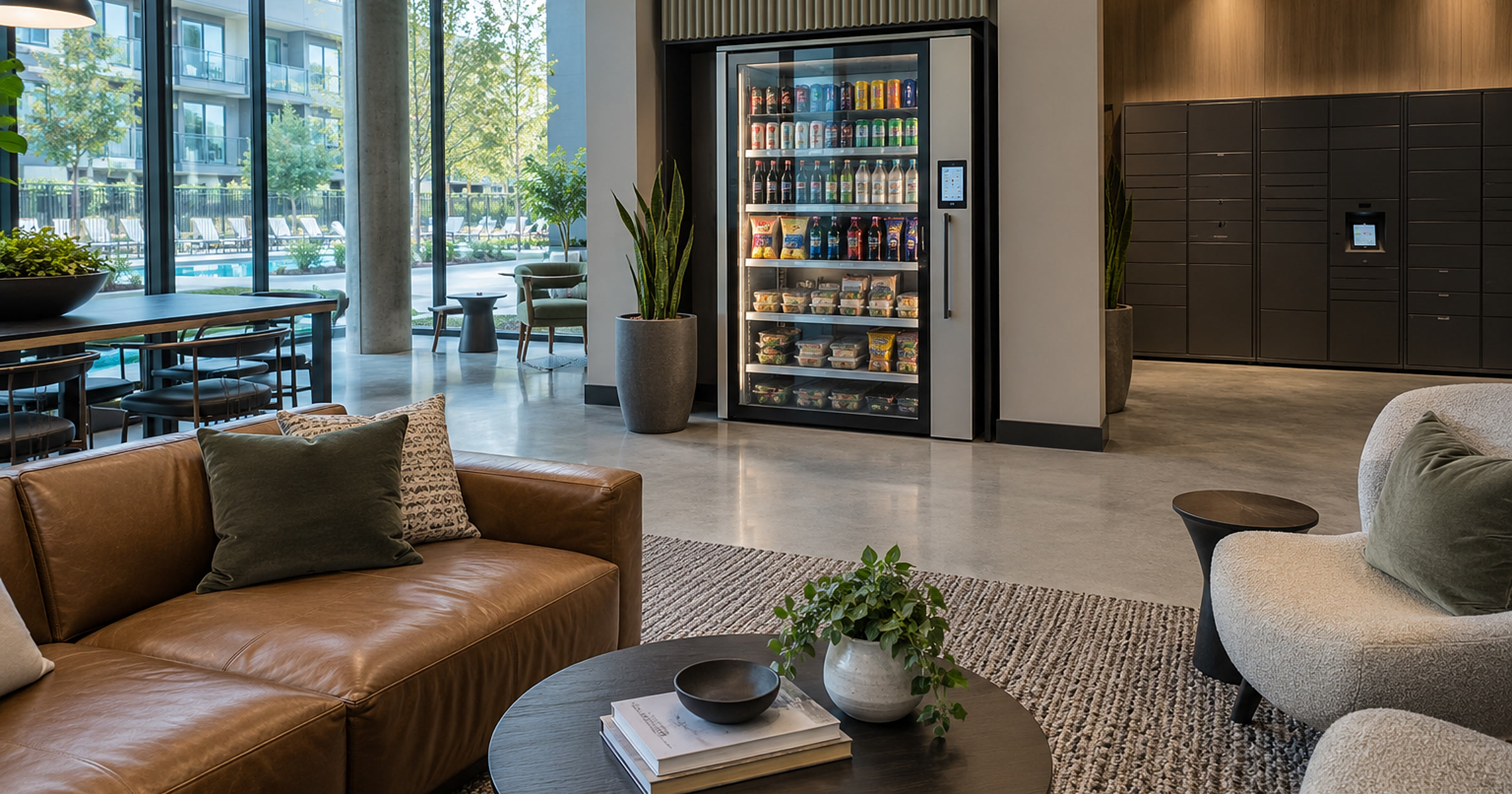
Large apartment communities are full of short stops. Residents pick up packages, leave the gym, or wait near the clubhouse. None of those moments is long enough for a full food run. Many are long enough for a cold drink or a simple grab-and-go item.
The Barton reporting is useful because the planned amenity mix is broad. The article lists a 9,000-square-foot clubhouse and a dedicated coworking area. Those details point to a property where people will move between several shared areas, not one lobby desk.
A merchandised cooler belongs in that movement plan. The question is not whether residents like convenience. Of course they do. The better question is where convenience can sit without making the leasing team responsible for a snack program.
If the unit is near a real resident route, people notice it. If it is hidden behind a door nobody uses, it becomes an expensive-looking afterthought. The location decides whether the amenity feels natural.
The clubhouse is not the only candidate
The obvious answer is the clubhouse. It may be right. It also may be too obvious.
A clubhouse often has seating, coffee, and tours moving through the same space. That can make it a good place for a smart cooler. It can also make it the wrong place if the unit interrupts leasing tours or blocks the route during resident gatherings.
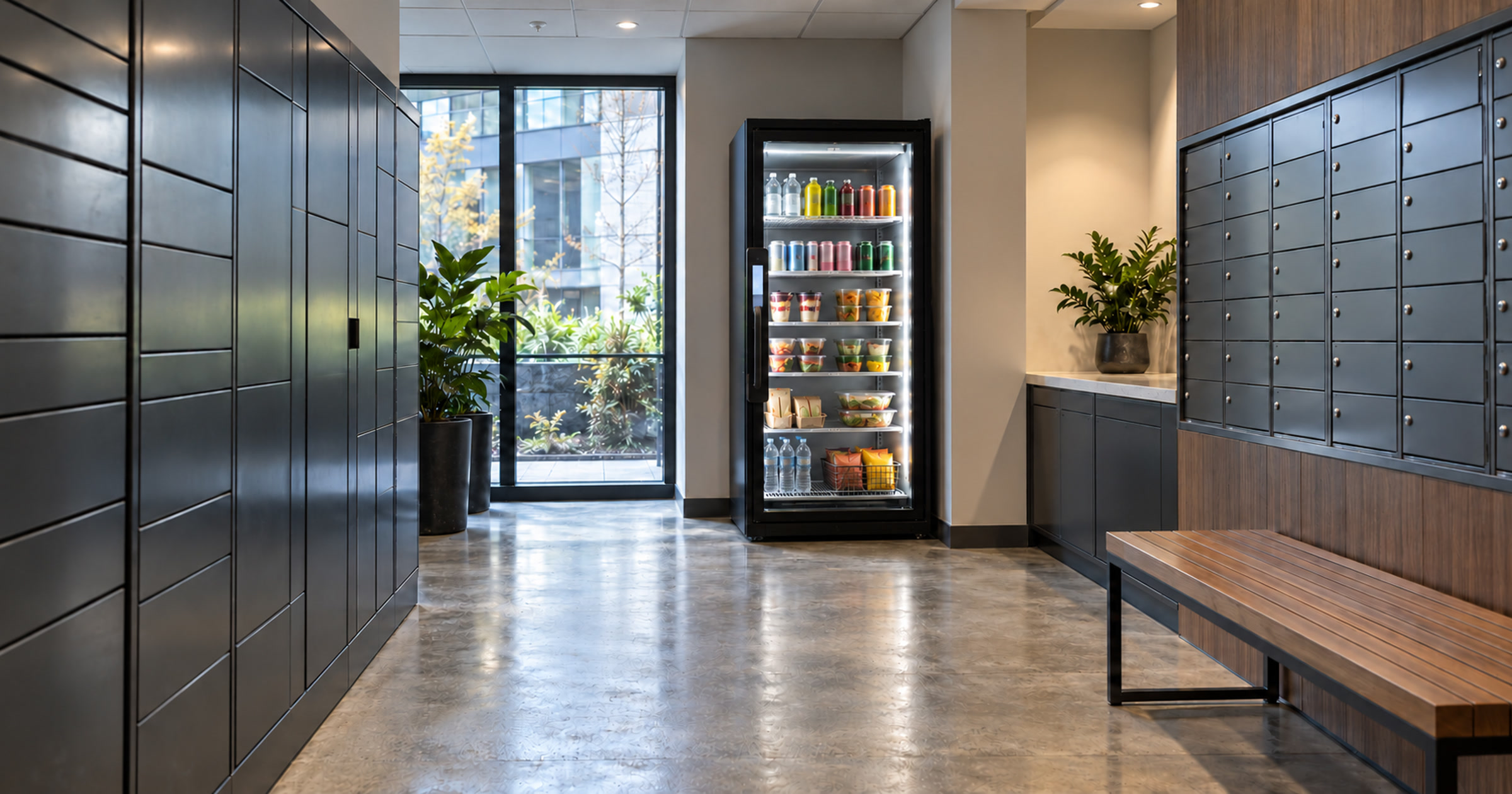
Package rooms, coworking nooks, and fitness-adjacent corridors deserve the same review. A resident leaving a workout may want a cold drink before walking home. Someone using a coworking room may want refreshments without leaving the building. A package pickup route may create a steady stream of short stops throughout the day.
The right location usually has three things: visibility, enough stopping room, and clean restock access. That last one gets ignored until the first visit becomes awkward. Revvolto needs room to stock and maintain the unit without dragging a restock cart through the busiest part of the property.
A pretty amenity wall is not enough. The unit has to work on an ordinary Tuesday.
Smart fridges should reduce work, not create it
Apartment teams already handle tours, work orders, and resident questions. A snack amenity goes sideways when it quietly becomes another internal job.
That is the difference between a managed cooler program and a shelf of snacks someone has to babysit. We handle stocking, payment technology, and maintenance. Your team should not be buying cases of drinks or guessing which items ran out.
For a larger community, that ownership matters. The first month of resident excitement can hide a weak process. The long-term test is whether the setup still works after normal building life takes over.
A good vending plan answers boring questions early. Where does the restock vehicle park? Which route does the visit use? Is there power where residents actually stop?
Boring questions prevent annoying problems. That is the whole game.
Product mix should match resident behavior
Multifamily refreshments should not pretend to be a grocery store. They should serve the moments the property actually creates.
A fitness-adjacent setup leans toward cold drinks. A coworking-adjacent setup may call for coffee drinks and light meal options. A clubhouse setup may need a broader mix because traffic changes during events.
The point is to start with behavior, not a product wish list. If residents mostly pass the unit for ten seconds, the mix should be easy to scan. If people use the area for longer work sessions, more substantial options can make sense.
There is a compliance line here too. The copy should not turn food access into health claims or resident lifestyle promises. The amenity is practical: convenient, cashless, and maintained. That is strong enough without pretending a vending plan changes someone’s life.
Sales data can help refine the mix over time. If drinks move faster than snacks, stocking can respond. If weekend traffic behaves differently from weekday traffic, the assortment can change. That is better than guessing once during design and hoping the shelf behaves forever.
Plan the route before the wall is finished
The best time to place a cooler is before the building treats every corner as spoken for. Once furniture and package lockers are locked in, the vending conversation gets harder.
Austin multifamily growth is a reminder for property teams: shared amenities are not just what you list on a brochure. They are the small services that make common spaces easier to use after move-in.
Walk the future resident route. Start at the package room. Move through the clubhouse. Check the fitness exit and the place people naturally wait. Then ask where a stocked, cashless unit would help without creating more work.
If your Austin-area apartment community is planning shared spaces, Revvolto can help you test whether a managed cooler belongs in the layout. Tell us about the location at revvolto.com/contact-us.