Pflugerville is looking for small businesses that want to open, relocate, or expand downtown. Community Impact covered the notice, including future city-owned rooms between roughly 2000 and 5700 square feet. The report also mentions coworking and shared retail possibilities.
That is a useful planning signal for any Austin-area downtown, not because Revvolto has any connection to Pflugerville or its program. We do not. The lesson is simpler: when a downtown space is built for several small businesses to share, food access belongs in the layout conversation early.
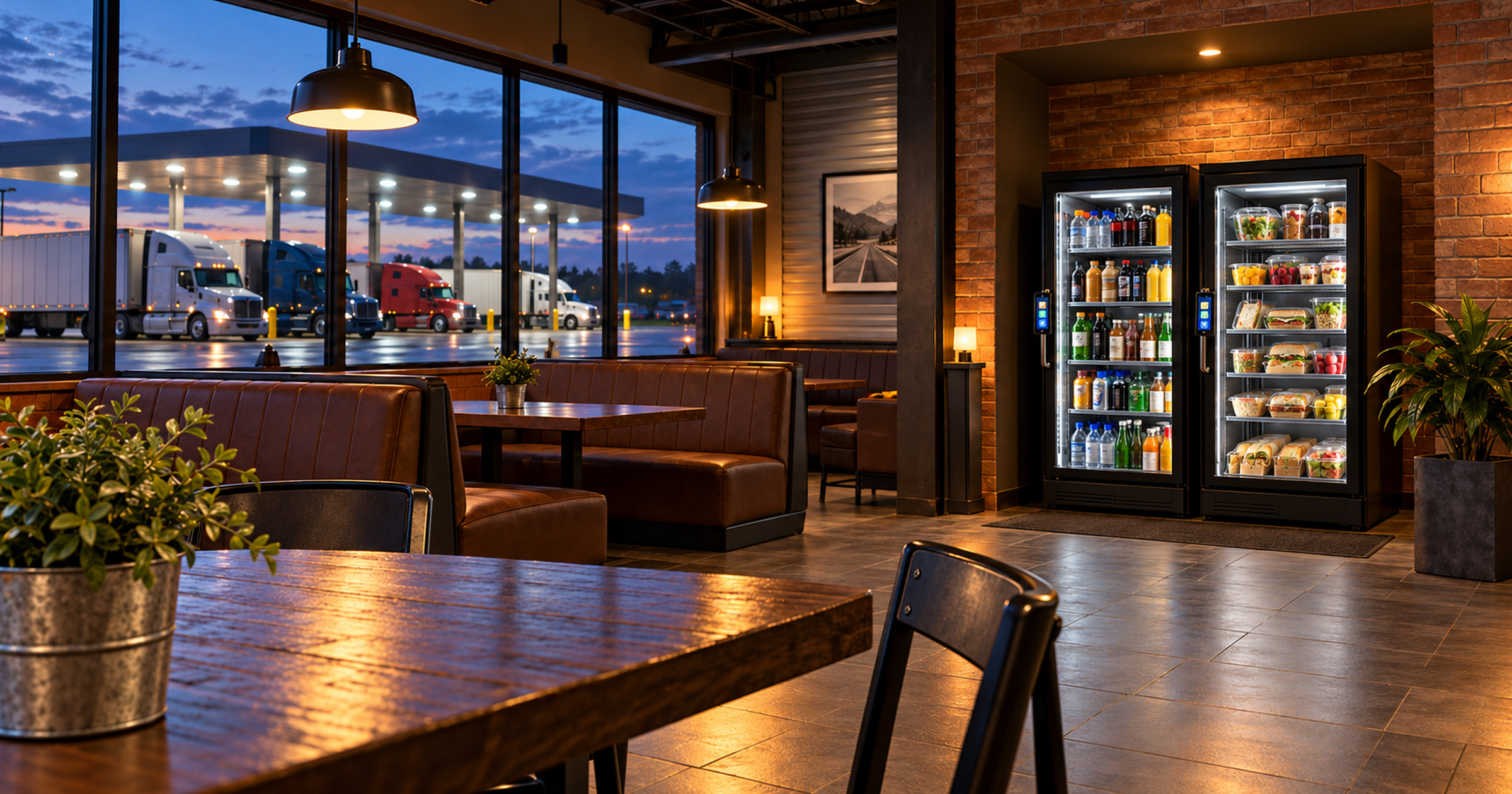
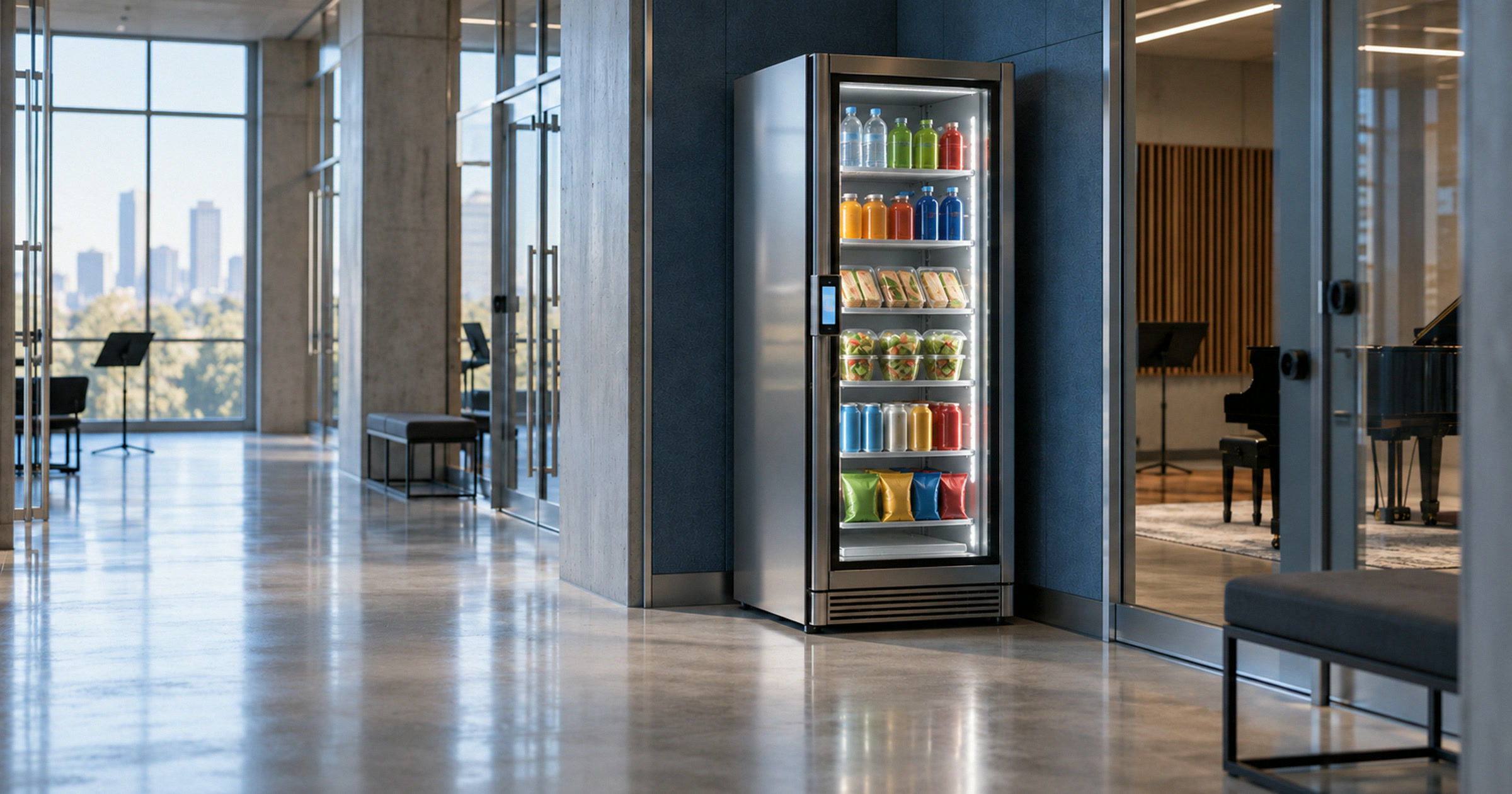
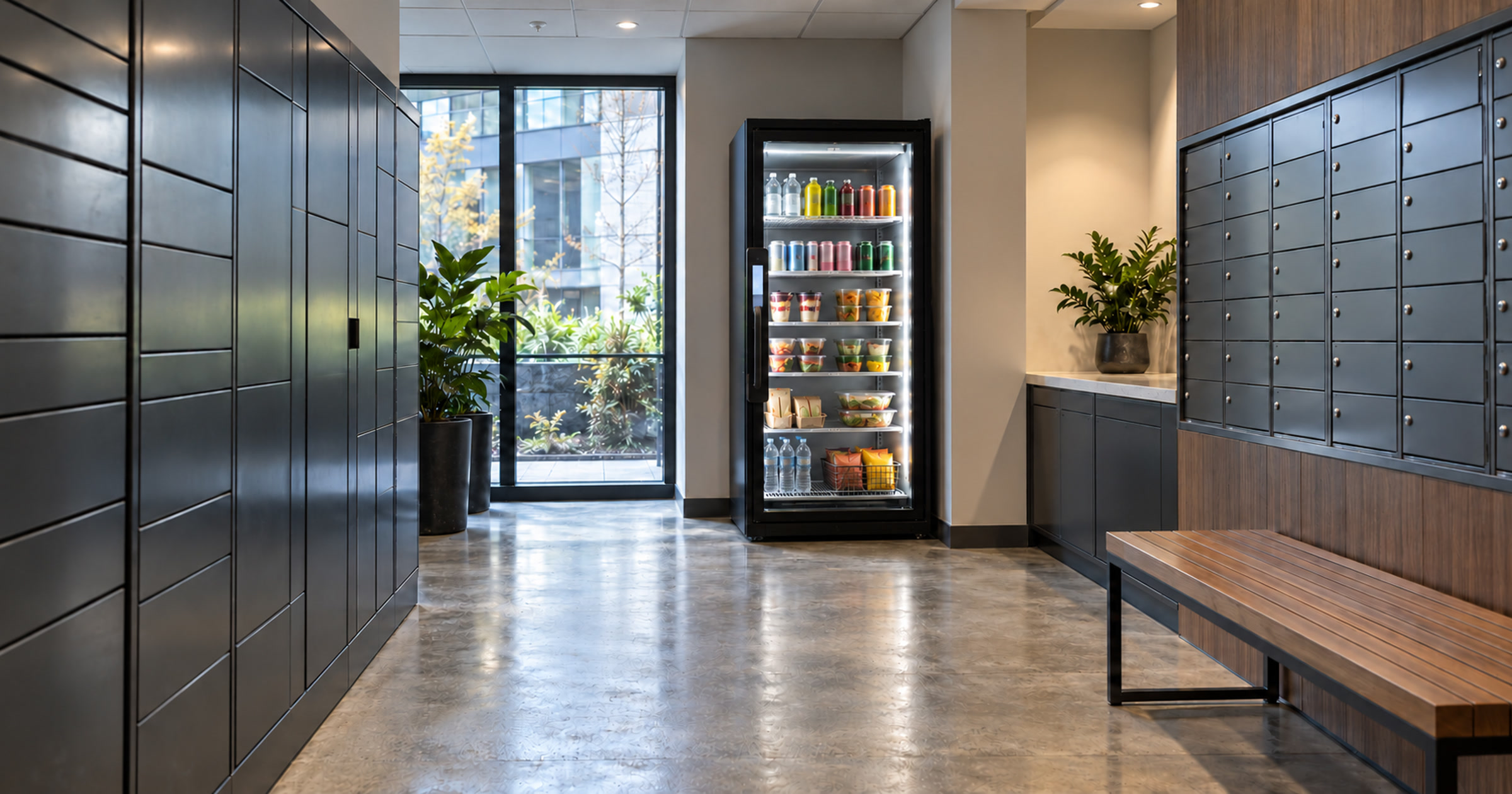
A modern vending machine or compact cooler can make that kind of space easier to use. The trick is placing it where people already slow down, not where it becomes one more thing the front counter has to manage.
Shared commercial spaces run on mixed traffic
A single storefront can now carry a lot of jobs.
One room might have a small retailer near the front, a meeting room in the back, and office users who come and go throughout the day. That mix is the point. It helps the space stay active even when one user alone would not fill the building.
It also creates a basic food and drink problem.
People arrive at different times. Some stay for a short appointment. Some work a half day. Some are there to staff the space while everyone else passes through. If the only refreshment plan is “walk somewhere nearby,” the experience depends on building hours and whether somebody can step away.
That is where cashless vending fits. It gives tenants, workers, and visitors a clean grab-and-go option inside the building. No one at the desk has to sell snacks. No tenant has to maintain a shared pantry. The space gets a practical amenity that can work beyond one business’s schedule.
For smaller properties, that matters. A shared building does not always have the depth for a cafe. It may not have the staffing model for a managed breakroom. A well-placed cooler can cover the middle ground.
Placement beats the product list
The first question is not what goes inside the machine. The first question is where people naturally pause.
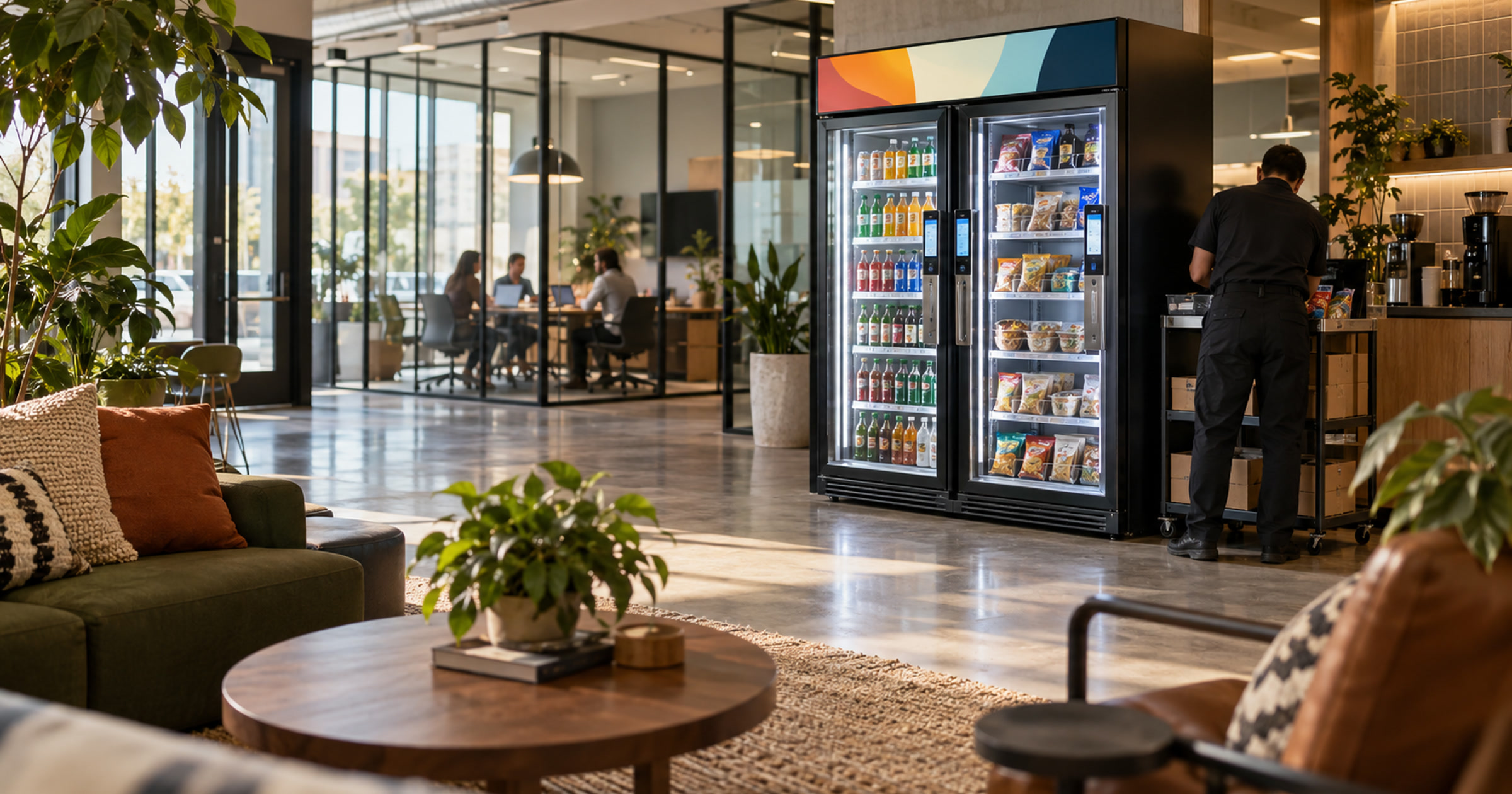
In a downtown shared-retail or coworking setup, that might be near the common seating area. It might be close to the meeting room corridor. It might be beside a small tenant kitchen or along the route from the entrance to the back offices.
The wrong spot is the one that steals attention from a counter, blocks a walkway, or makes the amenity feel like an afterthought. If the unit sits too close to an active sales area, staff may get pulled into questions they should not have to answer. If it sits too far away, people forget it exists.
Good placement makes the machine feel obvious without making it loud. People should see it when they are already between tasks. The unit should have enough clearance for someone to open the door, make a selection, and move on without causing a little hallway traffic jam.
That is boring planning. It is also the planning that keeps an amenity from becoming furniture.
Service ownership matters in multi-tenant rooms
Shared spaces get messy when ownership is vague.
If everyone uses the amenity, who stocks it? Who handles expired products? Who deals with a payment issue? Who wipes down the area? Who decides whether the assortment is mostly drinks, snacks, or chilled meals?
Those questions sound small until the space opens. Then they become daily irritations.
A Revvolto-style setup is built to keep that work off the building team in qualified placements. We stock the unit, keep it current, and handle service. That lets the property team think about location fit instead of turning a shared amenity into somebody’s unofficial side job.
For downtown spaces trying to attract small operators, that can be the difference between “nice idea” and “actually maintainable.” A shared amenity only helps if it stays stocked and easy to use.
The product mix can come later. Cold drinks may matter most in one building. Quick snacks may carry another. A small chilled selection may make sense where people hold meetings or work longer stretches. Start with the traffic pattern, then tune the assortment around what people actually buy.
The best downtown amenity feels built in
The Pflugerville notice is about commercial activation, not vending. That is exactly why it is worth watching.
When cities and property teams think about mixed-use buildings, they usually focus on tenants and street activity. Food access can get treated as something nearby businesses will solve later.
Sometimes they will. Sometimes they will not.
A vending or smart fridge setup is not a replacement for restaurants or coffee shops. It is the backup layer inside the building. It helps when a tenant has a long afternoon, when a visitor is between appointments, or when the only nearby option is closed.
For mixed-use commercial buildings, the right test is simple: where will people already pause, and who will own the work after the first week?
If that answer is unclear, the amenity is not ready. If the answer is obvious, the cooler can make the space feel more complete without asking one small business to become the snack department.
Planning a shared commercial space in Austin or nearby? Tell us about the location at revvolto.com/contact-us.