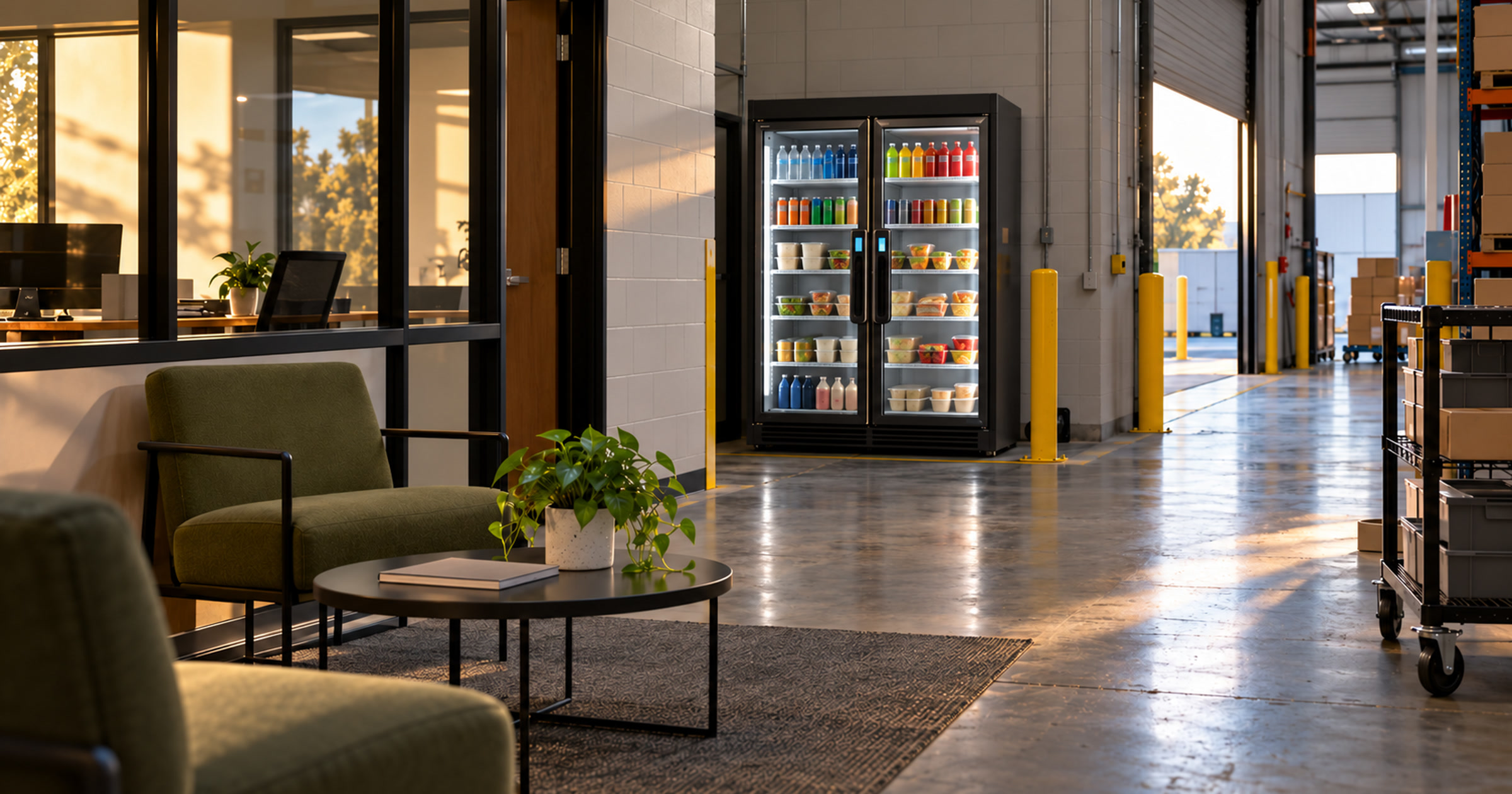
A large store opening starts long before the first customer walks in. Hiring ramps up. Training begins. Delivery teams learn the building. Managers test routines that will have to work once the doors open.
That makes the pre-opening window a good time to plan smart vending for the people working there. Community Impact reported that NFM plans to hire about 700 Austin-area employees for its Cedar Park store, while roughly 400 current employees are expected to relocate. NFM’s official store page says the 1.2-million-square-foot location is scheduled to open in 2027.
Revvolto is not affiliated with NFM, CedarView, or either source. The project is a useful local planning cue because a major retail campus has to support people well before launch day.
The employee food setup belongs in opening plans
A retail opening plan usually gives plenty of attention to the sales floor, receiving areas, and training rooms. Employee food access can get pushed into the leftover-space category. That is backwards.
The people preparing a store for opening are already working inside it. Some are learning new systems. Others are setting up displays or moving inventory. The food setup has to work during that ramp-up period, then keep working after customer traffic arrives.
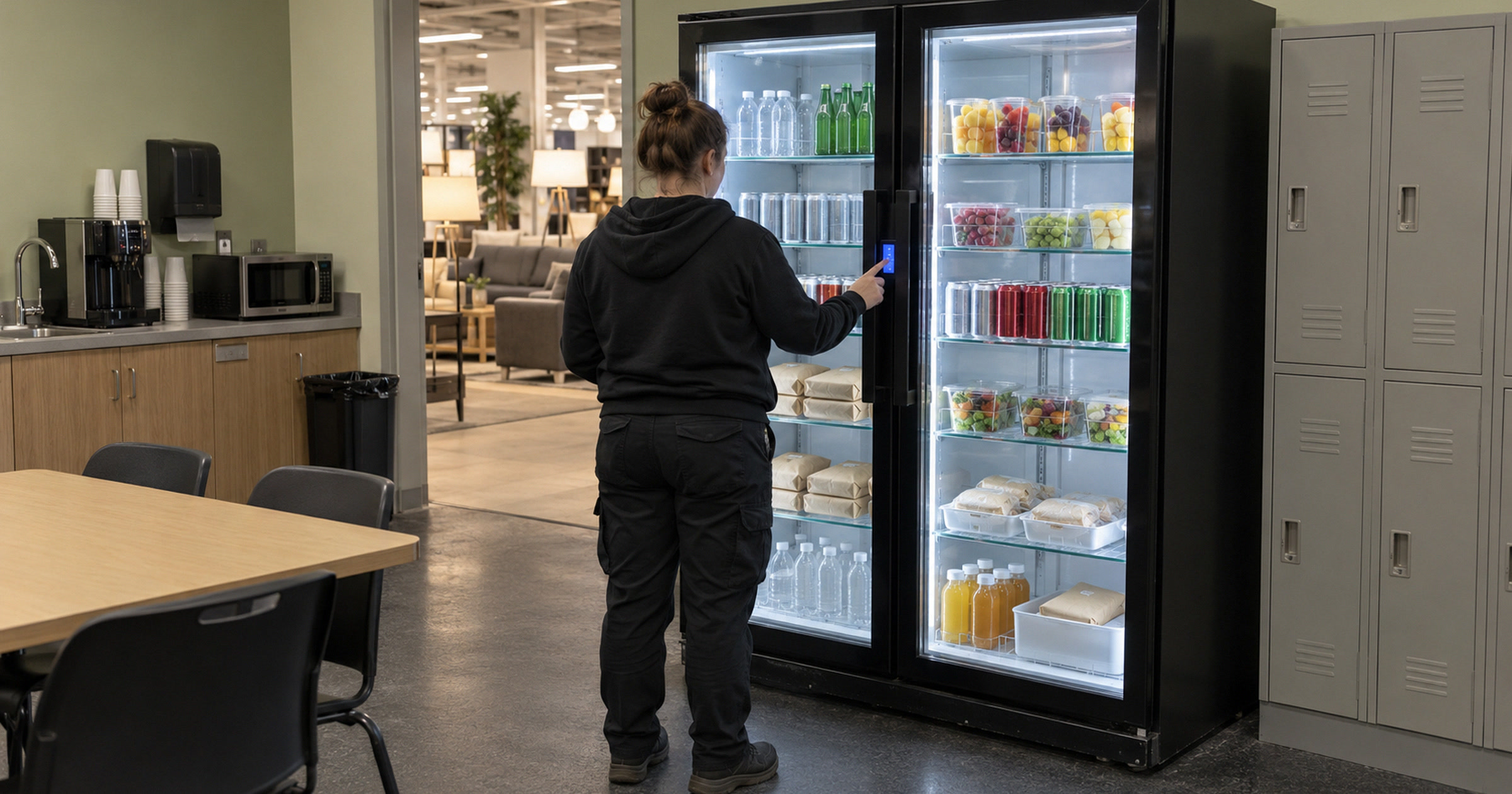
A smart fridge or modern vending unit can fit that job when the location qualifies. It gives the team an on-site option without asking a manager to become the snack buyer. We handle stocking, payment technology, and ongoing maintenance.
The useful question is not whether a machine can fit somewhere. It is whether the selected spot helps the people using it while keeping the service visit out of busy operating zones.
Large retail teams do not move as one group
A big retail campus contains different work patterns under one roof. Sales employees may spend much of the day near customer areas. Warehouse and delivery teams may work closer to receiving. Managers and trainers may move between meeting rooms and the floor.
One cooler hidden beside a distant office will not serve each routine equally well. Start by mapping where people already reset during the day. Then look at travel distance, door clearance, and the route used for restocking.
This is where the local hiring story matters. Hundreds of incoming employees are not one generic audience. A food setup has to match the building’s actual staff zones and hours. The planning work should happen while those zones are still being assigned, not after every outlet and cabinet is fixed.
The same principle applies to other big retail sites. A home-improvement store, regional showroom, or appliance campus can have long internal walks. The right amenity point makes a short break easier. The wrong one becomes an attractive machine in a corner people rarely visit.
The operator should reduce management work
A modern cooler is only useful if someone owns the operation. Product selection changes as buying patterns become visible. Inventory has to be monitored. Service issues have to reach the right person.
That work should not land on a store manager by accident. We manage the unit, keep the assortment moving, and handle maintenance. The business still provides practical site input, including expected use and access rules. The operating burden stays with us.
This matters during an opening ramp because managers are already dealing with new employees and orientation. They should not have to track beverage inventory or troubleshoot a payment reader between sessions.
The room itself matters too. The cooler needs a clean electrical plan and enough door space. Restocking should be possible without crossing a training session or blocking a back-of-house aisle. A simple service route is better than a dramatic location that creates daily friction.
Our recent guide to managed vending in multi-tenant business parks looks at shared service ownership across separate suites. The retail version is different. One operator controls the building, but several teams may still use it in very different ways.
Use the pre-opening period as a real-world test
Floor plans tell you where a cooler fits. Early staff activity tells you where it belongs.
Watch the building during orientation and setup. Notice which break room fills first. Look at where delivery staff already pass. Check whether a proposed location stays convenient after customer areas open.
That observation period can also shape the starting assortment. A location used during early staff preparation may behave differently once the full store is active. The product mix should be reviewed after real purchase data appears rather than treated as finished on day one.
Do not confuse a large headcount with automatic fit. Qualified placement still depends on expected use and the physical site. A huge building can fail if the unit sits far from the people it is meant to serve.
The better move is to settle ownership early, choose a reachable staff area, and leave enough room for service. That is less glamorous than dropping a cooler into a rendering. It is also what makes the setup usable six months later.
For another retail-specific view, see our guide to retail staff-room placement.
If your Austin-area retail location is getting ready to open, tell us about the building at revvolto.com/contact-us. We will help you decide whether a managed cooler fits the staff setup.