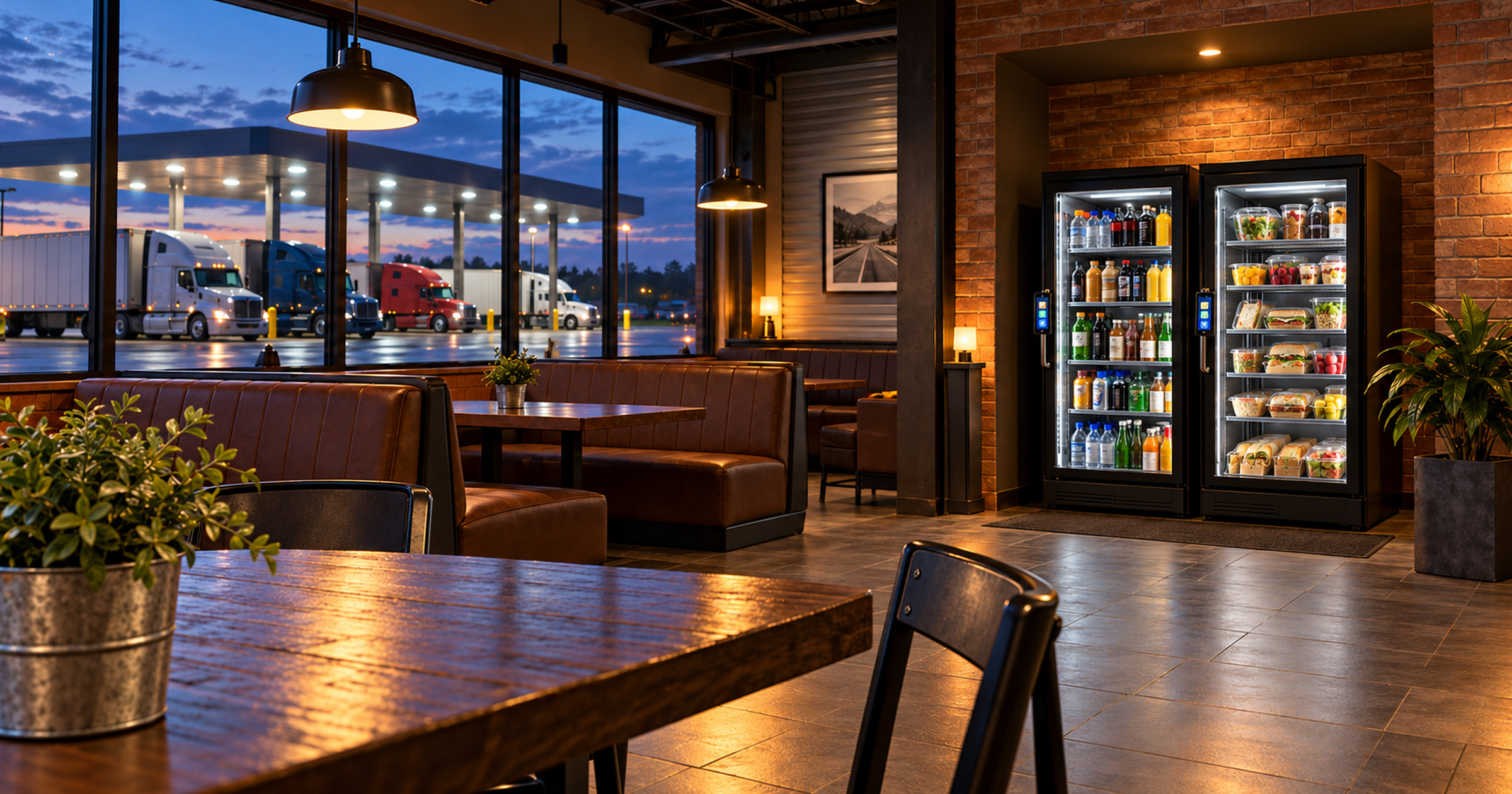
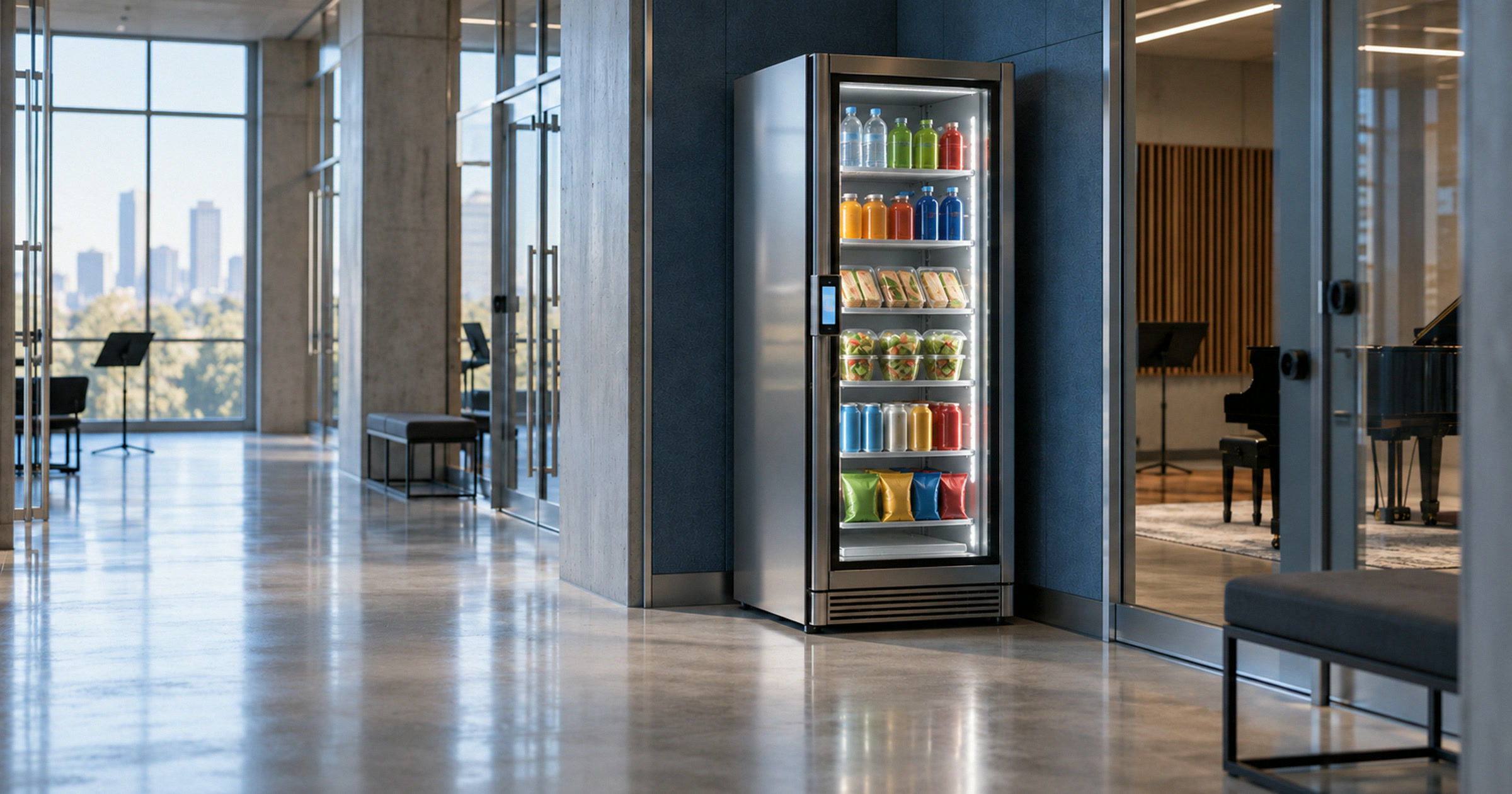
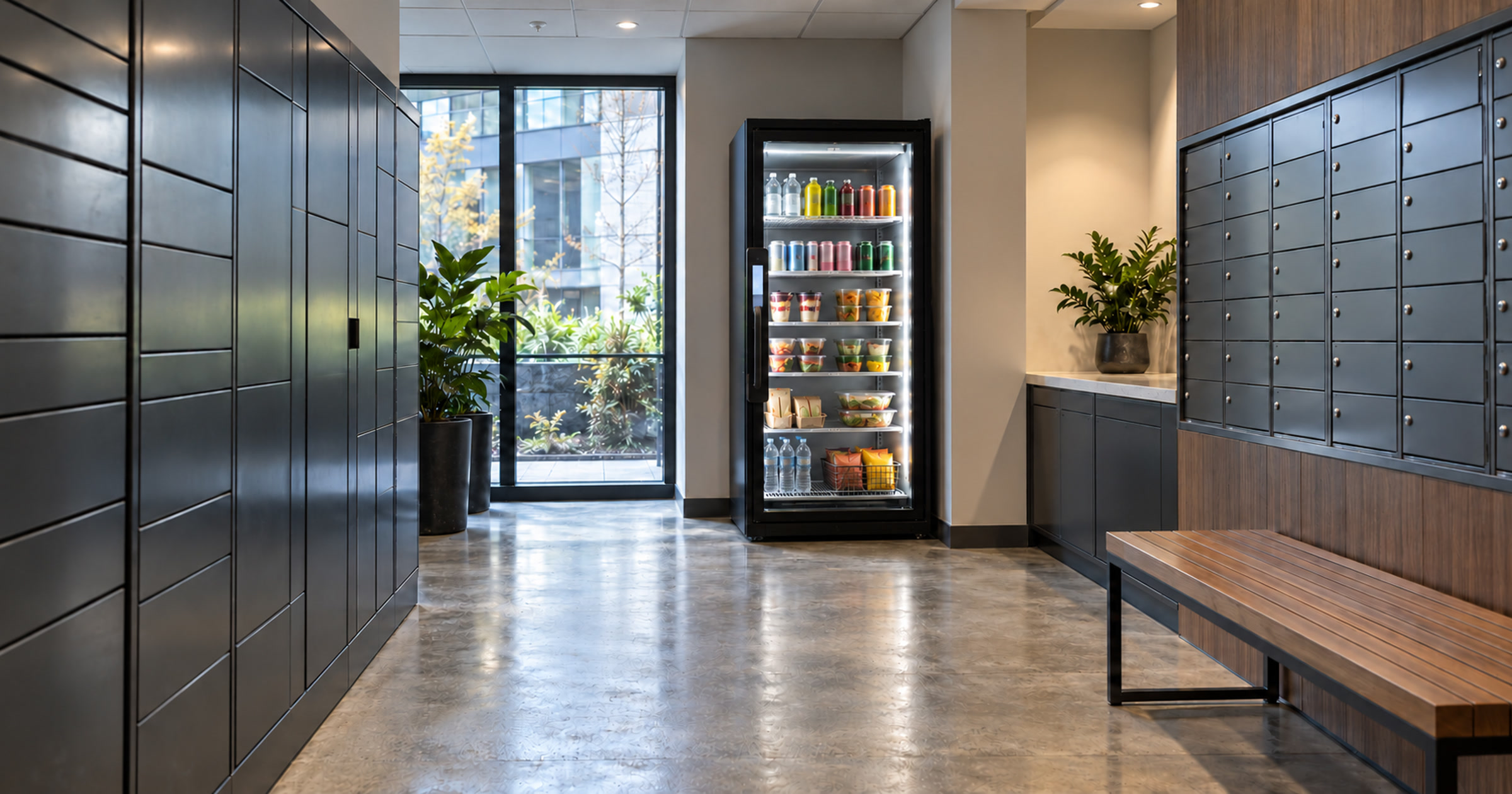
A theater does not need another appliance dropped into the lobby because somebody found an open outlet.
Smart vending works best in performing arts venues when the site review starts with movement. Watch what happens before doors open. Watch intermission. Watch what happens after the show. Then look behind the scenes, where staff and performers may have a narrow break window.
That is a different test from an office breakroom. The timing is sharper. The paths are tighter. The rushes are less forgiving.
For theater operators, the useful question is simple: where can a smart vending machine or smart cooler support grab-and-go access without turning the lobby into a bottleneck?
That answer should come from a site review, not a guess.
Start with the theater’s rush moments
Theater food access has two clocks.
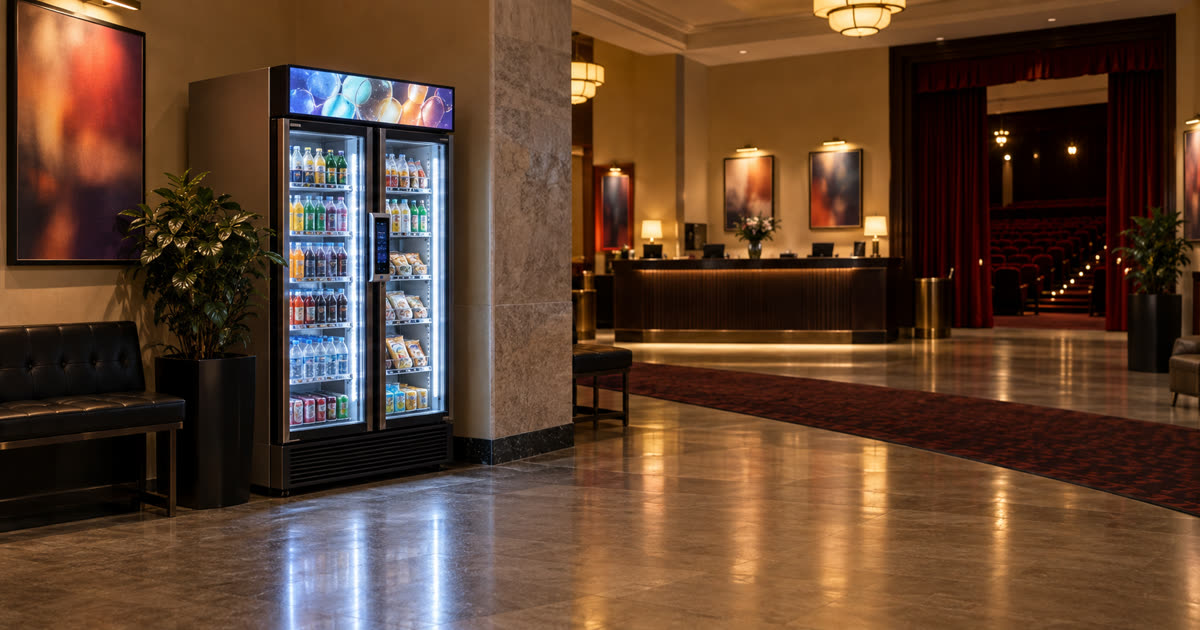
The first is the public clock. Guests arrive in waves. Then intermission sends a lot of people into the same lobby at the same time. If the vending unit sits in the wrong spot, it can create a small crowd exactly when ushers already have enough movement to manage.
The second is the staff clock. Front-of-house teams have short gaps before doors. Crew and performers may have their own break pattern backstage. Their food access problem is not the same as guest convenience. They are usually trying to get something quickly and get back to the job.
A good site review separates those patterns. One placement may serve a lobby audience. Another may make more sense near a staff break area. Trying to make one unit solve every theater food problem is how you end up with a machine that technically fits but does not really help.
The right review asks when the venue gets crowded. It asks who uses each path. It asks where people already pause. It also asks where service can happen without fighting the same path guests use during a show.
Check the path before you check the outlet
Power matters, but traffic matters first.
A smart vending placement should respect the routes people already use. The U.S. Department of Justice’s 2010 ADA Standards set minimum accessibility requirements for public accommodations and commercial facilities. That does not make a vending site review an ADA certification. It does mean placement has to respect access and the practical reality of people moving through a public venue.
In a theater, that can get tight fast. A lobby wall that looks empty at 2 p.m. may sit beside the intermission flow at 8:45 p.m. A backstage corridor that looks quiet during a walkthrough may carry cases and crew during changeover.
That is why the best placement conversation is not “where is there room?” It is “where is there room when the venue is actually operating?”
A useful site review should check lobby pause points. It should check staff access. It should check the service path for stocking.
If any of those fail, the placement is not ready. The machine might still fit on paper. Paper is a liar with a clipboard.
Match the equipment to the theater job
Not every theater needs the same format.
A compact smart cooler can fit a side lobby alcove where guests want cold drinks before a performance. A larger smart vending unit may fit better in a staff area where the mix needs to cover longer shifts. A small market-style setup may make sense only when the venue has enough dwell time for browsing.
The site review should also account for product mix. Public lobby food access may lean toward simple drinks and tidy packaged items. Staff-area access can support more practical shift-friendly choices. Neither should drift into messy food that creates cleanup problems for the venue team.
Payment support belongs in the review too. PCI Security Standards Council materials describe PCI DSS as security requirements for environments where payment account data is stored or transmitted. A theater operator does not need to become a payment-tech expert to add vending. The vendor conversation should be clear about who owns the payment system and support process.
That is one of the reasons Revvolto’s role matters. We are not asking a theater team to stock the machine or troubleshoot hardware. In qualified placements, we handle stocking and service. Payment tech stays part of the setup.
Review service access like it matters
The prettiest placement can still be a bad placement if service is awkward.
Restocking should not require a team member to weave through ticket lines. Maintenance should not require blocking an auditorium entrance. Product checks should not happen in the middle of a guest rush.
A smart vending site review should look at how the machine gets stocked. It should ask when the area can be accessed. It should ask whether the route works outside showtime. The goal is not only a clean install. The goal is a vending setup the theater can live with after the first week.
That is where theaters benefit from being picky. If the machine is too close to a doorway, move it. If the service path runs through the wrong zone, rethink it. If a staff-only placement would solve the real problem better than a lobby placement, say that early.
A theater is already a movement machine. Guests move one way. Staff move another. Equipment has its own path. Smart vending should support that movement, not add another snag.
The best placement is boring in the right ways
Good theater vending placement should feel almost obvious once it is installed.
Guests can find it without being pulled away from the main path. Staff can use it without asking the front desk for help. Revvolto can stock and service it without turning a show night into a maintenance obstacle course. Payment is cashless. The machine looks modern enough for the venue.
That is the site review test.
If you operate a theater or performing arts venue, do not start with the machine. Start with the path. Show us where guests pause. Show us where staff actually break. Show us where service can happen cleanly.
We can help you decide whether smart vending or a smart fridge fits the venue. Tell us about the space at revvolto.com/contact-us.