A vending machine restocking visit should not feel like a mystery appointment. For a host site, the point is simple: the machine should be checked, cleaned, refilled, and reviewed without turning the lobby, breakroom, or service lounge into somebody else’s problem.
That matters because vending is not just a box of snacks. It is a small amenity that lives inside a real business. People walk around it. Staff answer questions near it. Guests notice when it looks empty. A good operator treats every restock visit like part of the service, not just a delivery stop.
For Revvolto, that is the practical side of modern vending machines, smart coolers, and smart fridges. The technology helps, but the human service visit still matters. A report can show what moved. A person still needs to make the site look cared for.
Why restocking is more than filling shelves
The visible job is obvious: bring products in, refill low rows, remove anything that should not stay, and make the machine look presentable again.
The better job is quieter. The operator checks what people are actually buying, whether the current mix fits the location, and whether the machine still works for the space. A clinic breakroom may need a different mix than an auto dealership service lounge. A warehouse shift entrance may move through cold drinks differently than a tenant lobby. Same hardware family, different use pattern.
This is where hosts should be careful with bargain-bin vending. If the visit is treated like a drop-off, the machine can slowly become stale, messy, or poorly matched to the people using it. Nobody needs a tiny museum of unwanted snacks.
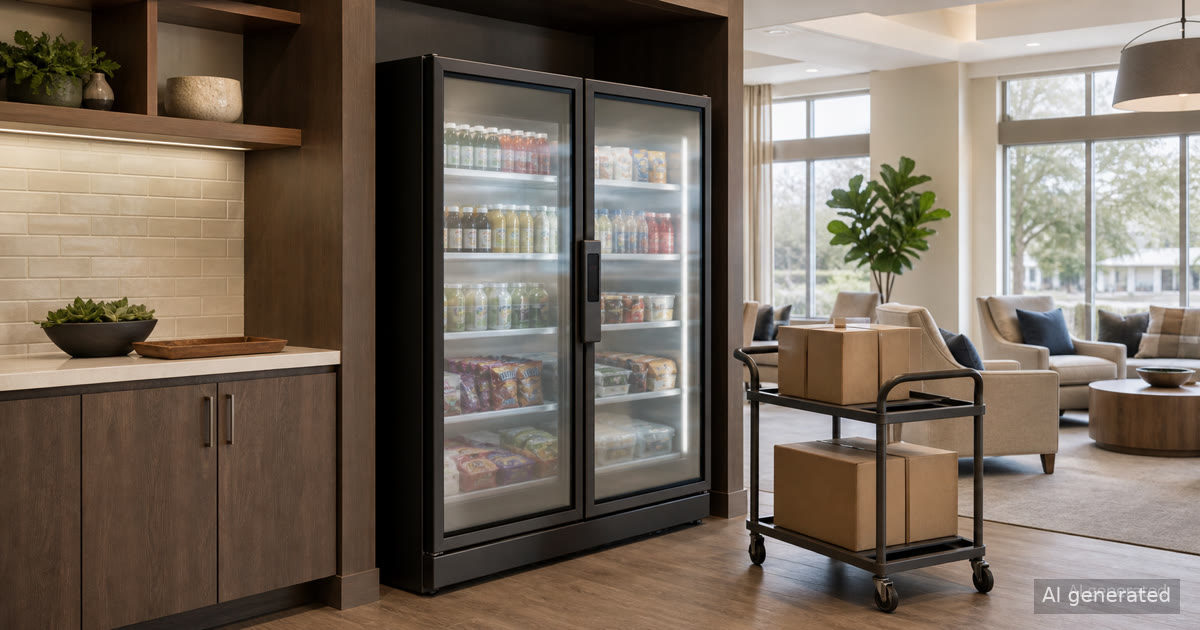
A useful vending machine restocking process should also respect the site itself. The restocking cart should not block the main path longer than necessary. The operator should understand where to park, where to enter, and who to notify if something needs attention. That sounds basic because it is. Basic is also where a lot of service quality lives.
Revvolto’s role is to keep that work off the host’s plate in qualified placements. The host should not have to become the inventory manager, payment-support desk, or snack detective.
What a good operator checks on site
A strong restock visit starts before the door opens. The operator should know what is likely needed, bring the right product mix, and arrive with enough context to avoid guessing in front of the machine.
On site, the visit should cover four practical checks.
- Inventory: what is low, what is moving, and what keeps coming back untouched
- Presentation: whether shelves, glass, product rows, and payment areas look clean and organized
- Function: whether doors, screens, cooling, payment flow, and product access appear to be working normally
- Placement friction: whether users, staff, or service access are bumping into the machine’s location
None of this requires turning a host visit into a production. It does require paying attention.
For example, if a smart cooler sits near a front desk and users keep asking staff how to use it, that is not just a user issue. It may be a placement, signage, product visibility, or support-ownership issue. If the restock visit only fills empty slots, the bigger problem stays hidden.
Payment support deserves the same care. Hosts do not need to become the payment department when a customer has a failed vend or a charge question. Any business that accepts card or cashless payments needs to take payment security seriously. The PCI Security Standards Council publishes standards for payment data security, but the host’s practical question is simpler: who handles payment questions when they happen?
That ownership should be clear before the amenity goes live.
How smart vending data should support the visit
Smart vending data is useful when it makes the service visit better. It is not magic, and it should not be sold like magic.
The right way to think about it: machines can report product movement, inventory patterns, and service signals. Operators can use that information to bring better refills, adjust the assortment over time, and spot patterns faster than they would by checking rows manually.
That does not mean the machine “knows” what people want. People still make the judgment call. A high-selling drink may be a real preference, or it may be the only cold option that was consistently in stock. A slow item may be wrong for the location, priced poorly, placed badly, or just waiting for the wrong audience. Data gives the operator a better starting point. It does not excuse lazy thinking.
This is also why hosts should ask how a provider uses data after installation. If the answer is vague, expect vague service. A better answer sounds more practical: we look at what moves, what stalls, what needs attention, and how the mix should change for this site.
For related planning, Revvolto’s guide to remote monitoring for vending machines explains what hosts should expect from reporting without turning it into a dashboard obsession.
What hosts should expect after the visit
The best restock visit ends with the host knowing less, in a good way. Fewer interruptions. Fewer questions. Fewer small jobs landing on the nearest staff member.
That does not mean silence is always best. If a machine needs service, a product mix needs adjustment, or placement is creating a problem, the host should have a clear point of contact. A modern vending amenity works better when support ownership is boringly clear.
Hosts should expect a few things from a serious provider:
- A regular service cadence matched to the site’s usage
- Clean, organized machines and shelves after each visit
- Product adjustments based on actual buying patterns, not random preference
- Clear handling for payment, product, or machine issues
- Respect for traffic paths, staff areas, and service access
Those expectations line up with the same questions that should be asked during a vending site review: who uses the machine, where it belongs, how service happens, and who owns the follow-through.
The public-facing parts of vending are easy to judge. Does the machine look good? Is there something worth buying? Does checkout feel simple? The operator side is less visible, but it is what keeps the amenity from becoming clutter with a card reader.
If your location could use a modern vending machine, smart cooler, or smart fridge without adding another staff chore, talk to Revvolto. We can look at the site, the audience, and the service plan that would actually make sense.