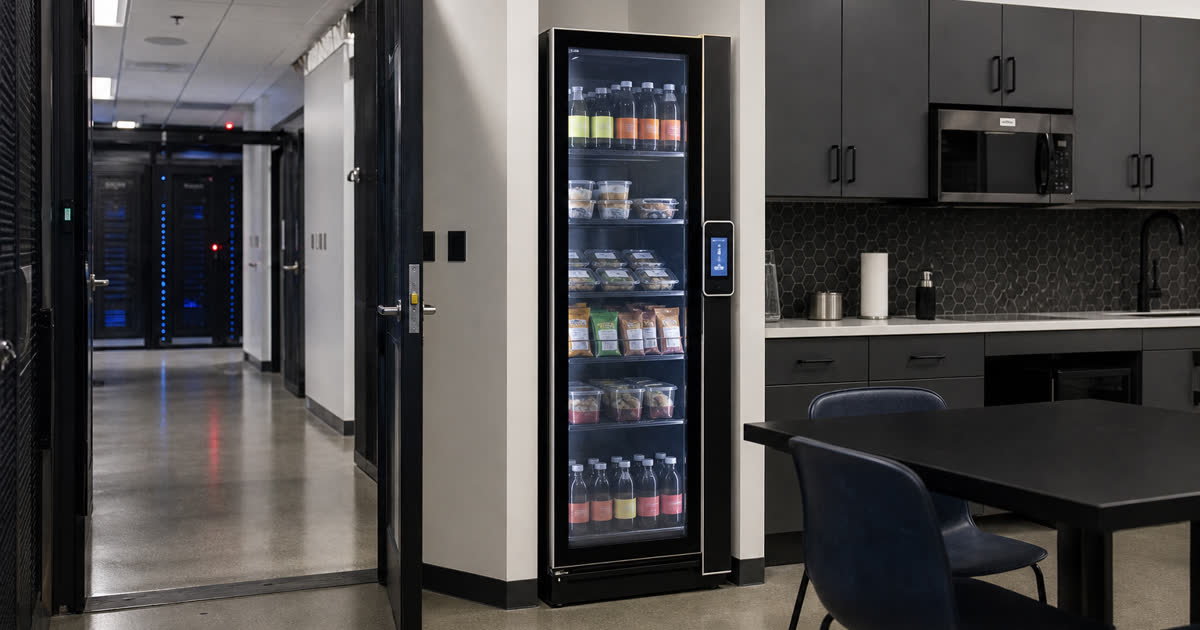
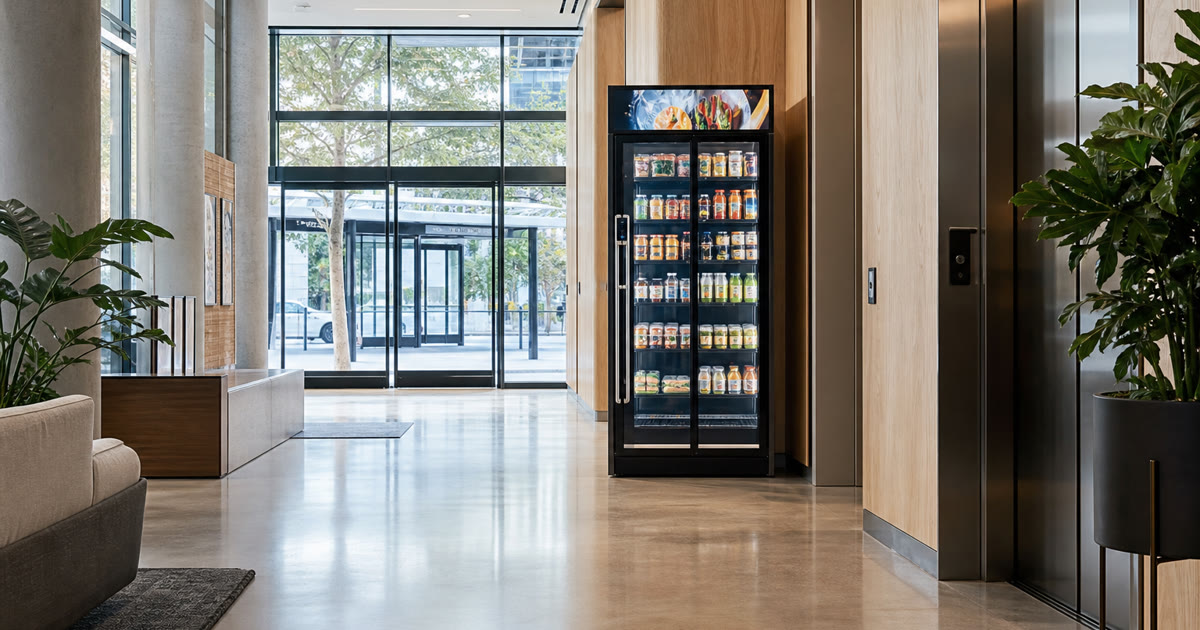
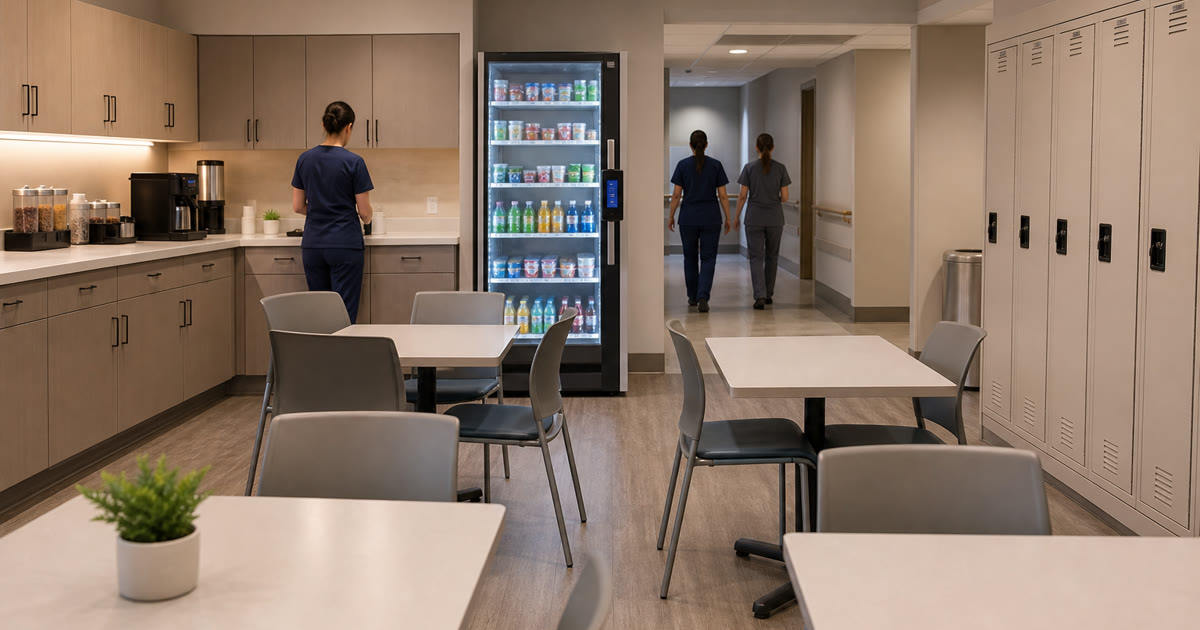
Auto dealership vending sounds simple until the service lounge gets busy.
A customer is waiting on an oil change. A technician has ten minutes between jobs. A service advisor is already juggling calls, repair updates, and walk-ins. If food and drink access depends on the front desk, the vending plan is not really helping the building. It is just moving one more small interruption onto the people already carrying the day.
That is the real test for an auto dealership vending machine: does it support the waiting area and staff path without adding another chore?
A modern smart vending machine or smart cooler can fit dealership spaces well, but only when the decision starts with the actual buyer problem. Not “where can we fit a machine?” Not “what looks premium in the corner?” The better question is: where do customers and team members already pause, and can Revvolto service the unit without turning your staff into the backup plan?
Start with the waiting-room job
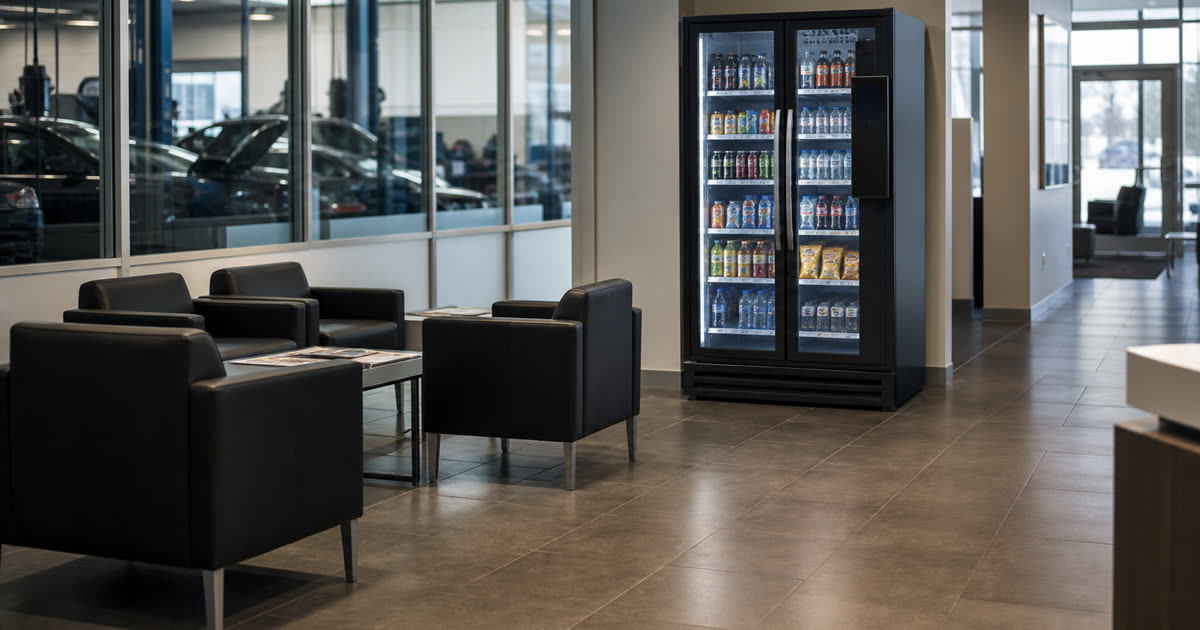
The dealership waiting area has a specific job. It needs to make short waits feel easier and longer waits feel less neglected.
That does not mean the lounge needs a full café. Most locations do not need another staffed service point, and many do not have the room or workload capacity for one. The useful middle ground is a compact, cashless smart vending setup that gives people a fast option without sending them across the property or back to the service counter.
Placement matters more than the machine itself. A vending unit near the seating area, coffee station, or customer path can feel natural. A unit hidden past a doorway or jammed beside storage feels like an afterthought. Customers will not hunt for it. Staff will not want to explain it. The amenity becomes invisible, which is the most expensive way to technically have one.
The same logic applies behind the counter. Service teams move through tight windows. If their only option is leaving the site or raiding whatever someone brought from home, the break path is fragile. A smart cooler near the staff corridor or breakroom can support the team without asking managers to stock shelves or solve payment issues.
A dealership vending plan should make both paths easier: customer waiting and staff breaks. If it only solves one, the placement may still work. If it solves neither, it is furniture with snacks inside.
Do not turn vending into a staff assignment
The fastest way to ruin a good amenity is to make the dealership team own it informally.
That usually starts small. Someone notices a machine is low. Someone else gets asked about a payment issue. A manager decides to “just keep an eye on it.” Before long, the amenity has a shadow owner. That is exactly what modern vending should avoid.
This is where the operator model matters. Revvolto handles the stocked machine, payment support, and service for qualified locations. The point is not only to place a modern vending machine. The point is to remove the little operational tasks that make an amenity annoying after the first week.
For dealerships, that matters because the service lane already runs on interruptions. Advisors do not need another question between a customer handoff and a repair update. Managers do not need another vendor chase. The best vending setup is boring in the right way: people use it, payments work, and the dealership team does not have to babysit it.
Cashless payment support is part of that expectation. Customers should not need coins, staff assistance, or a front-desk workaround. The setup should feel as normal as tapping a card at any other modern retail point. That is not a flashy feature. It is table stakes for a premium waiting area.
Match the product mix to the dealership day
Product mix should follow the dealership’s rhythm, not a generic snack list.
A service lounge has different needs than an apartment lobby or office pantry. Morning traffic may lean toward cold coffee, water, and simple breakfast-friendly options. Midday service traffic may need drinks and grab-and-go snacks. Staff areas may need dependable items people can use quickly between tasks.
The mistake is overbuilding the assortment. A dealership does not need the machine to prove it can carry every category under the sun. It needs the right everyday mix for the people actually using that space.
That is another reason a smart vending or smart cooler model can work better than a self-managed shelf. Purchase data can help refine assortment over time. If certain items sit, they can be reconsidered. If certain categories move, the mix can adjust. The language here matters: the system does not magically know what people want. It gives the operator better signals than guesswork. For a deeper pass on service-lounge assortment, see our guide to service lounge vending product mix.
For dealership buyers, the practical question is simple: will this setup keep the lounge and team areas useful without creating extra meetings or staff errands?
If the answer is yes, vending starts acting like an amenity instead of a chore.
Use the service path as the final test
Before approving any dealership vending machine location, walk the service path.
Where does a waiting customer naturally look after checking in? Where does a service advisor pass without getting blocked? Where can a restock visit happen without cutting through the most awkward part of the showroom? Where does the machine have enough visibility to be used, but not so much prominence that it disrupts the room?
Those are not design trivia questions. They decide whether the amenity works after install.
The best spot is usually close enough to the pause point that people see it naturally, but separate enough that it does not crowd the desk. It should support the customer experience without becoming the customer experience. It should also be reachable for service, because a beautiful machine in a painful restock location will eventually become a problem.
That is the Revvolto lens: modern vending machines, smart coolers, and smart fridges should fit the real building path. The hardware matters. So does the product mix. But the vending machine service model is what keeps the amenity from becoming another assignment.
If your dealership is thinking about a better food and drink option for the waiting area or staff path, start with the operational question first. Who uses it, where do they pause, and who keeps it running?
Revvolto can help qualified Austin-area dealerships evaluate whether a stocked, cashless smart vending setup fits the space. Tell us about the location at revvolto.com/contact-us.