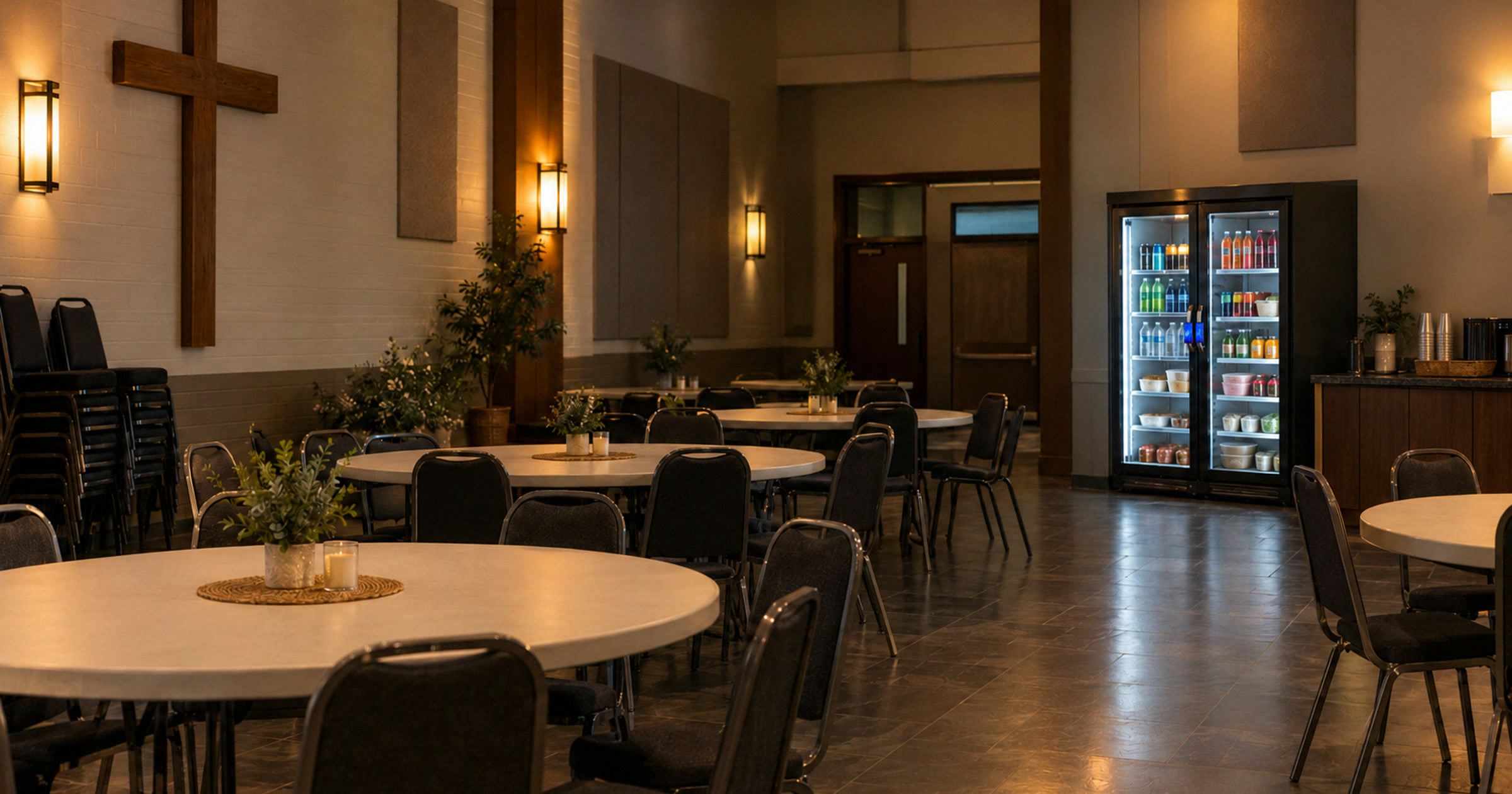
Austin has another small business week on the calendar. The Greater Austin Asian Chamber of Commerce lists the DECA Small Business Opportunity Summit for August 6 at the City of Austin Permitting and Development Center. The official page says the program includes a resource fair with refreshments and networking.
That is a good local hook for a simple point: when a building brings busy business people through the same rooms, food access becomes part of how the day works.
Not the fancy part. The practical part.
Events expose the daily food problem
A summit is temporary. The building problem is not.
People arrive early. They wait between sessions. They take hallway calls and try to fit real work around the event schedule.
If every quick food option depends on a staffed table or nearby cafe, the building has turned a basic need into another coordination job.
That is fine for one polished event. It gets old fast in a workplace, training center, or shared office that sees steady traffic every week.
Smart vending and smart fridges are not a replacement for catering. They solve a different problem: the everyday gap between full food service and nothing useful on site.
That gap shows up during small business events because the audience is moving, focused, and usually short on time. The same thing happens on normal days in buildings with tenant meetings and workshops.
This is why the local hook matters. A resource summit makes the pattern visible in a few hours. People are not looking for a full restaurant moment. They are looking for something they can grab without leaving the building or derailing the conversation they came to have.
The same behavior shows up after the banners come down. A small business owner waiting on an appointment, a vendor between meetings, or a team using a shared training room still needs the basic stuff. Water. A cold drink. Something quick enough that the room keeps working.
The right amenity does not need a committee
The best refreshment setup for a business building is usually boring in the right ways.
It sits where people already pass. It keeps the walkway clean. It gives the operator purchase signals instead of guessing what to restock. It does not ask the front desk, facilities team, or office manager to become the snack department.
That last part matters. Small teams already have enough jobs disguised as “quick tasks.” Ordering drinks, cleaning out slow-moving items, and troubleshooting payment issues are not strategic work. They are little interruptions with receipts.
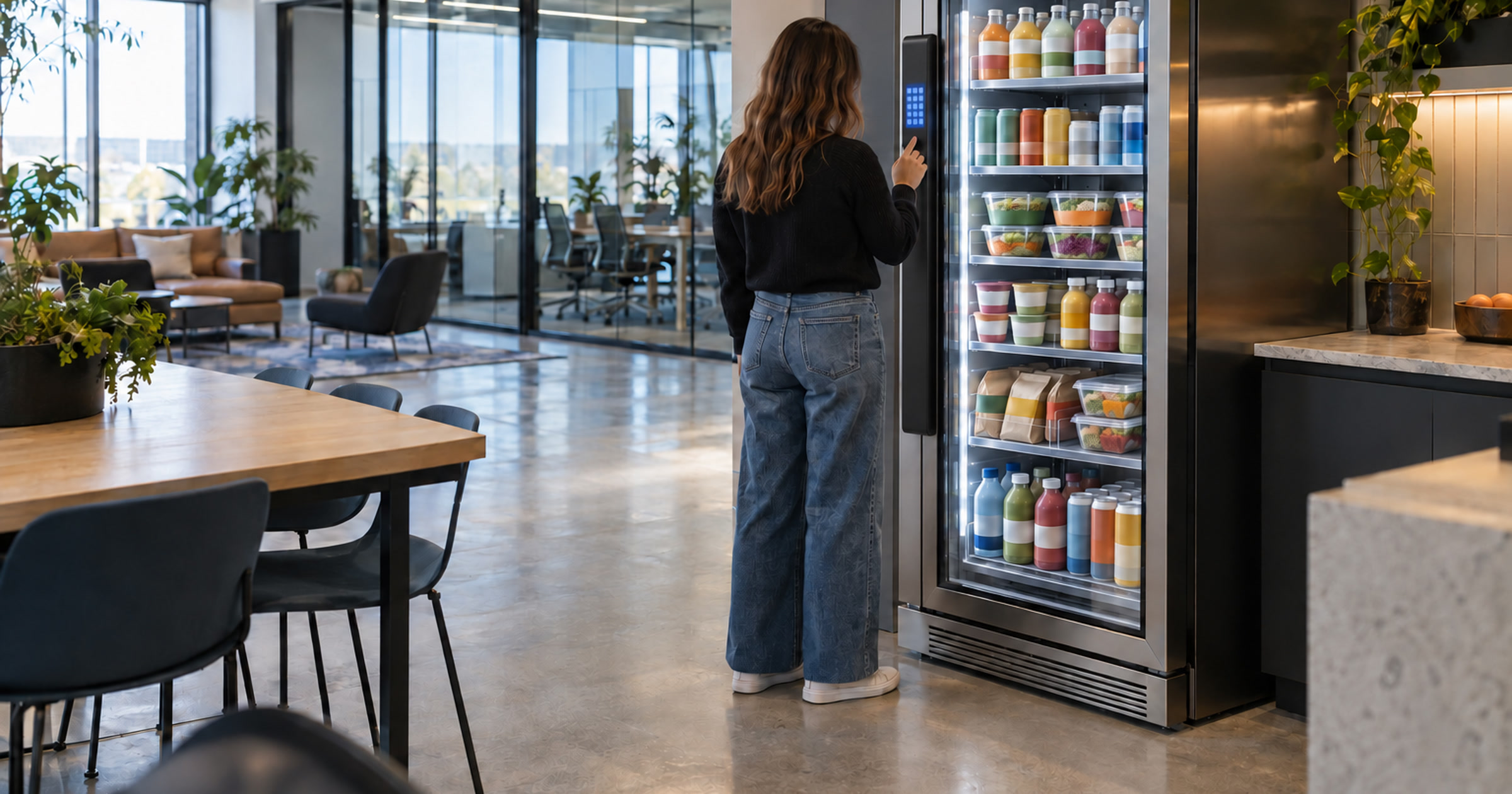
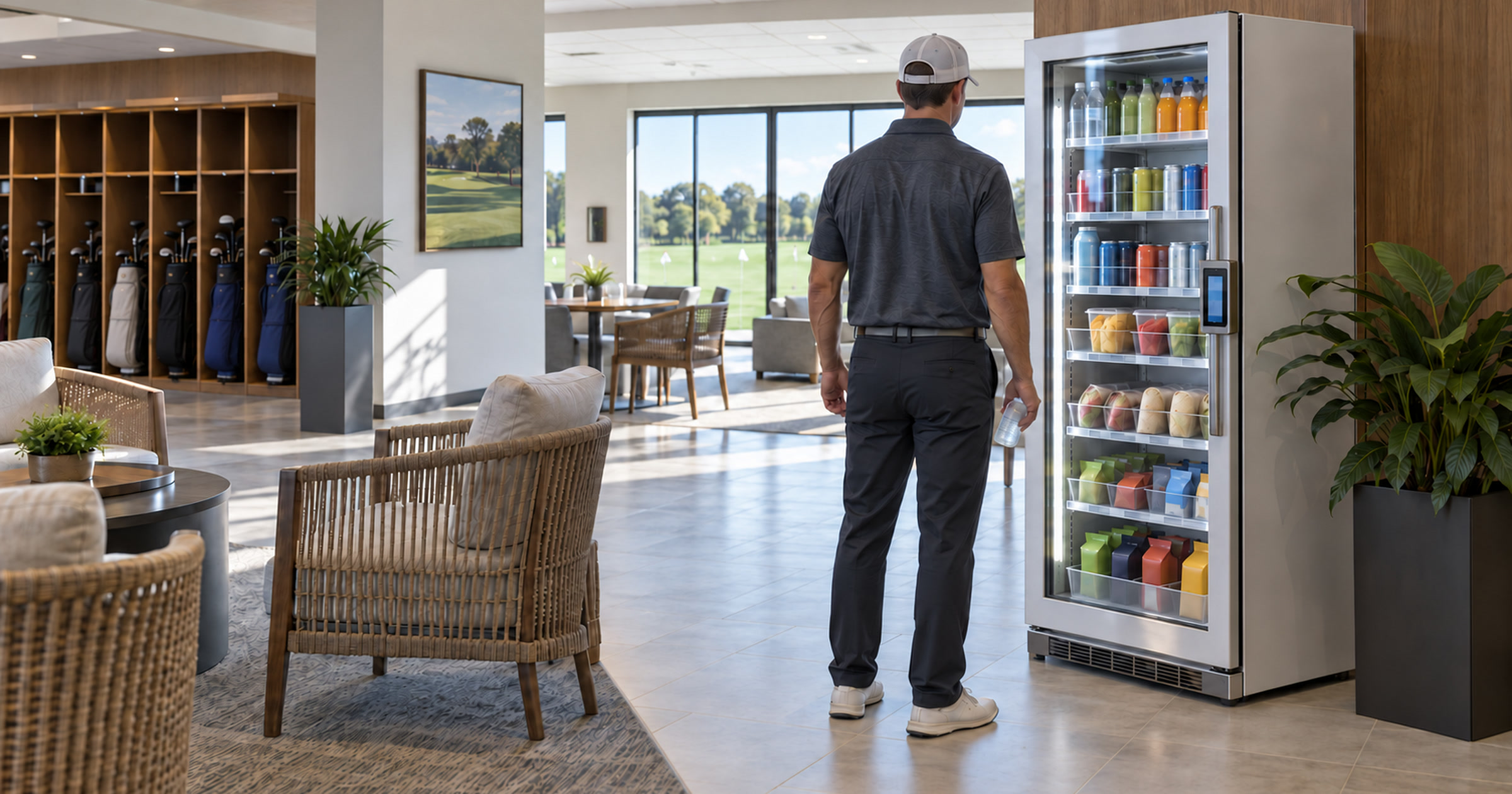
A cashless smart vending machine or smart fridge can handle the routine better when the location has enough daily traffic and the product mix matches the audience. For a training room, that may mean cold drinks and easy handheld snacks. For a permit center or professional services lobby, it may mean quiet, compact access that does not make the room feel like a convenience store.
The point is not to make the amenity louder. The point is to make it useful without making it everyone else’s problem.
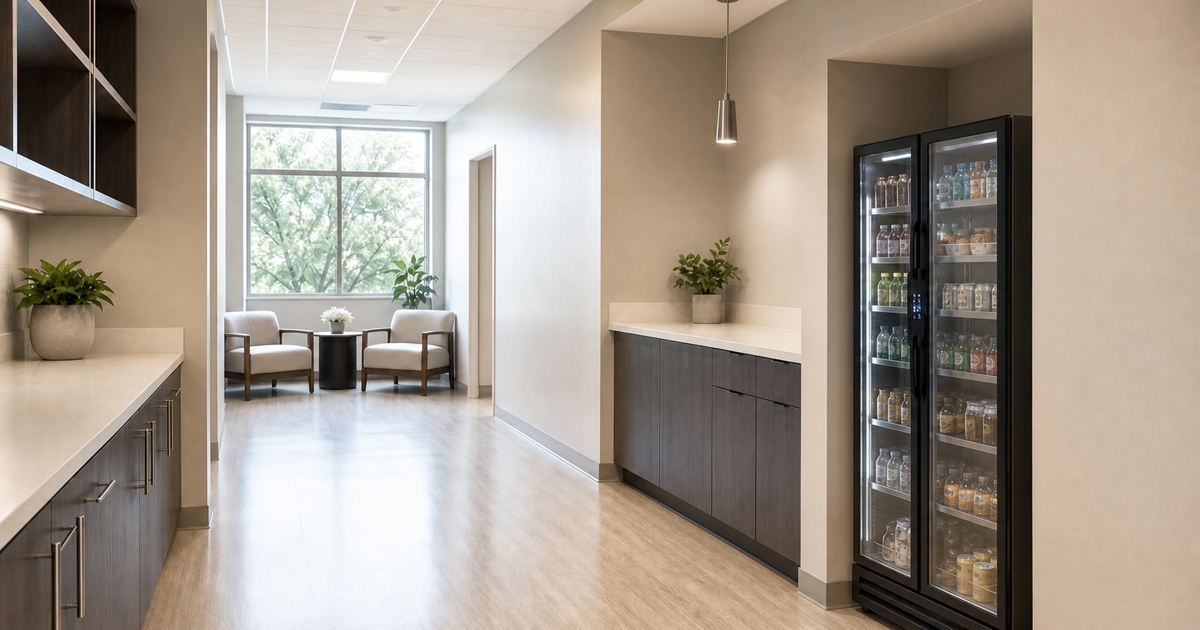
Placement does a lot of the work. Put the cooler too close to the entry desk and it can interrupt staff. Hide it in a dead corner and people will miss it. The better spot is usually near the path people already use, with enough space to open the door and step aside. That is why vending machine placement deserves a real look before anything gets installed.
Product mix matters too. A room full of business owners does not need novelty for novelty’s sake. It needs reliable drinks, practical snacks, and a presentation that feels appropriate for the building. Smart vending helps because the operator can adjust the vending product selection from real purchase behavior instead of guessing forever.
Austin buildings need flexible food access
Austin keeps stacking together workplaces, event rooms, and business support programs. The local small business calendar is a reminder that these rooms are not static. One day they hold a resource fair. Another day they hold a workshop or tenant meeting.
Fixed food service is not always realistic for that kind of demand. A fully staffed counter may be too much. A lonely snack bowl is too little. A well placed smart cooler sits in the middle: available when people need it, compact enough for the room, and managed by someone who is actually responsible for stocking and service.
That middle ground is easy to underestimate. The wrong setup turns into clutter. The right setup disappears into the daily rhythm of the building. People use it, the area stays clean, and the team responsible for the room is not constantly restocking drinks between meetings.
For Revvolto, the fit conversation starts with the site, not the machine. How many people pass the area on a normal day? When do they need access? Is there enough room for service? Will the amenity help the building, or will it create another tiny bottleneck?
That is where Revvolto fits. We install modern cashless vending machines and smart fridges for qualified locations, then handle stocking and service.
For Austin buildings that serve entrepreneurs and visitors, the question is not whether every event needs a catered spread. Most do not. The better question is whether the building supports the small moments between the formal agenda.
A good amenity earns its place there.
If your Austin location needs practical food and drink access without turning your team into the operator, Revvolto can help you review the fit.