Northwest Austin has another apartment project on the board. Community Impact reported that a 342 apartment project is planned for the Pearson Ranch area, with groundbreaking expected this month and completion anticipated in 2028.
That is a local development story. It is also a useful resident amenity reminder.
This is where planning gets real.
Apartment food access is easy to underrate while teams are focused on leasing and construction timelines. But once residents move in, the small daily friction shows up fast. Someone gets back late. Someone wants a cold drink after the gym. Someone needs a quick snack before a meeting in the resident lounge.
If the only answer is leaving the property, the amenity plan has a hole in it.
We are not affiliated with the project, developer, or Community Impact. The point is broader: as Austin apartment communities keep adding residents and shared spaces, food access should be planned around the places people already pause.
Resident amenities work better near the pause path
A vending machine or smart fridge should not be treated like a leftover appliance. Placement decides whether residents use it.
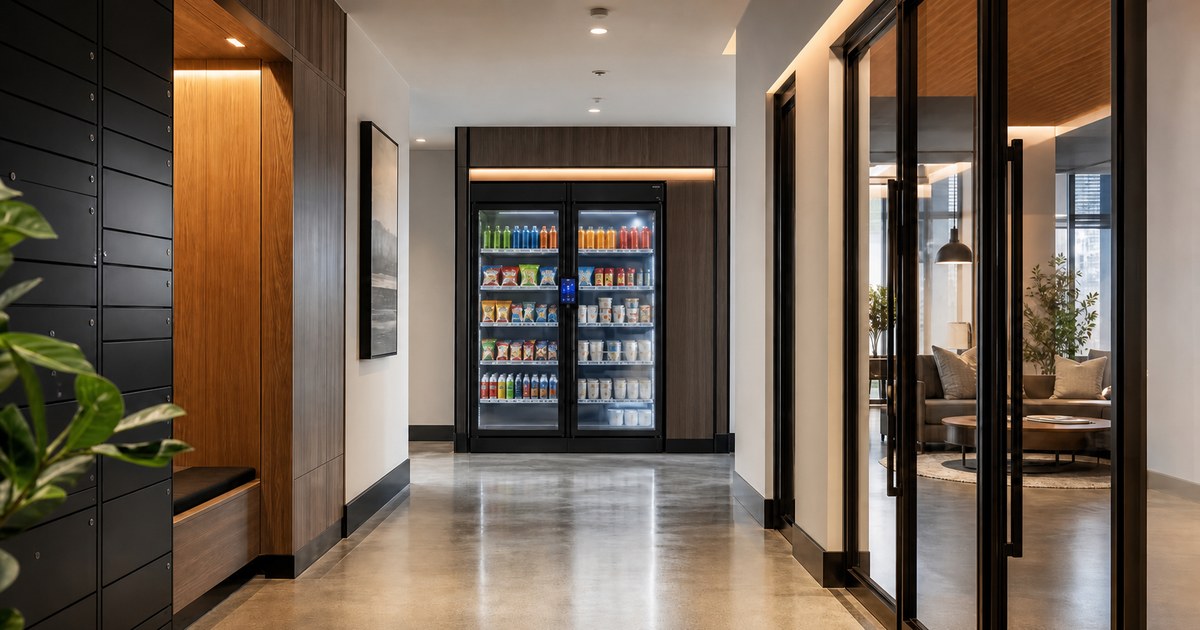
For apartment communities, the best location is usually near a real pause path. The package room works. The resident lounge works. The fitness center exit works. Those are the places where residents already slow down. That matters more than picking the prettiest corner on the floor plan.
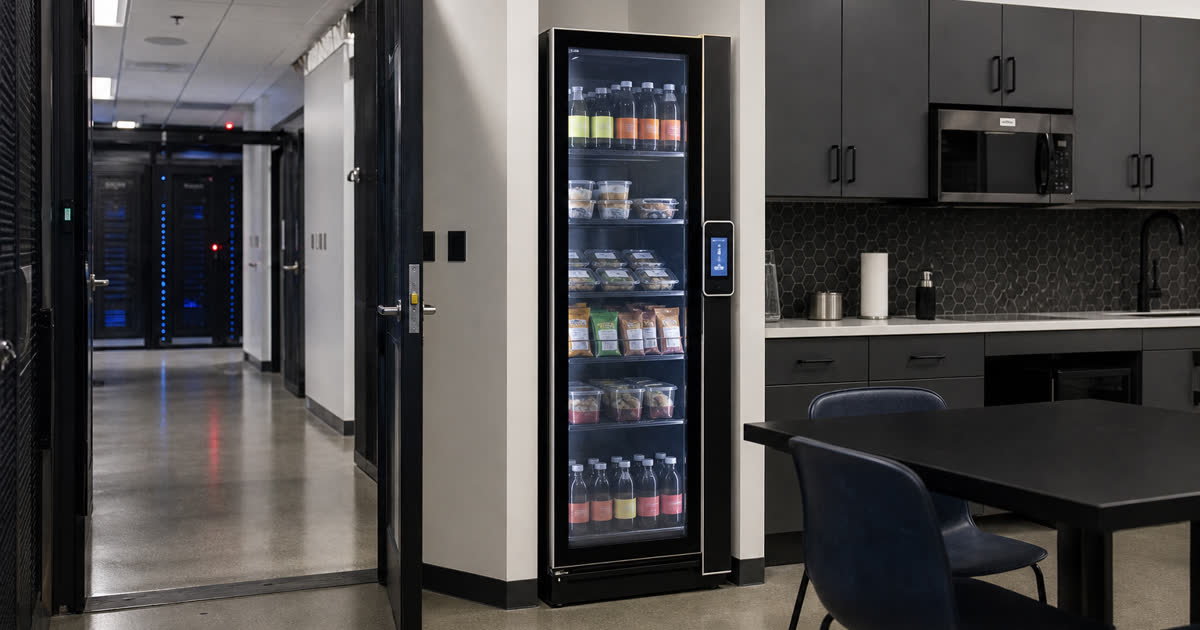
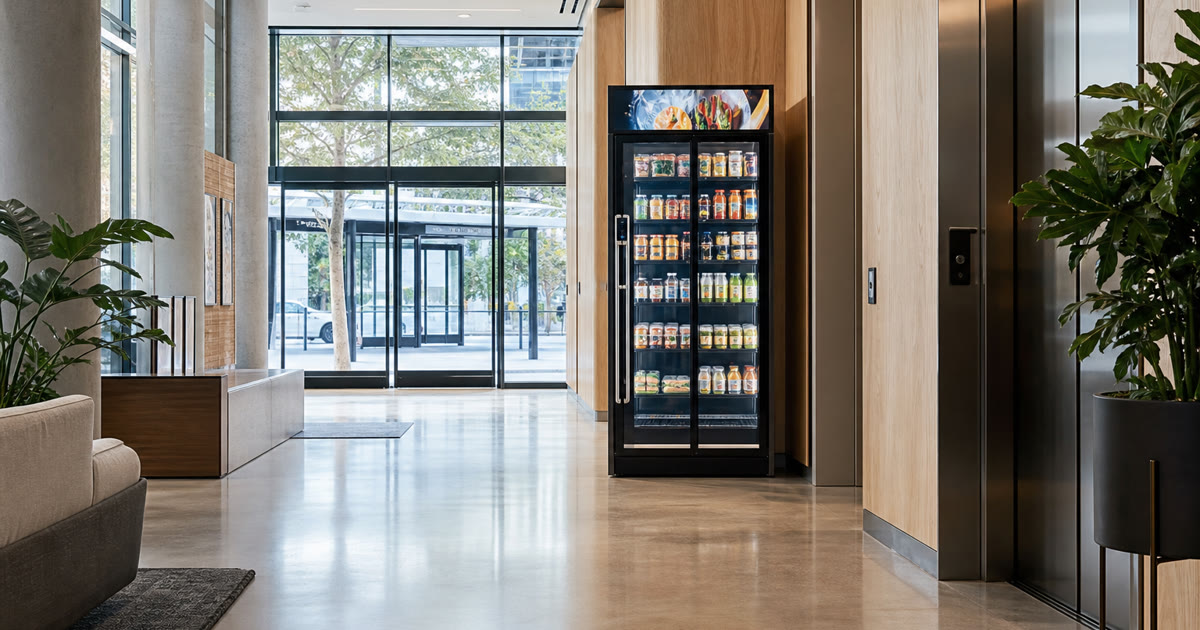
A smart vending cooler beside a resident lounge can support quick drink and snack access without asking property teams to run a mini-store. A smart fridge near a fitness area can make post-workout convenience feel normal instead of bolted on later. A compact micro market can fit some communities, but only if the room layout supports it.
The useful question is not, “Can we add vending somewhere?” The useful question is, “Where would a resident naturally stop for thirty seconds?”
That answer usually tells you where the amenity belongs.
New multifamily growth changes the building math
The Community Impact report says the planned Northwest Austin project includes 342 apartments across three four-story buildings. That kind of resident count creates repeated daily movement inside the property.
Not all of that movement is dramatic. Most of it is ordinary. People pass through the lobby. They pick up packages. They use shared rooms. They come back from work or the gym.
That ordinary movement is exactly why on-site food access can work.
A resident amenity does not need to be loud to be valuable. In fact, the best version is boring in the right way. It is stocked. It is cashless. It is easy to understand. It sits where people already are. It does not turn the leasing team into snack managers.
That last part matters. If a property team has to manage product selection and restocking, the amenity starts looking less like a perk and more like another job.
Smart vending should fit the property, not fight it
Every apartment community has its own traffic pattern. A downtown tower, a garden style community, and a mixed use development do not need the same setup.
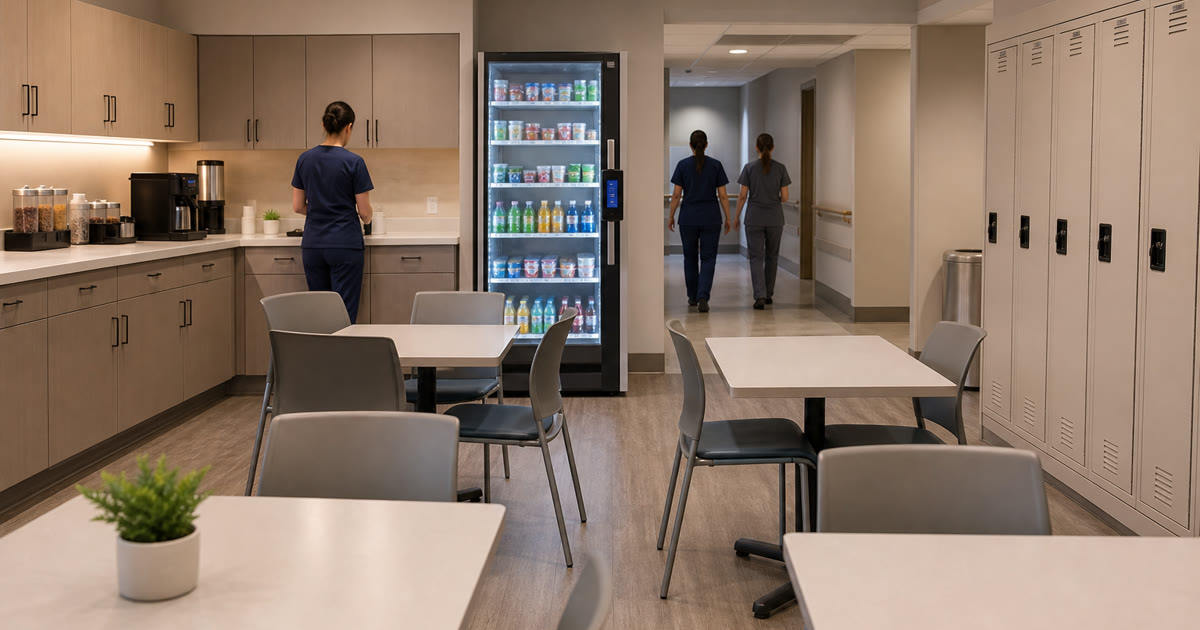
Some properties need a full glass smart vending cooler near a lounge. Some need a smaller smart fridge in a staff-monitored amenity area. Some need a compact micro market only if there is enough room for browsing without blocking the path.
The point is fit.
Before adding vending, property teams should look at three practical things. Where do residents already pause? How can service teams access the unit? Does the product mix match the daily use case? That is enough to avoid the classic vending mistake, which is putting the machine where it is easy to ignore.
For Austin apartment communities, especially in growth corridors like Northwest Austin, this is not just an amenity question. It is a building operations question.
A smart vending program should make life easier for residents and easier for the property team. If it only does one of those, something is off.
What to ask before choosing the spot
Start with movement, not the machine.
Where do residents pass when they are already in a short break mindset? Where can a stocked unit sit without creating clutter? Where can service happen without disrupting the front desk or leasing office? Where would a resident actually use it at night without feeling like they are walking into a back hallway?
Those questions are simple, but they prevent expensive-looking amenities from becoming invisible.
The other question is ownership. Who keeps the unit stocked? Who handles a payment issue? Who notices when the product mix is not matching resident habits? If the answer is “the property team will figure it out,” the amenity is already drifting into busywork. A better setup gives residents access while keeping the daily operating burden with the provider.
For new properties, the best time to ask them is before opening. For existing communities, the best time is before the next amenity refresh. Either way, the unit should support the building’s real rhythm.
We help qualified Austin-area apartment communities add smart vending, smart fridge, and compact market options that fit the property instead of adding more work to the staff. Tell us about the location at revvolto.com/contact-us.