A vending machine should not become another thing your facilities team has to manage.
That sounds obvious until the machine is installed. Then the real test begins. People ask where to pay. Someone wants a refund. The product mix gets stale. A cooler blocks the wrong path. The lobby looks better for two weeks, then the support questions start landing on the same team that already handles the building’s daily headaches.
Facility managers already live between people, place, and process. IFMA describes facility management as work that integrates those pieces inside the built environment. That is a useful lens for vending because a food and drink amenity touches all three. People need it to be easy. The place has to support it. The process after installation has to be clear.
For your building, the goal is not “add vending.” The goal is to add vending machine service that takes work off your team instead of quietly handing them a snack program.
Vending is a facilities decision after install
The buying conversation usually starts with the machine. Glass doors and payment screens matter. So do refrigeration, shelf layout, and product options.
Facilities teams should care just as much about what happens after the unit is plugged in.
Who handles restocking? Who watches product fit? Who responds when a card reader fails? Who decides whether cold drinks need more room than chips? Who explains what to do when someone has a payment question?
If the answer is “your front desk will figure it out,” the setup is already wrong.
A good vending plan keeps responsibilities clean. Your team should know where the unit goes, how service access works, and who to contact when something needs attention. They should not be counting inventory by hand or guessing whether a product request is worth chasing.
This is where modern vending, smart fridges, and compact market formats can be useful. The hardware can support a better experience, but the service model is what protects your team from extra work.
Dashboards do not refill shelves. People do. The question is whether those people are your staff or the vending partner.
The machine has to fit the room, not just the brochure
A vending setup can look great in a product photo and still make the room worse.
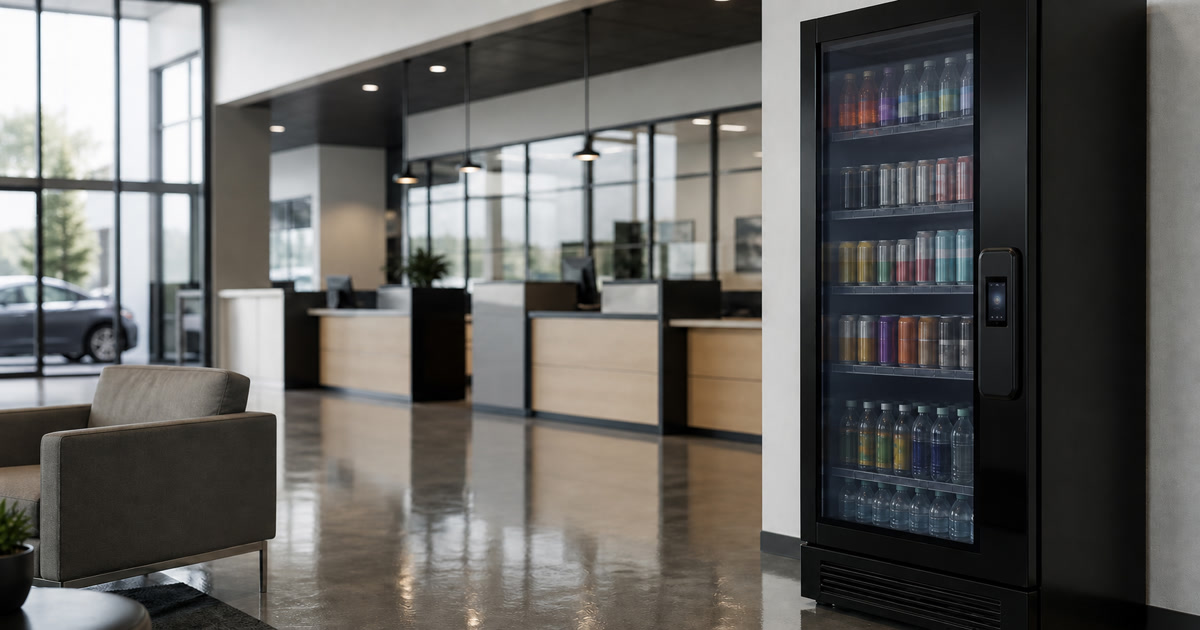
Placement affects how people move. It affects cleaning. It affects restocking. It affects whether the unit feels like part of the building or a black box that landed in a random corner.
Before choosing the format, walk the room like someone who has to live with it. Look at the natural pause points. Look at power access and service visits. Then ask whether someone using the machine would block the coffee area or the main path. If you need a deeper layout pass, start with our vending machine placement guide.
For access planning, the U.S. Access Board guide to accessible routes is a useful reference point because it explains why clear route width matters. This does not turn a blog post into a site-specific ADA review. It simply reminds buyers that a machine is not decoration. It changes the way a space works.
That is why the right answer may be a smart vending machine in one location, a smart fridge in another, and a smaller cooler in a tighter staff area. Bigger is not automatically better. The best format is the one people will actually use without creating friction for the building.
Payment support is part of the service, too
Cashless vending is expected now. That does not make payment support invisible.
Your team should not have to troubleshoot card taps, app questions, or refund confusion. They should not have to explain what a reader error means. They should not have to collect complaints and forward them into a void. For the payment side, our card reader guide covers the buyer questions worth asking early.
The payment side also needs careful claim discipline. PCI Security Standards Council standards apply to organizations that store, process, or transmit payment account data. They also cover certain parties involved in payment transactions and related devices. That source is not a marketing badge for any single vending setup. It is a reminder that payment support has real ownership behind it.
For a facilities manager, the practical question is simple: when payment questions happen, who owns the response?
If your team owns it, the amenity is not as hands-off as it looked. If the vending partner owns it clearly, the machine has a better chance of staying useful without becoming another inbox.
Product mix should not become a guessing game
Product planning sounds like a small detail until people stop using the machine.
A dealership service lounge may need quick cold drinks and simple snacks for people waiting on repairs. A clinic staff area may need grab-and-go items that work during short breaks. A manufacturing breakroom may need options that hold up across shift changes.
Those are different rooms. They should not get the same stale shelf plan.
The facilities question is not whether every possible product is available. That is how vending turns into a committee. The better question is whether the product mix can be reviewed, adjusted, and serviced without your team managing the whole thing.
We care about this because product fit is where a vending amenity either earns its space or becomes background furniture. If people do not see anything useful, they stop checking. Once that habit breaks, the machine may still be stocked, but it is not doing much for the building.
What Revvolto should take off your plate
For qualified locations, Revvolto is built around a simpler division of labor.
You provide the right space and a real use case. We help match the format, stock the machine, and maintain the setup. We also support payment technology and adjust the assortment over time. Site fit still matters. The audience and service access have to make sense before anyone should pretend vending is the answer. For more on the operating side, read how vending machine service should work after installation.
That is the adult version of the amenity conversation.
A facility manager should not be handed a machine and a new chore list. The better setup gives people convenient food and drink access while keeping ownership clear after installation.
If you are looking at vending or smart fridges for a workplace, start with the support burden. Ask what your team will still have to do once the machine is live.
Then make that list shorter.
Tell us about the location at revvolto.com/contact-us.