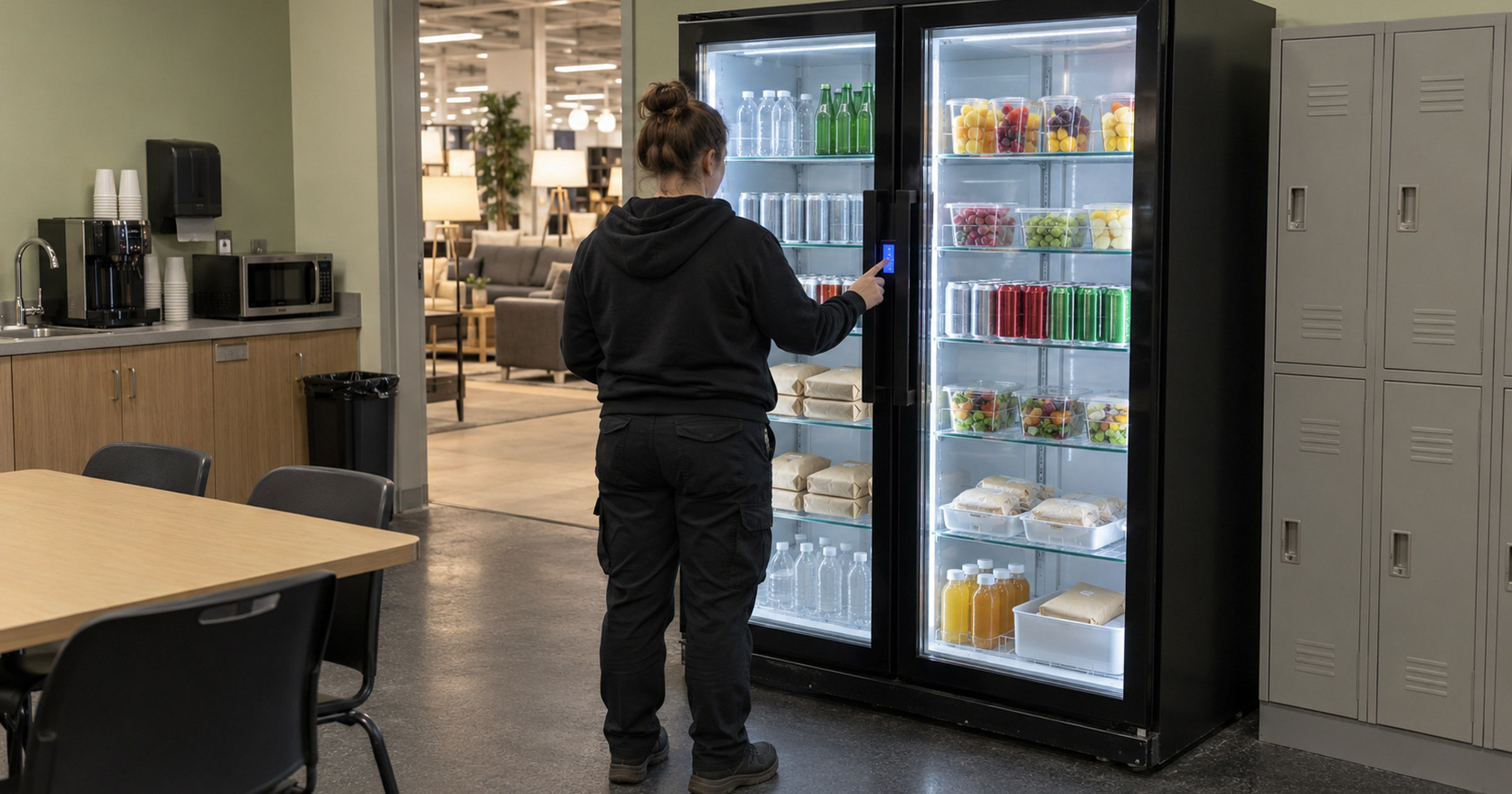
A good gym does not stop being useful when reception closes. Members still arrive early, finish late, and move through the same locker and exit areas. Smart vending for gyms can keep food and drinks available during those hours, but the machine is only the visible part of the decision.
The better question is whether the location can support a stocked cashless amenity without handing new work to coaches or reception staff. Start with where it sits and what it carries. The refill route and transaction help also need clear owners when the gym is busy.
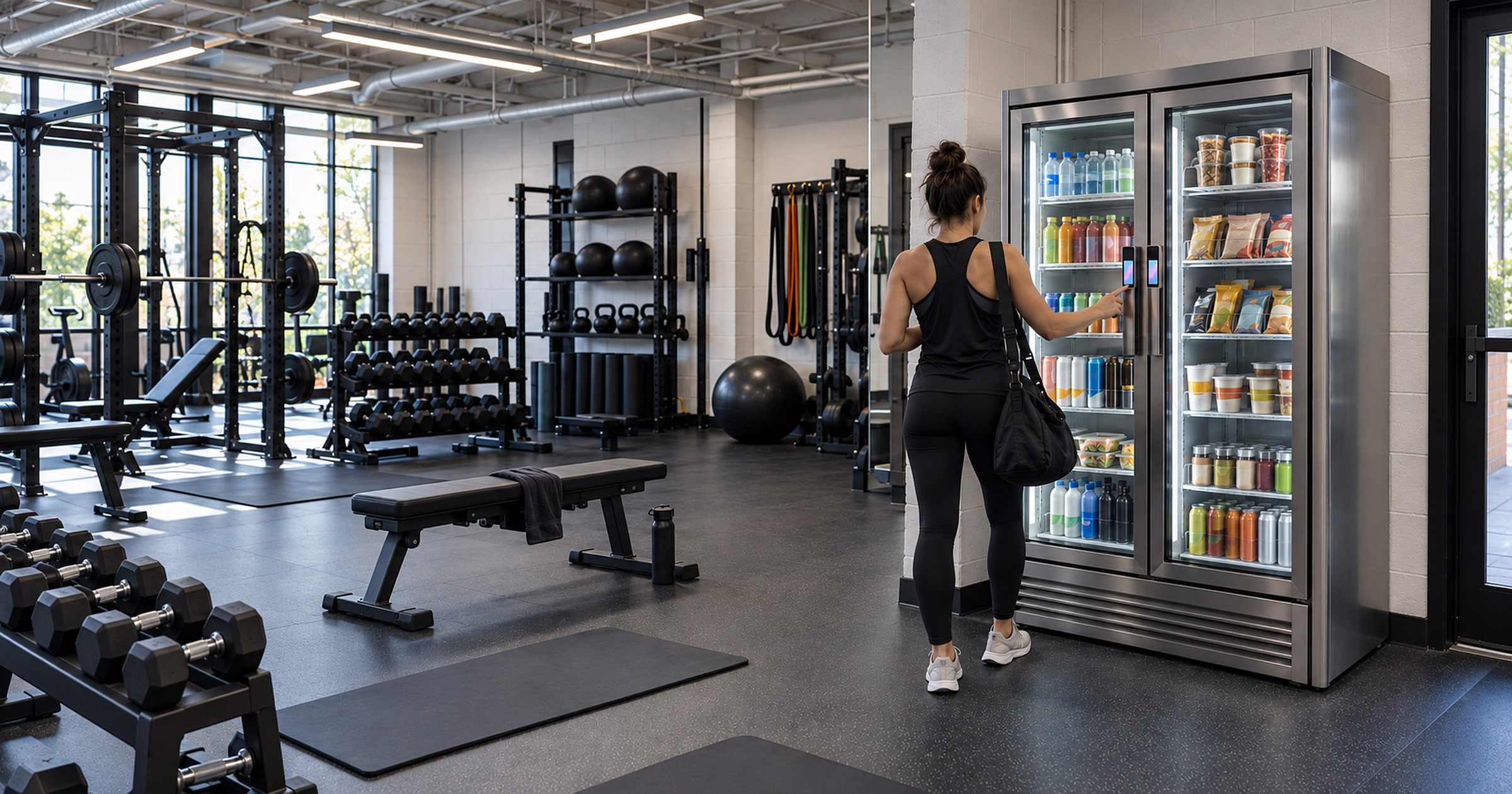
Plan for the hours your staff are not there
A staffed smoothie bar can answer questions and clean up small problems. An unattended cooler cannot. It has to be easy to find, simple to use, and backed by an operator who owns the routine work.
Start with the actual operating schedule. If members enter before reception opens or stay after the last class, walk the building during those periods. The route from the workout floor to the lockers may be active while the lobby is nearly empty. A vending unit beside an unattended desk looks prominent on a floor plan, but it may be irrelevant to the people still inside.
The right spot is usually on a route members already use. It should be visible without turning the unit into an obstacle. It should also feel natural beside the rest of the gym, not like a refrigerator parked wherever an outlet happened to be free.
After-hours access also changes the support question. A payment issue at 9:30 p.m. cannot become tomorrow morning’s mystery for the desk team. Before installation, decide who handles payment questions and equipment faults. If that responsibility is vague, the amenity is not ready.
Put smart vending for gyms near the exit decision
The best placement often sits between the end of a workout and the door, not at the center of the training floor.
That could be a locker vestibule, a recovery area, or the route beside the check-in zone. The useful location depends on where members slow down long enough to notice the offer. Someone leaving a class is making a quick decision. They are unlikely to cross the building because a machine looked good in a rendering.
Visibility is only half of the test. The door must open fully, the shopping area should stay clear, and a refill cart has to reach the unit without cutting through active exercise space. Equipment moves. Classes change over. A route that looks generous at noon can tighten quickly at the evening rush.
Accessibility belongs in that review. Section 403.5.1 of the 2010 ADA Standards for Accessible Design sets a 36-inch minimum clear width for walking surfaces on an accessible route, subject to the standard’s stated exceptions. That number is useful context, not a site certification. Your final layout still deserves a qualified review based on the building and the equipment.
Keep the product mix disciplined
Gym vending gets silly when the assortment tries to perform a personality.
Members do not buy a brand story from a cooler. They buy something because it is convenient at that moment. Start with a tight mix that fits the location, then use actual purchase activity to adjust it. Cold drinks, familiar packaged snacks, and a limited refrigerated selection are easier to manage than a crowded first fill built on guesses.
Do not turn the machine into a nutrition billboard. Product preferences vary, and Revvolto should not make health or performance promises about what sits on a shelf. The practical job is simpler: keep the unit orderly, offer relevant choices, and learn what people at that gym actually purchase.
The first mix also has to respect turnover. A larger assortment is not automatically better if slower items create waste or make the shelves look neglected. A smaller selection that moves can feel more intentional than a stuffed cooler with too many weak choices.
Our product-mix guide covers that operating question in more detail. For a gym, the buyer should ask who reviews purchase activity and who decides when an item has earned its shelf space.
Make payment support an operator job
Cashless shopping is convenient when ownership is clear.
The PCI Security Standards Council’s merchant resources frame payment security around people, process, and technology. That does not make a gym manager the payment expert. It does mean the buyer should ask direct questions about the payment system, support route, and vendor responsibilities before the unit arrives.
Who receives a failed-payment question? Who checks the hardware? Who responds when a member reports a problem after staffed hours? Those answers should point to the vending operator, not to a trainer finishing the last class.
Revvolto handles the stocked amenity, payment technology, and equipment service for qualified locations. We also monitor the assortment and refill the unit. Your staff should know where to direct a member, but they should not become the vending department.
For a deeper payment review, see our cashless vending guide. The goal is not to turn every buyer into a payments technician. It is to make support ownership obvious before a real member tests it.
Choose the setup that works on an ordinary Tuesday
A polished launch photo proves almost nothing. The better test is an ordinary evening when the front desk is quiet, a class has just ended, and someone wants a drink before leaving.
Can that member see the unit? Can they use it without blocking the exit? Can the operator refill it without steering a cart through an active class? Does the desk team know who owns payment and service questions?
If those answers are clean, a managed unit can extend the gym’s convenience beyond staffed hours. If they are not, adding more technology will not fix the plan.
We bring modern vending machines and smart fridges to qualified locations. We then handle stocking and payment technology. Maintenance stays with us too. Placement still has to earn its keep. Traffic, room fit, and operating access decide whether the setup belongs there.
If you are reviewing after-hours food and drink access for a gym or fitness studio, tell us about the location. We will help you test the route, service plan, and format before equipment shows up.